Women In Health IT
A new survey of more than 1,500 women revealed that they frequently encounter obstacles that impact salary and career advancement, according to Women Who Code.
Seventy five percent of jobs in the U.S. will require technology skills within the next decade, according to Women Who Code CEO Alaina Percival.
“It’s imperative that the industry as a whole become a more welcoming and inclusive place for women who have been drastically underrepresented to date,” Percival said in a statement. “Providing women every available opportunity and resource to succeed is crucial – both for their well being and for the stability of the economy.”
Highlighting challenges women face once they enter technology careers, the study also looked at what needs to be done to attract women to technology fields in the first place.
Nearly 80 percent of women indicated flexible work hours as critical, and one in four respondents said flexible work hours was the most important factor when considering a career in tech. Half of all respondents, in fact, agreed that balancing their career and personal life is challenging.
Women Who Code, a global nonprofit dedicated to inspiring women to excel in technology careers, conducted the research with developer training company Pluralsight.
When asked to rank the biggest challenges in their careers, respondents listed lack of opportunities for advancement first, followed closely by lack of female role models and lack of mentorship at work. More than 60 percent of female leaders agreed or strongly agreed with the statement that having more women on their teams would be beneficial.
Respondents also cited a lack of confidence and male-dominated work environments as top issues holding back their careers. And while 20 percent of respondents in their 20s and 30s aspire to a vice president or C-level position, more than 50 percent felt uncomfortable asking for a raise and nearly 50 percent felt uncomfortable asking for a promotion.
What’s more, women in leadership roles reported being held back by male-dominated work environments at more than twice the rate of women in mid-level positions or below (19 percent vs. 8 percent), while nearly half of respondents ages 21-49 feel that male colleagues are more likely to get promoted than female colleagues.
When it comes to salaries, the latest HIMSS Compensation Survey, released at the 2016 HIMSS Annual Conference and Exhibition, found big gaps between men and women holding positions with the same title in the healthcare IT field. Men, on average, earned $126,262, compared to $100,762 for women.
Twitter: @Bernie_HITN
Email the writer: bernie.monegain@himssmedia.com
Like Healthcare IT News on Facebook and LinkedIn
When Republican presidential hopeful Donald Trump accused his presumptive Democrat opponent, Hillary Clinton, of playing the 'woman's card' in the race to the White House, it backfired.
Clinton was the first to respond, unleashing many other retorts from both women and men – and an extra $2.4 million in campaign fundraising.
"If fighting for women's health care and paid family leave and equal pay is playing the woman card, then deal me in!" Clinton shot back.
One of our favorite commentaries came from Kirsty Styles, writing on thenextweb.com: Styles writes about a deck of cards in production now by a creative sister and brother team which is celebrating famous women, such as Harriet Tubman, Susan B. Anthony, Mary Cassatt and Beyonce. Clinton is the ace in this deck, which is due on the market in July.
While enamored of the idea, in her column Styles points out that the Woman Card deck doesn’t reference any female tech innovators who've made America great.
[See also: HIMSS compensation survey: Big salary gap between men, women healthcare pros.]
Styles suggests three to get the creators of the card deck fired up for tech: Pioneering computer programmer Grace Hopper, Radia ‘don’t call me the Mother of the Internet’ Perlman and women in tech champion Anita Borg.
Hmm, maybe someone should create a Women in Health IT card deck.
Or maybe it’s enough with the cards already.
New York Times columnist Nicholas Kristof writes in his April 30 column, "Trump Plays the Man's Card," that Trump is missing point.
"This is the card that in the United States earns women just 92 cents to a male worker’s dollar, less than one-fifth of the seats in Congress, a bare 19 percent of corporate board seats, an assault every nine seconds — and free catcalls and condescension! Frankly, I’ll stick with my MasterCard," Kristof writes.
That 92 percent earnings figure stands in contrast with the findings published in a HIMSS compensation survey released this past January.
The HIMSS survey reveals that men, on average, earned $126,262, compared to $100,762 for women in the survey of 1,900 healthcare professionals that includes CEOs, CIOs, IT project managers, sales professionals and those with clinical titles such as CMIO and Clinical Systems Analyst. It means that women in health IT make about 80 percent of what men earn in the same positions.
Twitter: @Bernie_HITN
Email the writer: bernie.monegain@himssmedia.com
The first three months of my interim CIO engagement at University Hospitals has flown by. I’m fortunate to be working with a very talented IT team and we recognize there is always room for improvement. We have already made some very positive changes and improvements. We are tightening up how we manage and monitor the production environment to reduce preventable incidents.
We do a root cause analysis on every major incident and review them as a team at our bi-weekly leadership meeting, tracking all subsequent action items. We are making progress on numerous major priority projects and there have been several system upgrades and go lives during this period. We are doing detailed planning for our new hospital integration efforts. We are launching our visual management board and leadership huddle next week as part of our lean efforts. And we have re-established an executive level IT steering committee addressing the critical need for IT governance.
Our third IT steering committee will be Monday evening. Our CEO and other senior executives are engaged – exactly what we needed. They are developing a deeper understanding of our current work and the many new requests we have received since this year’s budget was approved. We have reviewed with them how our work aligns with UH strategic goals and ranked the projects in relative priority order.
At the upcoming meeting we will discuss our strategy for new hospital integration. In particular, we will look at the impact of system-wide requests before all hospitals are on the core systems. And we will look closely at the new requests – why are they needed this year and how do they align with UH strategy.
There is an insatiable demand for IT at UH — just like at every other organization I’ve worked for. But the “yes machine” can’t continue unless there are tradeoffs. IT leadership teams appreciate it when executives say “it’s OK to say no” and that “there can’t be back doors and end runs when something is not approved”. And that approving new projects at this stage in the year means making tradeoffs – something has to come off the list or get pushed down to make time for a new project.
The scope of responsibilities for our executive IT steering committee is not unique or earth shaking – it is the basics you would expect to see:
– Primary governing body for IT strategy and operations
– Communication ambassador for IT
– Planning for future initiatives and direction
– Balance conflicting priorities
– Guidance on specific projects as needed
– Approve unplanned projects
– Provide input and oversight on IT policies
Basic but needed. One of the 4 questions I asked in every executive meet and greet session was: how can I have the greatest impact as an interim? IT governance was a common response. Just over three months on the job and we are having our third steering committee. I listened and they were ready. For a CIO, that’s a good place to be.
Blog originally posted on www.sueschade.com.
The results of a 2015 HIMSS survey of 20,000 women in health IT on workplace, job satisfaction, recognition and opportunities to move up – coupled with another on salaries for women in this field compared with compensation for men – spoke clearly to HIMSS Executive Vice President Carla Smith.
Both surveys revealed pressing needs for resources and community for women in health IT.
Men, on average, earned $126,262, compared with $100,762 for women in the HIMSS Compensation Survey of 1,900 healthcare professionals that included CEOs and CIOs.
Moreover, women landing their first executive positions make just 63 percent of what men make in their first executive role.
"I firmly believe sunlight is the great disinfectant: It's a great way to start conversations and help people be more informed," Smith said at a HIMSS16 session where she presented the findings of the compensation survey.
She saw the disparity, but also recognized the opportunity to do something about it – to change the status quo.
Not one to procrastinate, Smith gathered together a roundtable of some of the most powerful women in the industry. They met at HIMSS16 to better define the situation, build a community and create an awards program, all to provide women support, recognition, concrete solutions, share ideas, offer resources and content.
Content is where Healthcare IT News comes in. Today we launch a dedicated section of the website – "a room of one's own," so to speak – exclusively focused on news, career advice, profiles, success stories and recognition of women in health IT and the issues that are most pressing to us.
We are also launching a Women in Health IT newsletter, which will be emailed the fourth Tuesday of each month.
Virginia Woolf's slender masterpiece "A Room of One's Own," which explores themes related to women writers and female fictional characters, was published in 1929, at a time when male authors dominated the literary world even more than they do today.
It's much the same in the realm of healthcare IT. The disparities may not be as wide as they once were, but they persist. As we see it, closing those gaps and achieving parity – both in opportunity and compensation – will elevate the entire healthcare IT industry.
Watch more video from Women in Health IT

(SPONSORED) Learn more about Verizon’s support of initiatives, such as Girls Who Code and the Inspire Her Mind campaign. Helen Donnelly of Verizon also describes the organization’s goals with respect to women in health IT.
Watch more video from Women in Health IT
HIMSS has launched an awards program to put the spotlight exclusively on influential women in health IT and their achievements.
The awards recognize women both for their individual achievements on the job and also for their influence on other women in the health IT field.
HIMSS initiated the program and the awards ceremony to come in response to a survey that revealed women were not recognized for their work and contributions.
The survey elicited comments, such as:
“We see very little about women in this field.”
“Rare to hear success stories.”
“Comments from experts tend to be from males only.”
“Most recognition that I’ve seen has always gone to male management or clinical personnel.”
“While I have extensive knowledge, I feel invisible.”
“I don’t even know who the women leaders are in our industry.”
The award nominations will open in the summer/fall of 2016. Award winners will be announced in the winter of 2017. A private VIP Awards Dinner will be held at HIMSS17, as well as a Women in Health IT reception to celebrate the winners.
More at: http://www.himss.org/News/NewsDetail.aspx?ItemNumber=47294
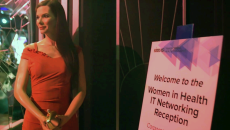
Hear remarks from women in leadership and emerging women in the field of health IT in this special reception highlights video captured at Madame Tussauds in Las Vegas from HIMSS16.
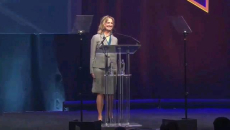
Dana Alexander, RN, kicks off the Opening Keynote session at HIMSS16 with poignant remarks about the state of the healthcare industry and how advancements in health IT have driven fundamental change - but there is still work to be done.

Denise Hines, executive director of the Georgia Health Information Network announces some exciting professional news on HIMSS Radio and highlights the Women in Health IT initiative.

Jennifer Dennard, Founder of #healthITchicks and Digital Diva for HIStalk, talks with Justin Barnes, host of HIMSS Radio, about the hottest content and topics coming out of HIMSS16.