Women In Health IT
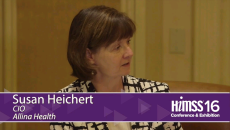
In this clip from the Women in Health IT roundtable discussion at HIMSS16, Susan Heichert and Dana Alexander talk about efforts they have made toward increasing the number of women in leadership positions in health IT.
Picture this. One of your IT leaders tells you they have been pulled into a project by a senior executive; they are trying to figure out who in IT owns it. You tell them that another of your leaders owns it. They are working out the specific issues with yet another leader. The first person says it’s still not clear. So you pull all three of them together for 15 minutes and try to sort it out.
With a collaborative team that works well together, that 15 minutes is relatively easy. Your first question is who’s on first? You want to know who owns it and what’s going on.
My team has learned that one of my questions about problems is “who wakes up in the morning worried about it?” Not that I want people worrying and losing sleep. But, it’s a way to identify who owns something and is accountable for it. “Who’s on first?” is another one of those questions. It may be a messy, complex project. It may be off to the side or on the fringe but it still needs a clear owner.
After just 15 minutes, my three leaders and I confirmed the right roles for each of them, and next steps. And of course we talked about lessons learned. So what did we learn again in this situation?
Role clarification – this is critical for all projects, small or large, high priority or not. Clarifying and communicating sponsor, business owner, project manager, and decision makers is key.
Communication – proactive communication throughout the life of a project to all members of the core team and the stakeholders is another key.
Setting and managing expectations – this is especially true when dealing with many concurrent efforts with the same set of users and stakeholders. It’s also important when a project that seems simple actually has a lot of complex issues: technical, operational, legal or something else.
I’ll bet you can think of a messy project in your experience that swirled or stalled. You might have some bad memories. Most likely, what went wrong ties back to one of these basics. So clarify roles, communicate, and manage expectations, but make sure you know who’s on first.
Blog originally posted on www.sueschade.com.
The HIMSS Innovation Center is presenting a display to Florence Nightingale on the anniversary of her birthday, May 12, which is also Nursing Informatics Awareness Day. She was born in 1820.
Nightingale is considered to be the founder of modern nursing, and many people in the field of healthcare look to her as having built the foundation for nursing informatics.
The display features a letter signed by Florence Nightingale, as well as a book she owned, donated by Maureen Mitchell, RN, associate professor, graduate program director, School of Nursing, Cleveland State University. The items are on loan to HIMSS for two years. Learn more about Nighingale’s life and contributions to nursing:
"Florence Nightingale’s focus on hygiene and cleanliness was vital to patient safety," said Joyce Sensmeier, RN, vice president, informatics, HIMSS North America.
"Her methods resulted in drastically lowered mortality rates, and improved overall hospital performance. Her ideas and reforms changed healthcare on a global scale. HIMSS strives to emulate Nightingale’s dedication to patient care and the advancement of healthcare."
Learn more about the background of the artifacts donated by Mitchell.
Listen to Mitchell’s discussion about Florence Nightingale and nursing informatics.
Patricia Flatley Brennan, a professor at the University of Wisconsin at Madison, and a former practicing nurse with a Ph.D. in industrial engineering, will take the lead as director at the National Library of Medicine.
The NLM is the world's largest biomedical library and the producer of digital information services used by scientists, health professionals and members of the public worldwide.
National Institutes of Health Director Francis S. Collins, MD, announced the pick today.
Brennan is expected to begin her new role in August 2016.
"Patti brings her incredible experience of having cared for patients as a practicing nurse, improved the lives of homebound patients by developing innovative information systems and services designed to increase their independence, and pursued cutting-edge research in data visualization and virtual reality," Collins said in a statement.
For seven years, Brennan worked in both critical care and psychiatric nursing.
As Collins sees it, Brennan's combination of skills makes her ideally suited to lead the NLM in the era of precision medicine.
She will take charge of the library as it becomes the epicenter for biomedical data science, not just at NIH, but across the biomedical research enterprise, he noted.
At the University of Wisconsin-Madison, she is a professor at the School of Nursing and College of Engineering. She also leads the Living Environments Laboratory at the Wisconsin Institutes for Discovery, which is developing new ways for effective visualization of high dimensional data.
Brennan is recognized as a pioneer in developing information systems for patients.
She designed ComputerLink, an electronic network to reduce isolation and improve self-care among home care patients. She directed HeartCare, a web-based information and communication service that helps cardiac patients at home to recover faster, and with fewer symptoms.
Brennan also directed Project HealthDesign, an initiative designed to stimulate the next generation of personal health records. She also conducts external evaluations of health information technology architectures, and works to repurpose engineering methods for healthcare.
She received a master of science in nursing from the University of Pennsylvania and a Ph.D. in industrial engineering from the University of Wisconsin-Madison. Following seven years of clinical practice in critical care nursing and psychiatric nursing, Brennan held several academic positions at Marquette University, Milwaukee; Case Western Reserve University, Cleveland; and the University of Wisconsin-Madison.
NLM Acting Director Betsy L. Humphreys led the NLM over the past year, after Donald Lindberg, MD, retired having served more than 30 years.
Twitter: @Bernie_HITN
Email the writer: bernie.monegain@himssmedia.com
Like Healthcare IT News on Facebook and LinkedIn
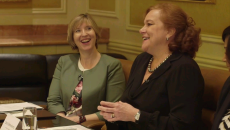
In this clip from the Women in Health IT roundtable discussion at HIMSS16, Carol Steltencamp, MD, and Sue Schade discuss the general absence of female mentorship early in their careers.
Female CEOs are doing better than ever on the compensation front, with median pay figured at $15.9 million, 21 percent higher than last year.
That compared with median pay for male CEOs of $10.4 million, which was down 0.8 percent from 2013.
Marissa Mayer, the CEO of Yahoo is at the pinnacle of the top 10 women CEO list, with a salary of $42.1 million.
The numbers come from executive compensation benchmarking firm Equilar and the Associated Press.
However, there remains a large gap between the number of female CEOs and male CEOs. The study of 340 CEOs included only 17 women.
Also, numbers can be tricky. Once they are sliced and diced, the picture comes into better focus.
Released along with the list of highest paid women CEOs, was another list – one that ranked highest paid CEOs, regardless of gender.
Mayer was the one woman to make that list – at No. 5.
As Fast Company pointed out after it crunched the annual paychecks every which way: The top two highest-paid male CEOs make more than all the top-paid female CEOs combined.
David Zaslav, the top executive at Discovery Communications, took in $156.1 million in 2014. Leslie Moonves, the CEO of CBS, made $54.4 million. Combined, that's about $210 million.
Here are the top 10 women CEOs by compensation:
Marissa Mayer: Yahoo, $42.1 million
Carol Meyrowitz: TJX Companies, $23.3 million
Meg Whitman: Hewlett-Packard, $19.6 million
Indra Nooyi: PepsiCo, $19.1 million
Phebe Novakovic: General Dynamics, $19 million
Virginia Rometty: IBM, $17.9 million
Marillyn Hewson: Lockheed Martin, $17.9 million
Patricia Woertz: Archer Daniels Midland, $16.3 million
Irene Rosenfeld: Mondelez International, $15.9 million
Ellen Kullman, DuPont, $13.1 million
Other key findings from Equilar:
For the first time since 2011, a female executive (Marissa Mayer of Yahoo!) made the list as one of the top 10 highest-paid CEOs with a total compensation of $42.1 million.
The four highest paid executives – David Zaslav, Leslie Moonves, Philippe Dauman, and Robert Iger—have all appeared in the top 10 since the study was first published.
For CEOs in the current study, median pay increased 0.8 percent between 2013 and 2014 from $10,521,653 to $10,611,031.
On average, pay packages in 2014 were composed of 61 percent equity, 36 percent cash and 3 percent other compensation.
Female CEOs are outpacing their male colleagues in pay, although they remain vastly outnumbered in the top echelons of American companies.
Twitter: @Bernie_HITN
Email the writer: bernie.monegain@himssmedia.com
New findings from hospital watchdog the Leapfrog Group shows many hospitals across the country are failing to meet national performance targets for quality of maternity care.
The study comes on the heels of Leapfrog's twice-yearly Hospital Safety Score, which assigns letter grades to hospitals based on their adherence to various safety standards. According to the report, 798 hospitals earned an 'A,' 639 earned a 'B,' 957 earned a 'C,' 1162 earned a 'D' and only 15 earned an 'F,'
[See also: Leapfrog out with troubling hospital safety numbers.]
When it comes to maternity care, facilities were deficient in a number of different areas, such as the rate of episiotomies. A once-routine incision made in the birth canal during childbirth, it's now recommended only in a very narrow set of cases; Leapfrog's target for all hospitals is to perform the incision in 5 percent or less of all cases. Yet the rates were too high among 68 percent of hospitals.
Too many C-sections were also being performed, the data showed. At 60 percent of reporting hospitals, the rates surpassed Leapfrog's target rate of 23.9 percent for all hospitals, and the variation was dramatic -- ranging from as low as 10 percent to as high as 54 percent in one unidentified east coast city.
Not all of the findings were dour. Four out of five hospitals meet Leapfrog's target of 5 percent for early elective deliveries, which are medically unnecessary inductions or C-sections performed at 39 weeks. That, the report said, means the facility is taking steps to minimize risks to the mother and child be delivering too soon.
[See also: Leapfrog Group: Rate of serious, even fatal, hospital infections still too high.]
Additionally, the early elective delivery rate has shrunk dramatically, with the national average at 2.8 percent, compared to the 17 percent reported in 2010.
But the study also shows many hospitals don't have adequate experience with high-risk deliveries. Low-weight infants born with complications are more likely to survive if the hospital has an experienced neonatal intensive care unit on-site, yet 78 percent of hospitals performing high-risk deliveries don't meet the Leapfrog standard.
"This report underscores the importance of understanding the risks associated with specific delivery choices and of improving the quality of care during birth for the wellbeing of both mothers and their babies," said Kristin Torres Mowat, senior vice president of plan development and data operations at Castlight Health, in a statement.
As the country celebrates National Women’s Heath Week this week, women at the University of California, San Francisco’s National Center of Excellence in Women’s Health, have double cause to celebrate.
It was 20 years ago the center was founded. The founding director, Nancy Milliken, continues to lead the enterprise today.
“Women were vulnerable to harm from undertreatment, overtreatment and mistreatment due to the lack of rigorous research on women's unique experience of health and disease,” Milliken said in the May 8 UCSF article.
Before launching the center, Milliken was a professor in the Department of Obstetrics, Gynecology and Reproductive Sciences at UCSF.
UCSF was designated in 1996 as one of the nation's first six National Centers of Excellence in Women's Health, sponsored by the Office on Women's Health in the U.S. Department of Health and Human Services.
The quest has always been for health equity.
“My dream would be that the need for UCSF National Center of Excellence in Women’s Health would be eliminated because sex and gender approaches to research, clinical care, education are in the DNA of UCSF, and inform health care and policy across our nation and the world,” Milliken said in the UCSF article.
The other five National Centers of Excellence in Women’s Health designated by HHS in 1996 are located at:
– Allegheny University of the Health Sciences, Philadelphia
– Magee-Womens Hospital, Pittsburgh
– Ohio State University Medical Center, Columbus, Ohio
– University of Pennsylvania, Philadelphia
– Yale University, New Haven, Conn.
Read the article here.
Twitter: @Bernie_HITN
Email the writer: bernie.monegain@himssmedia.com
This Mother’s Day, Janet Schijns, vice president, global channels, at Verizon Enterprise Solutions, pays homage to her trailblazing mother, who continues to inspire her today.
“I’ve noticed that over the past few years that fewer and fewer women are staying in tech long enough to mentor others or trail blaze for the next generation,” writes Schijns in a May 4 LinkedIN post.
“Instead of lamenting, I’ve taken action,” she writes in "The Critical Role That Mothers Play."
Read Janet’s column here.
At the start of 2016, the current installed base of wearable activity tracking devices was just over 33 million in the U.S.