Artificial Intelligence
Technology can notice oversights and help with formatting. And artificial intelligence has a role to play.
The group wants to advance the ability of augmented intelligence to enhance care, boost population health, drive value and improve physician satisfaction.
The firm says hospitals and health systems should be preparing themselves to take advantage of distributed ledger technology, AI, augmented reality and quantum computing.
Many illnesses are easy to treat if caught in time. New EHR studies show how optimizing data can spot problems clinicians might overlook.
The National Neuroscience Institute (NNI), the national specialty centre for the management and care of neurological diseases in Singapore and Iota Medtech, a local medtech company specialising in AI and surgical robotics, signed a Memorandum of Understanding (MoU) to develop a system to sort brain scans of head injury patients in order of urgency.
What’s it about
Currently, there is a significant waiting time for head injury patients requiring urgent treatment, especially when scans were received after radiologists' working hours. The 70 to 100 brain scans received daily are interpreted by radiologists in chronological order.
The development of the priority sorting system will help ensure that patients requiring immediate medical attention receive the care they need. Radiologists will be able to interpret brain scans faster and their work will be more efficient. NNI will develop the algorithm to sort brain scans using a “triage system”, with each scan labelled red, amber or green according to the urgency of medical attention.
The system will also be tested in a clinical setting, with its accuracy compared against that of radiologists in NNI. Before being implemented in hospitals, it will have to go through regulatory approval processes by the Health Sciences Authority, the national regulator for health products, which will take some time.
In the future, the system developed by NNI and Iota Medtech can be modified to treat other common conditions such as stroke and glioma (a type of brain tumour).
On the record
“Head injury was chosen as the initial focus of the system in accordance with current patient demands”, said Mr Benjamin Hong, CEO of Iota Medtech in a statement.
Associate Professor Ng Wai Hoe, medical director of NNI said, “Iota Medtech's algorithm has already passed laboratory tests for accuracy and NNI will be providing data of brain scans to continually increase the accuracy of the system. The sharing of the data will be in accordance with guidelines in the Personal Data Protection Act.”
A new AI service promises to improve physician performance by doing the typing for them.
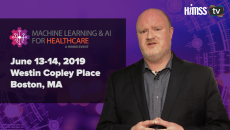
The Boston Machine Learning & AI for Healthcare event focuses on how to build healthcare data competency and acquire new AI skills.
The Joondalup Health Campus and Princess Margaret Hospitals in Australia has used artificial intelligence to accurately diagnose common respiratory disorders in children.
Northwestern University and Google have partnered to use AI technology to spot cancer earlier.
Precision medicine and clinical trial matching specialist Massive Bio is partnering with the initiative. Massive Bio’s precision medicine approach is based on a genetic understanding of the patient, allowing doctors to better select treatments most likely to help those patients.