Artificial Intelligence
The radiology provider says up to 5,400 authorizations could be required per day. Automation of the process, while maintaining a human touch, has brought many efficiencies.
Recursion releases more than 300 gigabytes of data it hopes will be a "playground" for innovative new machine learning applications.
Three representatives from their respective fields of AI – clinical practice, research and healthcare apps came together for a panel discussion around the current and future developments of AI in healthcare on the second day of the HIMSS Singapore eHealth & Health 2.0 Summit on April 24. The panel consisted of Dr Ali Parsa, Founder and CEO, Babylon Health, Dr Ngiam Kee Yuan, Group Chief Technology Officer, National University Health System, Singapore and Dr Hwang Hee, Chief Information Officer & Associate Professor, Department of Pediatrics, Seoul National University Bundang Hospital, South Korea.
The hype cycle of AI in general and in healthcare
Mr Neil Patel, President, Healthbox, Executive Vice President, HIMSS, USA, who was the panel moderator, began the discussion asking the panelists on their thoughts on the current hype cycle of AI broadly and in healthcare.
“I think at the general level, we’re seeing a much greater update of machine learning and deep learning because of the availability of two things: one is the data that becomes available and secondly, relatively cheaper or cheap computing power that one can get today.
That spurred a new revolution and allowed us to use information in ways we never thought possible. But it’s also created real challenges – one of the key things I tell every software developer is to ensure that the data is ‘clean’, that’s paramount. And I think from that point of view, we always have to think about AI with reference to the data we select,” said Dr Ngiam.
He explained that the best way to describe ‘clean’ data is to reflect reality. In healthcare data, something is usually missing or there’s too much noise or extra data points that do not necessarily contribute to the desired outcome. Another way to look at it is that the data has to be appropriately selected for the specific purpose. For example, if the purpose is to predict the length of stay at a hospital, then the length of stay data has to be absolutely spot on and all the determinants of length of stay has to be within that dataset.
Citing from his experience in the varied use of AI in the Babylon Health app, Dr Parsa said: “I think we use the word AI for a whole set of different techniques. And each of those techniques are useful for different applications. For instance, for diagnosis, you cannot use what is currently called deep learning because the likelihood of misdiagnosis is very high and the technique to be used is probabilistic graphical modelling, which is very close to probability analysis – it just happens to be that machines are better at probability analysis that the human brain can be.”
For Dr Parsa, the hype of AI is high and in the short-term, it will continue to do what it has done in the last few years but in the long-term it will surpass all the current imaginations.
The observation by Dr Ngiam is that the healthcare vertical is lagging behind in the AI hype cycle compared to industries like finance and logistics. In healthcare, the use of AI is directly affecting patients so it has to bear the same standards as other medical devices that are currently in medical practice. AI technologies in healthcare are slightly overhyped but in terms of real adoption, there needs to be factors like a really mature EHR system, good data streams, finding ways to deploy these AI technologies and training doctors to ‘buy in’ into using these technologies.
Augmenting, not replacing doctors
There are reports or articles that get a lot of press, for instance, of AI algorithms being tested against real doctors and ‘beating’ the human doctors repeatedly. The debate of whether doctors are going to be ‘replaced’ by AI algorithms is also a polarising one. However, Dr Ngiam pointed out that one of the key principles that all can agree to is that AI tools are meant to augment, not replace doctors.
“What we found which consistently (in studies) was that when the doctors took the machines’ suggestions, they were better than either the doctor or machine alone. I think that’s what we really want, that is, a combination of AI and a doctor is better than either of them.”
Adding to Dr Ngiam’s statement, Dr Parsa said, “The augmentation (of AI) to existing services is unbelievably valuable and we should not underestimate the contribution technology makes today. The contribution it makes today makes those who use it significantly better than those who don’t, that in future, makes those who don’t use it, irrelevant.”
Using AI to increase empathy
From Dr Hwang’s personal experience as a clinician in South Korea, he feels that AI can help him concentrate more on his patients compared to the conventional way of practice. For example, he takes 30 minutes to an hour to do an electroencephalogram (EEG) interpretation compared to the AI software which just takes five minutes to do the same – that frees up more time for him to communicate with his patients.
One of the biggest complaints mentioned by Dr Ngiam is that doctors spend way too much time staring at screens and they may not be looking at patients sufficiently. He explained that AI can help doctors transact a consult with the empathy that is required or that patients want from a doctor – AI can help with the hard work of summarising of key points, so that doctors are better prepared to meet with the patient, rather than for them to read off a screen.
During one of the Babylon app tests, Dr Parsa found out that it was possible to reduce the time of consultation from 10 minutes to about five minutes, which would increase the satisfaction of patients. However, his 16-year old son who also did some of the tests – found that it was not very good as he had to repeat answering the doctor’s questions after he had answered the same questions via the app.
Dr Parsa’s point was to think about the changing perceptions of humans: “For the first time in history, an 18-year old in Singapore, Korea, Iran, India, the US and the UK are closer to each other in their mentality and culture than they are compared to the past – that had never happened before. You now have a generation of human beings that behave globally in a very similar manner.
That generation does not want to spend two hours or wait for a few days to see a doctor or get a surgery, and being asked the same questions over and over again, that’s just not the way they were brought up. And we need to be very careful not to forget that shifting human culture, which is very significant.”
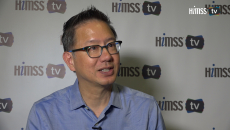
Ian Z. Chuang, chief medical officer at Elsevier, says in a traditional model, research to bedside takes an average of 17 years. With the advent of new technologies, including machine learning, that needs to change to a shorter timeline.

Dr. Chris DeRienzo, chief quality officer at Mission Health, says the industry is on the precipice of making fundamental improvement in population health with machine learning models.
Digital transformation is a top priority at most healthcare organizations today, but progress so far has been fragmented.

SPONSORED
 |
02:08 pm |
April 30, 2019
|
02:08 pm |
April 30, 2019
|
02:08 pm |
April 30, 2019
Neil Jordan, Worldwide Health Leader and Connector at Microsoft, discusses the best use of AI in healthcare, as well as issues involved with its implementation, including ethics and regulations.
Artificial intelligence (AI), neural networks and machine learning can be ethereal concepts to the average punter, but when applied to the health sector their benefits come into sharp focus.
When technology can save a life, it suddenly becomes meaningful. Magnetic fields and radio waves took on a new meaning with the introduction of the MRI machine, and the same will happen with the application of today’s technologies in the health sector.
We’re just starting to see the impact AI and image recognition can have on healthcare, but it is poised to be the technology’s biggest contribution to society yet.
Earlier this year, a group of Chinese and US researchers developed a program to automatically diagnose childhood illnesses including meningitis, asthma, gastro and the flu. This AI program works faster and, in some cases, more accurately than doctors.
However, as in the early stages of every new discovery, there are obstacles to navigate. Privacy concerns, investment requirements and regulatory issues are just some of the hurdles that need to be overcome.
Despite the challenges, there are potential benefits. Doctors are an invaluable part of society, but they are still human, and misdiagnoses happen. According to research, there are approximately 140,000 cases of diagnostic errors in Australia each year, with 21,000 resulting in serious harm and more than 2,000 resulting in death.
Modern AI promises to solve this issue through the power of neural networks. Unlike traditional software that only does what it’s told, neural networks can teach themselves new skills with enough training data. By reviewing mammograms with and without cancerous cells, for example, a neural network can learn to identify malignant cells in new mammograms.
In 2016, a research team achieved just this. The Houston-based team built a program that analysed mammograms 30 times faster than a human, and with 99 percent accuracy. More recently, Maryland researchers used AI to diagnose cervical cancer with 91 percent accuracy, vastly improving the 69 percent human success rate.
These diagnoses were all made without an expensive medical professional, and without the cost of a clinic.
The upshot is AI could offer better diagnosis, to more people, for less money, in less time, allowing doctors to focus on patients that truly need their care. Not only can technology improve current diagnostic methods, but it can also create new ones; neural networks will eventually identify links between symptoms and illnesses that human researchers would never have found.
Unfortunately, the AI healthcare revolution has a down side, and a price many Australians seem unwilling to pay.
To be effective, neural networks need the training data of many thousands of people in order to learn which symptoms correspond to which diagnoses. In the China/US study, 600,000 Chinese health records were used as training data, a feat possible thanks to the sheer size of the country, as well as China’s less stringent privacy culture.
In Australia, we’re far more protective of our data and cognizant of the implications of sharing too much.
Privacy aside, there are challenges around getting consistent data, both to teach programs and to feed them for diagnosis.
Inconsistent standards are used across the private and public sector, even between doctors in the same clinic. While getting clean data is technically possible, it could be a regulatory and administrative nightmare.
Despite the obstacles, AI’s potential benefits to healthcare are not just worth pursuing, they should be a priority. Just as governments are now (rightly) planning for the arrival of self-driving cars, we need to plan for an AI powered healthcare system today.
Standards on access to data need to be agreed upon, along with a transparent and open opt-out process. A standardisation of medical data is also long overdue. More than just setting us up for the benefits of AI, patients would see immediate benefit from more consistent data recording.
It’s a long road between here and a world of automated and accurate AI powered healthcare, but it’s one we should start preparing for today.
Without this preparation we’ll see more noble but half-baked ideas launched before they’re ready, eroding public trust. It’s a world we can see, but one we can only reach with a clear-eyed vision of the journey ahead.
Allan Waddell is the Founder and Co-CEO of Kablamo
Organizations aim to advance the radiology community’s use of existing and emerging technologies.
As health systems merge, the need to reconcile data sets from disparate EHR systems for population health and quality improvement is critical, and artificial intelligence can help, the company says.