Artificial Intelligence
The CEO says cash raised by the stock offering will help broaden the analytics and data capabilities it can offer its payer and provider customers – and drive innovations in AI, blockchain, robotics and more.
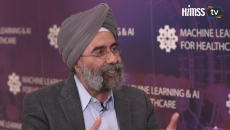
The most promising use case for blockchain in healthcare is the elimination of "redundant work, rework and reconciliation," says Tej Anand, professor of practice at the University of Texas' McCombs School of Business.
Buzzwords like Artificial Intelligence (AI) and machine learning are commonly heard at conferences and industry events and they often conjure up images of robots or killing machines from the Terminator. However, panelists from the Innofest Unbound conference in Singapore all felt that technologies such as AI should not replace humans as it is commonly imagined – rather, they should augment the work of clinicians and hopefully, even enhance the patients’ interactions with their doctors.
Human-centric AI
A medical doctor by training and also the founder of MEDGIC, a startup which utilises AI to detect skin conditions, Dr Reid Lim feels that the use of AI should always involve doctors and not replace them.
“Healthcare systems are becoming unsustainable and we need AI to help automate some things and to help alleviate the burden on doctors. AI is not new and it seems strange that some people are only beginning to grasp the use AI.”
“A lot of radiologists are already using Computer Aided Diagnosis (CAD) for mammography and it has been happening for some time. So the idea is for us as a tech startup to pursue what we call human-centric AI. We try to make AI as explainable as possible and we always want humans to be involved in the whole process,” he added.
Dr Philip Wong, a practicing cardiologist and founder of WEB Biotechnology, concurred that as doctors, there is a sense of compassion and empathy to want to help patients regardless of their health condition, and that is something AI cannot do at the current moment.
“Anything thing (or tech) that is adopted by the hospitals, we always have qualified specialists or ‘men/women in the loop’. For instance in radiology, even though a lot of analysis is done by AI, in the end the person who signs off is the radiologist or specialist radiologists who have to sign off the report.”
“We’re not afraid of losing our jobs as healthcare providers, and in this respect, what I think most people or most healthcare providers don't understand is the benefit that you get from the first problem I pointed out, right? The problem is we have a whole huge plethora of data, which we're trying to analyse but we haven't got a sense of it. So you pop up the electronic health records, right, I see two computer screens with approximately 1000 fields. I've looked at this, analysed all this and this is where I think AI can really help the doctor, the patient as well,” said Dr Wong.
Meaningful and novel applications of tech
Mr Chua Chee Yong, Emerging Services & Capabilities Group, iHIS, the IT agency for the Health Ministry in Singapore, shared that there are possible concerns about specialists being ‘replaced’ by AI even after years of training and practice. However, he stressed that it is about how to meaningfully apply technologies so that it makes a difference.
“We all know today that AI is not quite explainable, not quite there yet. What do we do? We can choose to ignore it and only use it when AI reaches a point that it is explainable. Or we can choose to apply it in a safe way that allows us to improve our productivity.”
“The example in this case is retinal image scanning. We use a simple AI to do a simple classification of ‘normal’ vs ‘abnormal’. Guess what, 70% of the normal cases got eliminated by AI and the leftover 30% are read by the human being – productivity suddenly increases and the person just focuses on the very complex 30% abnormal cases. The accuracy also improves – you see how we apply it? Despite the constraints and limitations of AI, if we apply it meaningfully, we can harness value out of it,” he explained.
Looking into the future
According to Dr Wong, what he sees in the future is that data is becoming more ‘fluid’, for example from the Spyder wireless ECG monitor that he invented. For example, even if someone is wearing the ECG monitor in the US, the ECG data can be acquired by the doctor back in Singapore almost instantaneously.
Another future development that is very exciting for Dr Wong is that the smartphone will become the ‘replacement’ of healthcare in many respects, becoming the apparatus and interface to make an appointment to see a doctor, collect health information and do much more.
He concluded with a wish as a doctor for a ‘digital health persona’ for patients, to get a lot more health information from them and try to solve their problems. With the digital health persona, health information is being collected continuously, even outside the hospital and the information can even be front-loaded to the doctor before the patient sees him/her. This gives the doctor a broader picture of the patients’ health.
Pre-treatment scans were input into a deep-learning model, which analyzed the scans to create an image signature that predicts treatment outcomes.
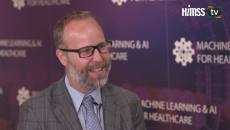
Chad Konchak, assistant vice president of Clinical Analytics at NorthShore University HealthSystem, says the challenge is not so much in the technology development but in the cultural maturity for people to realize what the data can do for them.
The new voice-driven capability enables Amazon's Echo device to provide additional services, such as the ability to search for dentists or pediatricians.
SPONSORED
 |
02:30 pm |
June 25, 2019
|
02:30 pm |
June 25, 2019
|
02:30 pm |
June 25, 2019
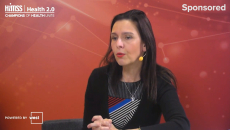
Elena Bonfiglioli, Microsoft's regional business leader of Health and Life Sciences at EMEA, says empowering clinicians through collaboration and coordination is at the core of improving outcomes through personalized care.
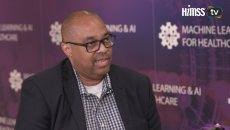
KVC Health Systems CIO Lonnie Johnson describes the predictive modeling goals and first steps toward AI and machine learning of the multi-state provider of foster care and adoption services.
The White House wants "explainable" systems for healthcare, not black boxes, and wants research into new technologies that are "reliable, dependable, safe, and trustworthy."
Duke University Health System Chief Analytics Officer Stephen Blackwelder says interventions are the hardest part as disparate data has to be interwoven for behavior change if risk is to be mitigated.