Artificial Intelligence
The open source Penn AI is a self-service tool designed to accelerate biomedical research.
SPOT platform uses algorithms to pinpoint critical data points in EHRs, the system says.
Even as EHRs, telemedicine and AI continue to transform clinical practice, certain core human qualities – civility, respect, empathy, collaboration – are "what make us valuable."
Cosgrove said hospitals have to up their game to harness emerging technologies.
King’s College London and NVIDIA are collaborating on a new platform that will broaden the scope of AI in NHS hospital radiology services across the UK.

BeCare Link CEO Alan Gilbert says the digital therapeutic company is using artificial intelligence to predict disease progression for multiple sclerosis patients – helping improve care, lower costs and decrease hospitalizations.
New data suggests that artificial intelligence can identify patterns that indicate breast cancer development.
The academic medical center and the physician-owned malpractice insurer will explore how AI can be integrated into the workflows of frontline clinicians to reduce errors, boost quality and safety and improve patient experience.
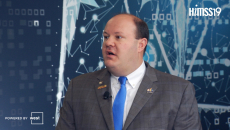
The Regenstrief Institute is working to automate the delivery of data into dashboards to reduce the burden of professionals looking at population data, says Health Informatics Director Brian Dixon.
Health application developer Clarigent Health is teaming up with The Children’s Home of Cincinnati to complete a pilot study using Clarigent’s artificial intelligence-powered mobile decision support app.
The platform works by analyzing linguistic and vocal characteristics of sessions between therapists or physicians and patients to provide a near real-time assessment of a patient at risk for suicide or mental health conditions.
WHY IT MATTERS
Clarigent’s application uses advanced algorithms to analyze linguistic and vocal characteristics collected during therapy sessions from clients of The Children’s Home, a provider of education and mental health treatment for children.
In the pilot, titled Classification and Assessment of Mental Health Performance Using Schematics, or CAMPUS, 20 therapists working in multiple elementary, middle and high school settings across southwest Ohio will deploy the mobile app to record regularly scheduled sessions with students.
"This technology has the potential to change how mental health services are administered on a global scale,” Children’s Home President and CEO John Banchy said in a statement.
While previous clinical studies have tested the technology in hospital and emergency room settings, with results published in peer-reviewed journals, CAMPUS marks the debut of the app in a school environment.
Participation in the pilot and recording requires the consent of the student and parent or guardian, and the schools have also granted consent.
The research team hopes to obtain 400 to 600 recordings in this initial phase, before progressing to a larger study in the fall involving several thousand students.
Clinicians, who make the ultimate decisions on treatment, can use the app's assessment and recommendations to help inform and guide them.
The goals for the pilot aim to show the app can be integrated into a normal therapy session without interfering with the session, and to ensure the app can receive audio of sufficient quality in a school setting to enable analysis by the app.
The fall study will include control participants from the general student population in addition to screening for a more diverse set of behavioral health conditions.
THE LARGER TREND
While initially focused on suicidality and mental health, Clarigent is looking at other areas – both inside and outside of healthcare – where its technology platform can also be leveraged.
In addition, Clarigent intends to conduct and publish additional studies supporting and underlying the rationale for the recommendations provided by the app to better enable clinicians to independently review the basis for the recommendations.
ON THE RECORD
"This technology was invented in response to a need expressed by medical professionals who work with young people in crisis,” Clarigent Health CEO Don Wright said in a statement. “This study is an important first step in moving the technology from the hospital and research bench into the real world where kids are every day."
.jumbotron{ background-image: url("https://www.healthcareitnews.com/sites/hitn/files/u6245/digital%20transformation%20jumbotron.jpg"); background-size: cover; color: white; }
.jumbotron h2{
color: white;
}
Digital Transformation in Healthcare
In May, we'll talk to experts and professionals on the front lines about what's really happening today with the digital transformation in healthcare and what hospital executives need to be doing right now.
Twitter: @SullyHIT
Email the writer: tom.sullivan@himssmedia.com
Healthcare IT News is a HIMSS Media publication.
Nathan Eddy is a healthcare and technology freelancer based in Berlin.
Email the writer: nathaneddy@gmail.com
Twitter: @dropdeaded209
Healthcare IT News is a HIMSS Media publication.