
Bill Siwicki

The program is designed to accelerate digital health technologies and enable innovation to improve patient care.

The Trustworthy & Responsible AI Network, or TRAIN, aims to put responsible AI principles into action to enhance the quality, safety and trustworthiness of healthcare AI.

A doctor of pharmacy explains why it's more important than ever to reduce alert noise and help clinicians who are struggling with burnout – and discusses the technology behind the scenes.

These technologies can help cure healthcare worker burnout, patient confusion and inefficient communications between care teams, says a top exec and nurse.
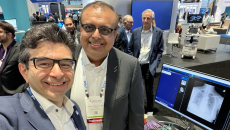
The model can be used to create products that improve the way radiologists, technicians and support staff interact with medical images, the company's CEO says.

At HIMSS24, the medical AI vendor has unveiled the next generation of its medical AI platform, a collaborative effort between medical expertise and the best that artificial intelligence has to offer, its CEO says.

That's the message Talkdesk VP Patty Hayward is sending at HIMSS24, because, she says, contact centers have a high impact on patient experience, offer nonclinical use cases for AI, and keep humans in the loop.
Boosts to Oracle Health Data Intelligence include system performance improvements, prebuilt clinical quality analytics and automated alerts that can help increase reimbursements and enhance care.

In total, the company is offering its cloud clients updates to Vertex AI Search, Healthcare Data Engine and MedLM, designed to improve patient care.

At HIMSS24, the company, known for its digital approach to brain health evaluation, also has revealed it has acquired Aural Analytics, a vendor of clinical-grade speech analytics.