Workflow
Finding the best care for a patient can be a constantly moving target. The number of stakeholders, the constant advance of new information and treatment options and the nuanced demands of different payers make for a maze of complexities to navigate.
In the field of oncology, for example, nobody but a specialist could be expected to keep up with the growing wealth of knowledge in the treatment of individual cancers.
Yet most patients are treated by general oncologists who may not be abreast of every best course of action for specific conditions. These practices might not know which treatments a patient could be pre-approved for, or which payers are most likely to compensate and for what.
As the practice of tailoring precision medicine plans for each patient takes hold, physicians are being asked to make more specific treatment decisions than ever before.
"You have labs, you have payers, you have providers and you have pharma – and they’re all interested in what the doctor is about to do with a patient," said Clynt Taylor, CEO of Intervention Insights, which makes a tool called Trapelo that helps streamline treatment and payment options.
Taylor says that giving an oncologist "an opportunity to see what they should be ordering based on the clinical scenario" empowers them to make the best decision for the patient.
Information is inspiration
"Most doctors have a good idea of what they want to do," said Taylor. "It’s information access that’s really holding up the process: ‘I didn’t know the lab could do that, I didn’t know these genes should be tested.’"
Effective deployment of an IT system that can gather all of this information and put it at an oncologist’s fingertips, integrated into their workflow, helps align the interests of everyone involved.
In precision medicine, every decision has to be tailored to the patient at hand. This requires significant knowledge about everything in a field where treatment options and knowledge about the disease are advancing rapidly. Doctors need to know their options in a way that relates to the patient and which a payer will approve.
"If I order a test, will I get a treatment option that is supported by clinical evidence?" said Taylor. "Or will I get treatment options I can’t use?"
Taylor notes that health plans "will pay if there’s evidence."
But that puts the onus on providers to have conversations with the payer at the beginning of the care process to build a case for a specific treatment regimen. Integrating payers into the treatment option plan helps form a more granular narrative of care.
"Payers not usually involved until the end of treatment selection process," said Taylor. "Docs go through the process, made treatment decisions, submitted to payer and the payer says ‘what’s going on?’ Involving them earlier in the process avoids the situation where payer prior authorization is a holdup."
Having a picture at the onset of care of how to proceed and the likely outcomes enables a much better relationship with the payer and delivers the most effective care possible for an individual.
Deep insights have been helping physicians predict the best treatment course in a number of fields; tying the process to the payer conversation makes for a more streamlined transition from treatment to payment.
Taylor notes that as more data is amassed about precision health, the more seamless the whole process will become.
"The more we can streamline communications through automation, the faster a decision can be made," he said.
Benjamin Harris is a Maine-based freelance writer and former new media producer for HIMSS Media.
Twitter: @BenzoHarris.
As companies work to improve their drug discovery processes and foster other new innovations, cloud technology is enabling easier collaboration among researchers worldwide.
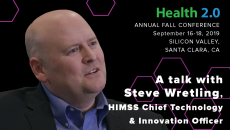
HIMSS CTIO Steve Wretling discusses new ways data and technology application will improve the future of care.
Four experts offer advice and best practices for how to launch and maintain success with technologies that boost engagement and improve the patient experience.
The health system has seen a 779% increase in primary care online visits scheduled and a 72.5% increase in urgent care online visits scheduled. It's all part of a larger online vision.
As use cases for healthcare video technology get more diverse, its best to take a full lifecycle approach that's managed centrally with standardized capabilities, says John Donohue, Penn Medicine's associate VP for enterprise infrastructure services.
Universal Health Services runs more than 15,000 tests per day to ensure that patient-critical applications and records are available for physicians and clinicians.
The research was carried out by the Federal Association of Private Providers of Social Services earlier this year.
The Guam Department of Public Health and Social Services has confirmed 1,417 TB medication doses from 35 unique patients, saved $21,255 in staff time, saved $3,457 in gasoline, and cut 700 hours of driving time.
Capital and Coast District Health Board (DHB) in New Zealand is piloting the Resident Guide app for onboarding junior doctors.
The six-month pilot begins in mid-August and involves all resident medical officers (RMOs) at Wellington Hospital.
Junior doctors are rotated around hospitals four times a year and need to quickly upskill on the way things are done at each new location, such as how to book tests and consults with other specialties.
The cloud-based Resident Guide app provides access to a combination of local operational and clinical guidelines.
3DHBs (Capital & Coast, Hutt Valley and Wairarapa DHBs) chief clinical information officer Steve Earnshaw said the aim of introducing Resident Guide is to make access to essential information easier for RMOs to find and engage with.
Earnshaw added that local information is already being loaded into the app and the August start date will provide time to fine tune and make improvements before the transition period in November when a new group of RMOs arrive.
“Change-over is always a difficult time and this will help the new RMOs by providing them with everything they need to know on an app on their phone,” he said.
MedApps co-chief executive Tom Collins said the regular movement of junior doctors is like starting a new job every few months.
“The information is all site specific, so they have to start from scratch every time,” said Collins.
“Resident Guide means that when you rotate you are not making mistakes and it’s a confidence builder for junior doctors who are trying to do the best for themselves and their patients.”
The platform is already live at 28 facilities in Queensland, Australia, where it is also being used by nursing staff.
This article first appeared on eHealthNews.nz.