Telehealth
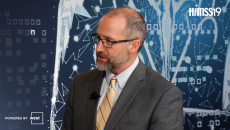
David McSwain, interim CMIO at Medical University of South Carolina, says the tech has evolved enough that virtual visits now include entire care teams in ways that just aren't possible when clinicians are using phones.
Two Australian doctors have collaborated in creating a new telehealth web portal to provide dermatologist services to rural and regional Australia.
Dermo Direct Co-founders Dr Christopher Ross and Dr Dev Tilakaratne decided to band together for a real-time telehealth video consultation service as they aimed to bring dermatology to those who would otherwise struggle to access such care – due to distance, mobility, being short on time or other issues.
“We created Dermo Direct to help with the follow-up of our pre-existing country patients and for any rural patients that have limited access or have to pay a lot of money to travel and see visiting dermatologists across various parts of Australia,” Ross told HITNA.
“A lot of dermatology diagnosis is visual, so this service speeds up diagnosis and management.”
Dermo Direct covers all dermatological cases but has limitations on skin cancer checks or skin lesions suspected of being connected to skin cancer.
Ross said unlike other telehealth platforms, Dermo Direct brings the web-based portal direct to patients, as the GP isn’t also required to be present to coordinate care.
“We ask the GPs for referrals direct to our service. All the patient then has to do is log on to our website and input their information, photos, or any other data necessary and book an appointment with a dermatologist,” he said.
“Using a smartphone, tablet or computer with the usual microphone, camera and speakers that you would use for a standard video call such as Skype, Gruveo or Facetime, we then have that consultation with the patient.
“The resulting bloodforms are electronically sent to the patient’s email, while a letter of diagnosis goes to the patient and to their GP. Not all pharmacists accept electronic copies, so at this stage, we also send them a hard copy of the prescriptions through mail,” he said.
[Read more: Mobile app brings specialist advice to burn victims | How can Australia do remote healthcare better?]
Ross said none of the teleconference videos are recorded but the notes and photos from the telehealth consultations are kept on a server in Darwin Dermatology, a private clinic that Tilakaratne runs.
“We treat patient information just as how we would in a face-to-face consultation. As for the photos sent through the system, they are stored in a compliant program and the patients are given the option of uploading them when they first book online.
“From a patient’s perspective, nothing changes because we treat the photos that they send us how we would if we took them ourselves in a clinic and uploaded them onto the system,” Ross mentioned.
Dermo Direct is predominantly targeted at Australians living in rural and remote parts of the country, but isn’t only limited to patients in those areas.
“As the Medicare rebate still exists for rural patients, and those in nursing homes, for example, the out-of-pocket cost isn’t as much as them having to see a visiting dermatologist. The website is set up to see if a patient is eligible to use the rebate, using their postcode.
“The service is also eligible for those residing in cities, but they wouldn’t be covered by the Medicare rebate, so their out-of-pocket would be much higher. But sometimes the waiting time to see dermatologists can be up to six months in cities, so they can opt to use this service instead.”
Currently, Ross and Tilakaratne are the only two dermatologists currently available on the platform, but Ross mentioned that there is capacity to bring on board other dermatologists if the platform picks up pace.
Moving forward, Ross also said he envisions for Dermo Direct a reach beyond just dermatology.
“We would like to get other specialists involved with telemedicine as well, to amplify efficiency for both a business model and a patient model,” he added.
Whether it's after-hours coverage at skilled nursing facilities or connected tools for home health monitoring, remote care technology is reaching maturation just when it will be needed most.

Health IT implementation best practices series examines in-depth what it takes to deploy today's most necessary technology and tools
With increasing buzz around population health and social determinants of health, those two forces are poised to change philosophies around care delivery and how a hospital or health system works to keep the surrounding community healthy. While that likely means good things for patients and outcomes, it also drives more sharing, more data and more risk of losing your privacy.
There is also a big push for increasing a patient’s autonomy around their personal health information and the access they have to it, especially via personal devices which are likely to be used in the future to communicate directly with providers, if they aren’t already.
There is also the continued push toward interoperability and the use of AI and machine learning. David Finn, EVP of Strategic Innovation for CynergisTek, said that while all these things carry huge potential to positively impact healthcare delivery, they also create new dimensions of risk when it comes to cybersecurity.
“It has been my mantra for ten years that we have to change the way we think about data. It is our most valuable asset. It’s how we run our business and care for patients. But we have not adjusted our thinking about data to how the bad guys think of it. Until we think about what you could do maliciously with that information, I’m afraid we will not catch up with them,” he said.
Many of these trends are already exploding, so it’s no surprise then that they are all included in Finn’s list of top cybersecurity issues healthcare will face in 2019 and 2020. If they aren’t on your list of concerns, Finn says they should be.
1. FHIR and APIs
New proposed standards for interoperability and new FHIR standards for letting systems share health information, as well as facilitating patient access through open APIs, recently made waves through the healthcare landscape. Just as patients have access to other personal information like banking via apps on their devices, the notion is that they should have equal access to their PHI. Finn said that while he doesn’t disagree with that concept, data standards for APIs were proposed but no one talked about security, even though he said APIs are a known security risk in most industries. Such standards and policies need to have cybersecurity standards embedded as well. That means they have to be as big a part of the conversation as patient care itself.
“To call for that kind of sharing without addressing security points back to all the issues we had in 2018 and prior. We just haven’t elevated privacy and security to the same level of understanding or given it the same seat at the table as we work through a lot of these issues.”
2. Keep your business associates close and your data closer
In 2018, the number of cyber incidents related to business associates climbed, yet the concept of clinically integrated supply chains is gaining traction because it is a faster and more efficient way of operating, Finn said it also increases risk and exposure to third-party error or misconduct.
“Unless we design all these things with the security built in up front, I’m afraid we may actually be making things worse for ourselves,” he said.
3. Digital transformation and the silver bullet
That transformation, including telehealth, personalized medicine and the use of connected personal and medical devices, is most certainly upon us. While all those methods represent a potential positive impact on care and outcomes, they also mean more data, more formats, more cloud development and they all require specialized security needs, especially when it comes to medical devices. When it comes to medical device security issues, Finn said there are dozens or hundreds of vendors who claimed to have solved medical device security. They get a “fancy new tool” they think will find and fix everything. The inherent problem with the “silver bullet mentality” is tools are just tools.
“A stethoscope has never cured anyone. An x-ray has never healed a broken arm. They are very helpful in figuring out what’s wrong but we are getting away from basics by thinking there is a silver bullet. At the end of the day, it’s going to come back to using those tools to find out where your issues are and what you need to do. But we need people to go in and do that work.
If there is one area of innovation taking the healthcare world by storm, it’s AI and machine learning. And with good reason. From claims processing to diagnosing cancer, Artificial Intelligence seems to have limitless potential is numerous sectors of care delivery and operations. But much like the headaches we so often hear about when it comes to launching EHRs and other innovations, AI has the potential to be launched badly. And such tools can also expose systems to risk if security is an afterthought, not an equal player.
“It takes a really smart person who understands the data to look at what those systems are telling you and make adjustments that actually improve what you are doing. My hope is we start thinking about the security before we start jumping on all this new stuff. We have to do it. There’s no argument about that but we have to do it right.”
4. Moving to the cloud
Cloud computing presents another double-edged sword in that operationally, it is cheaper and more efficient, at least when it comes to up-front costs. Moving more data and applications to the cloud and getting that processing out of data centers ]makes a lot of sense, he said. But the pitfall is the frequent perception that once we have given something over to a cloud vendor they are going to protect it. Third party risk and lack of understanding of what the cloud model really means, how you recover when a cloud-based system goes down or in the case of an attack, the response, is going to be very different with a cloud-based system versus if all that data and applications were in your data center, where you have control over everything.
We need to back up and look at how we are doing it, Finn said. First and foremost, more front-end vigilance is needed when it comes to arbitrating contract requirements and fleshing out potential vulnerabilities. And whether you are cloud-based or if you are keeping it all in-house, you still need a detailed response plan and recovery team for if your cloud goes down or is taken down by cybercriminals.
“Just like in your data center you have to have a disaster recovery plan and you have to test it, you still have to have an incident response plan and you have to exercise it to make sure you’re not missing anything,” Finn said. “And we just typically don’t do that with our cloud providers.”
5. Phishing is still a force to be reckoned with
Finally, Finn said that despite rampant usage and success with phishing attacks by hackers, awareness and training related to phishing-related events actually went down from 2017 to 2018. In fact, 2018 had more phishing attacks than ever before in healthcare. It is imperative that this seemingly simple method of invasion be treated with the utmost urgency.
“It comes back to awareness and training which will keep us focused on the real issue which is how we think about data and how we use it,” Finn said.
The company will help the academic medical center build out its Medicare Advantage plan, as well as developing new AI-powered diagnostics, clinical pathways and more.
In a bid to better understand the molecular mechanisms underlying cancer, several healthcare organisations have banded together to develop the use of VR in its diagnostics.
The team, composed of CSIRO Australia, the Garvan Institute of Medical Research, the Children’s Cancer Institute and Start VR, is using VR to create 3D models that visually represent what’s happening within cancerous tumours on a molecular level.
Sony Foundation and Tour de Cure have provided $240,000 in funding.
The research involves genomic sequencing (the information encoded in a cancer’s DNA), giving researchers more detailed insights into the molecular mechanisms of a particular cancer.
The project draws on Aquaria, a web-based protein visualisation tool that was jointly developed by the Garvan Institute and CSIRO. Aquaria provides details of millions of proteins and allows these models to be assembled into dynamic representations for interactive exploration.
“The Garvan Institute will be drawing on our online resource, Aquaria. Software development will be driven by Garvan’s BioVis team, in collaboration with CSIRO’s Immersive Environments Lab,” the Garvan Institute of Medical Research Project Leader Seán O’Donoghue told HITNA.
“Planning, testing and validation of the developed system will be completed with researchers from Garvan’s Cancer Division and UNSW’s Children’s Cancer Institute. Deployment of the platform for use in VR environments will be completed by Start VR.”
DERIVING OPPORTUNITIES FROM CHALLENGES
According to O’Donoghue, cancer is an extremely complex disease of the genome and requires an overwhelming amount of data sets when it comes to researching it.
“Adding to the complexity, the initial DNA mutations that first lead to a tumour undergo subsequent mutations, further altering the cancer. Recently, it has become feasible to detect these changes via DNA sequencing; this offers us unprecedented detail on a specific cancer,” he said.
“But the volume and complexity of the resulting datasets can be overwhelming. Researchers are still trying to work on how to condense this information down to the most essential. One of the main strategies involves mapping the consequences of DNA mutations onto 3D models of proteins, and this is what our current project aims to do.”
O’Donoghue said the new tool will automatically identify protein structural states related to specific DNA mutations seen in a patient’s cancer.
“In many cases, the available 3D-model data can provide insight into the molecular mechanisms causing the cancer, as well as information relevant to treatment. Our new tool will use VR and web-based technologies, with the goal of helping researchers arrive at a clear visual hypothesis that describes what they believe is going wrong in a specific cancer, and then how it could be treated,” he said.
“Our tool will also be designed to help researchers clearly communicate their visual hypotheses to colleagues, clinicians and to patients.”
[Read more: Mobile app brings specialist advice to burn victims | CSIRO lays out action plan for Australia’s digital health future]
Although it’s primarily a research tool, O’Donoghue said the platform will also be designed for use in hospital scenarios. He also mentioned that the technology will pivot the future potential of VR for cancer research.
“By combining good user experience design and graphic design, together with DNA sequencing and structural biology, VR and AR will give researchers new insight into the molecular mechanisms underlying specific cancers, thereby enabling the discovery of new treatment options. This could transform practises in oncology,” he said.
O’Donoghue added that it has the potential to be used in other areas of research.
“VR can be useful for helping researchers explore other unfamiliar territories. Very similar approaches to ours will be useful for addressing a range of problems in the life sciences,” he said.
“This includes other diseases, as well as research aimed at improving our understanding of the fundamental processes of living cells.”
During the first year of tele-ICU, the technology helped save 125 lives, reduce ICU length of stay by 34 percent, reduce the sepsis mortality rate, and more.