Telehealth
The two-state health system will leverage technology from from Advanced ICU Care, as well as the clinical expertise of its advanced practice providers, intensivists and nurses.

Samsung Healthcare Senior Manager Jerry Berger says the consumer electronics maker is looking to make a mark in healthcare by offering its mobile devices and Knox software platform as the powerhouse behind its partners' solutions.
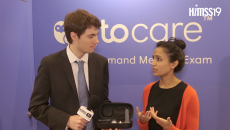
TytoCare’s connected telehealth device can improve diagnostic accuracy, according to Director of Provider Solutions Shriya Palekar.
Clinicians at the Bowen Center give trust back to IT staff after new network infrastructure install…
Poor networking was hindering growth at the health system. With new tech, the clinician satisfaction rate has soared to 95% and network uptime is up to 99%.
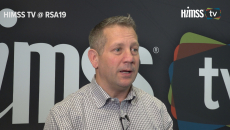
The use of mobile and IoT devices will bring better healthcare delivery to the edge of networks as 5G becomes more prolific in the coming years, says Cradlepoint CSO Todd Kelly.

Anton Arbatov, senior director SOC Telemed, says telehealth tools can enable faster access to care and help emergency clinicians make decisions at the bedside to reduce unnecessary admissions and length of stay, thereby saving money.
"Telemedicine optimizes our practice's capabilities, and also improves our patients' outcomes," said Dr. Robert S. Kaufmann of the internal med practice.

Brazil is facing many of the problems common in other countries, notably interoperability, privacy, infrastructure, a large population and the combination of private and public health, says E-VAL Saúde Director Luis Gustavo Kiatake.
Telehealth technology has helped the Friedwald Center reduce hospital transfers for falls by 90 percent, and transfers for dementia by 83 percent, among other quality improvements.
ACT Health is rolling out Wavelink’s Spectralink Versity enterprise mobility solution across five of its facilities, including Canberra Hospital.
The deal involves the roll out of 2000 of the Spectralink Versity handsets by July.
Spectralink Versity is an Android smartphone, purpose-built for healthcare. It is durable, waterproof, and has secure messaging capabilities, in addition to personalised settings for each user.
A higher-grade model has a barcode scanner, which enables integration into EMRs.
ACT Health will be using a combination of both models.
Wavelink Health Practice Lead Alan Stocker told HITNA that part of the evaluation criteria that it went through was a checklist of requirements such durability, being able to be used with medical gloves and a single sign-on for practitioners.
“ACT Health is effectively ditching the utility belt, which sees healthcare professionals carrying a number of utility devices like hospital issued phones, pagers and barcode scanners. They carry around about five devices at any given time,” he said.
“As it was managing a number of devices, this also meant that it had in place different maintenance contracts and multiple relationships with various vendors. And even with a number of devices, they weren’t delivering on what ACT Health wanted to do.”
Spectralink Versity eliminates that as it integrates all the uses of multiple devices into one.
According to Stocker, the units are designed to be used in an enterprise environment and also integrate with EMRs.
“A medical practitioner doing their rounds can go up to a patient, load up their EMR app, scan the patient’s hospital wristband, which then brings up their information,” he said.
“In addition, before we sell this to a hospital, we look at their wi-fi networks and make sure that it’s enterprise-grade. This means that we make sure of coverage no matter where Spectralink Versity is being used in the facility as if there’s a black spot, the healthcare professionals are not going to be receiving critical messages.”
[Read more: ACT Health replaces outdated bedside whiteboards with digital bedside technology | Royal Darwin Hospital improves patient care with virtual desktop program]
The devices connect to an electronic dashboard, which manages a number of functions, such as real-time staff whereabouts and rostering.
Stocker said with interoperability and connected devices becoming more prevalent in other parts of the world, Australian healthcare organisations need to keep up to stay ahead of the curve.
“In Australia, we haven’t quite seen the adoption of many smart devices in hospitals. We’re about five years behind to countries like the US. So, connected health is a huge part of Wavelink and we’re now driving this strategy to make healthcare easier for practitioners,” he added.
Spectralink Versity has also been taken by Northern Hospital in North Melbourne, a number of aged care groups including Arcare, Shepparton Villages, TLC Aged Care and Townsville Aged Care, as well as in smaller quantities at a couple of other hospitals.
The company is also running a number of proof-of-concept trials with hospitals and state health groups around the country.