Telehealth
Healthcare leader representatives from Singapore, Australia and the Philippines took centre stage as the HIMSS Singapore eHealth & Health 2.0 Summit officially kicked off on April 23 with the CXO Panel session on the topic of disruptive innovation for value-based care.
“Today’s healthcare model is based on ‘more is better,’ but I think the healthcare model of tomorrow ought to be when ‘better is more.’ When we look at that shift from the volume to value-driven care approach to how we are going to look after our patients, and take care of them with themselves being ‘activated’ to so, it will change the paradigm of how healthcare is interpreted and can be delivered,” explained Dr. Eugene Soh, chief executive officer, Tan Tock Seng Hospital, Singapore.
According to Dr. Soh, what value-based care means to him is the idea of how to expand value over time and space because value is delivered today in a very episodic manner and he believes the future will be a more relationship-based model.
From his experience working in the Philippines, Mr. Christian Besler, chief digital officer, Ayala Healthcare, said that what value-based care means to him is threefold: bringing about affordability, accessibility and quality of healthcare to the masses, especially in a country where good quality healthcare tends to be concentrated in urban areas.
The role of telehealth
Dr. Stephen Chan, chief medical information officer, Woodlands Health Campus Singapore, who was also the panel moderator, posed the question on the role of telehealth in Singapore to the panel: Despite the country’s small geographical size, could telehealth be customised to the local population? Is it more than just “access” for the modern day consumer?
Dr. Soh cautioned that the idea of telehealth should not just be transactional in nature but that care can follow the patient – it is about a community of carers that work with the patient. Mr. Besler echoed a similar sentiment: “Telehealth should not just be about the monetary value, it should be about bringing value to patient, allowing them to choose encounters with healthcare based on their time and convenience.”
Although he did not have a direct experience from the perspective of a private healthcare provider in Singapore, Dr. Peng Chung Mien, chief executive officer, Farrer Park Hospital, said that his hospital is currently on a trial with insurance companies to use telehealth for assessment to see if clients need to physically go to an emergency department for treatment. This is in the context in which there are a lot of instances of people going into hospitals’ emergency departments for non-emergency-related cases.
He added that the Ministry of Health’s regulation is that the first consultation of the patient with the doctor should always be in-person, and only subsequently followed up with telehealth sessions if required after the relationship has been established.
Rethinking the patient experience
The ongoing theme during the panel session was back to the fundamentals in healthcare: how to bring about value, ultimately for patients and how to empower them. In short, how can patients be empowered to have ownership of their care? Mr. Besler shared that it helps to give patients access to their healthcare data and records, empowering them with information and advice, having that constant encounter of care that will improve their experience.
Sharing his perspective from Australia, Mr. Chris Mitchell, executive director of Information Communications & Technology, Hunter New England Health District, said that while it is relatively new, there is a movement toward the tagline "Nothing about me, without me," that is, really putting patients at the centre of care and any decisions being made is made in consultation with the patient.
Parking of cars might be an afterthought for hospital design, but one of the patient-centric features that Dr. Peng said is happening at Farrer Park Hospital are parking spaces that allow two cars to park alongside each other yet also accommodate space for wheelchair and lift access.
“I think patient experience assumes a very linear relationship with the patient, one that happens at intervals and transactions in the healthcare model. My dream is that we have a better way to build a relationship with our patients,” Dr. Soh ended the session on a philosophical note.
The deal will enable patients in China to access U.S. physicians via a portal.
Swinburne University of Technology, a public university located in Melbourne, Australia, has partnered with Coviu, a telehealth software platform, to further embed digital health technology in the classroom, clinic and research.
What’s it about
The partnership will engage students studying health-related courses, and the wider community, in using the latest telehealth technology, equipping them to treat Australians remotely and redefine models of healthcare.
Coviu, a company that specialises in online health consultations, will provide access to its technology for Swinburne students, researchers and clinical services. Coviu is also a finalist and winner of the 4th Innovations Challenge Award for their PhysioROM solution at the HIMSS AsiaPac Conference in 2018.
Students will learn how to break down the barriers created by distance between healthcare professionals and patients. Swinburne will embed Coviu’s technology into the curriculum of nursing, occupational therapy, psychology, dietetics, health science, and digital health and informatics.
These will be taught through Swinburne’s new Health Precinct, which utilises the latest in technology and facilities.
The technology will also be implemented into Swinburne’s new Master of Physiotherapy, and Graduate Certificate in Teleaudiology, set to launch from mid-2019.
On the record
“Having our students prepared for a workforce where healthcare is increasingly delivered remotely is imperative and something that is at the core of digital health’s future in Australia. We need graduates that are comfortable using this technology and Swinburne will produce them,” said Dr Mark Merolli, Academic Director of Digital Health and Informatics at Swinburne in a statement.
“Health and digital technology go hand in hand, and this partnership reflects Swinburne’s commitment to being a leader in digital health and our passion for innovation in all aspects of teaching, training and research,” he added.
“Research has shown that up to 80 per cent of clinician visits can be provided online with comparable clinical outcomes. We’ve worked hard to make our telehealth technology simple to use for both patients and providers, however it’s absolutely essential that the next generation of medical professionals are equipped with the necessary tools and knowledge to make online consultations as effective as possible. Our partnership with Swinburne will ensure that this process takes place,” said Dr Silvia Pfeiffer, CEO and co-founder of Coviu.
The upgrade to network infrastructure meant big changes for the rural health system in the Nebraska panhandle, where great connectivity for small towns is uncommon.

11Health puts intelligence and sensors into medical bags attached to patients living with long-term conditions to remotely monitor those patients, says founder and CEO Michael Seres.
A new survey from the American Telemedicine Association assesses the current state of data exchange standards for remote care and offers best practices for health systems looking to capitalize on its potential.
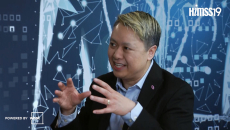
Improving care for patients with chronic disease is about more than just medicine, and online resources are giving patients a strong voice in the business of healthcare, says Colin Hung, CMO of HealthcareScene.com.

Understanding what customers need is critical to the VC firm for AI, medical apps and the next generation of wearables, among other investment areas, says Menlo Ventures Partner Greg Yap.
The scheme preyed upon hundreds of thousands of elderly and disabled patients, DOJ says.
New Zealand’s Northland District Health Board (DHB) is trialling an oral telehealth service for children and adolescents with plans to expand it to adult services over time.
The DHB is piloting the use of Zoom video conferencing technology and a specialised intraoral camera to allow dentists at Whangarei Hospital to do examinations and consultations on children at remote locations.
The first trial involved an oral health therapist operating the camera at Kaitaia District Hospital. The therapist sees the images live so is able to adjust the camera as needed and on instructions from the dentist.
Previously, the dentist would have travelled to Kaitaia and seen the patients in person.
Oral health therapist Kirstie Culpan said by having teledentists, children can have their consults on time. If needed, they can also be placed on the general anaesthetic waitlist as soon as possible.
Northland DHB telehealth and mobility programme Manager Roy Davidson said, “The live clinical quality imaging provided by the specialised intraoral camera is the key technical component that makes these clinics possible.”
He said the telehealth setup has at times proved to be a positive distraction in the clinic as children are generally interested in the technology.
The service is targeting children and adolescents initially but will expand to adult services in time.
A second pilot clinic was held on April 5 linking to Kerikeri, and an assessment will now be undertaken and a decision made on scale and timing of rolling out the service.
“At this stage, there appears to be strong potential to link up the oral health locations throughout Northland, including the mobile dental clinics,” Davidson said.
“Linking the more rural mobile dental clinics would provide a significant improvement to access of care for those families unable to travel to centres.”
He said the telehealth service also provides support and peer contact engagement from dentists to dental and oral health therapists who are working in the community service.
“Telehealth enables assessment in real time and discussion with whānau members who are with the patient and is a collaborative tool, enabling knowledge up skilling for the clinical teams involved,” Davidson said.
“Telehealth reduces travel for clinicians, reduces travel for families and provides faster access to specialist dental care.”
This article first appeared on eHealthNews.nz.