Quality and Safety
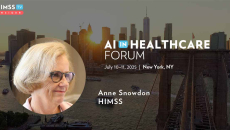
HIMSS Chief Scientific Research Officer Anne Snowdon says there are "thousands of reasons" AI tools are more readily adopted in other industries. But the biggest is that lives are at stake in healthcare. "We don't ever take that for granted."

The Ohio health system achieved powerful results on 81 suggestions from nurses. It reduced nursing documentation time by an estimated 1,500 hours per year and reduced clicks by 2.7 million per year. Needless to say, nurses are happy.

A new report shows trust in AI is climbing: One third of patients say they trust AI-generated search results as much as Google, and nearly one in five report trusting AI even more. By contrast, only 11% express skepticism about AI recommendations.
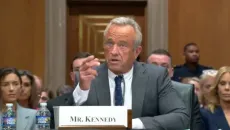
An open letter, signed by current and former CDC, NIH and HHS staff, accuses Health and Human Services Secretary RFK Jr. of sowing public mistrust by making false claims, and asks that he stop misusing agency data.

In one year, AMA's members leaped from curiosity in artificial intelligence tools to their integration into practice. Now, an eight-step governance framework encourages providers to establish AI accountability, oversight and staff training requirements.

Most respondents also reported having changed consultation dynamics with their patients.

The new chatbot at Singapore General Hospital was also projected to save around 60 senior doctor hours annually.

Two remote liver procedures were completed despite long signal delays.

Ismelda Garza, chief information officer at Cuero Regional Hospital, is fresh off of a Meditech deployment and now fully into the optimization phase. She discusses the importance of working with clinicians and consultants, keeping momentum up after go-live, and much more.

Mount Sinai researchers used a clinical and biomedical text processing model at six hospitals to analyze triage data and reliably predict hospital admissions.