Quality and Safety

More than half of Americans think the U.S. healthcare system is fundamentally broken, a new PwC Health Research Institute survey shows, and are looking to technologies, including AI and wearables, to improve care.

Technology can enable medical education programs to accept more students, even with space or site shortages. It also strengthens compliance and meets accreditation standards – while preparing med students for a digital-first healthcare environment.

In the second episode of this three-part series, the New Jersey health system's CIO and its president of advanced care operations discuss how they grew and scaled their acute care at home program and realized clinical, financial and operational ROI.

The company's collaborations with UW Medicine, Alaska Airlines and The MetroHealth System are helping boost patient access to specialty meds, says CEO Amit Gir, who describes plans for new drone deliveries.

Dr. Ami Bhatt, the ACC's chief innovation officer, sees potential for administrative efficiencies, decision support, patient triage, safer nuclear imaging, patient engagement and much more, but says AI should be "always adjunctive."

Rather than working within current systems, technology like AI and digital twins can help rebuild healthcare on a more proactive, wellness-focused model, according to Hamad Medical Corporation's Amr Metwally.

The American Medical Association says the new initiative is designed to ensure physicians are involved in the development and deployment of artificial intelligence technologies and to help shape AI policy conversations.

For the first in a three-part series, the CIO of the New Jersey health system and its president of advanced care operations describe how something started by necessity during the pandemic quickly evolved into something more substantial and valuable.

Epic Emeritus CMIO and former HIMSS Board Chair Dr. Michael H. Zaroukian offers health system IT leaders lessons from literature, frameworks for accomplishment, and an in-depth look into HIMSS Maturity Models designed to get EHRs to peak performance.
Success Stories & ROI
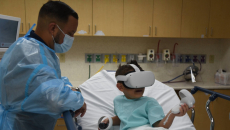
It has also helped to minimize opioid use at the health system, which grew virtual reality from a small pilot in two units with three superusers to wider use across 14 units with nearly 70 trained superusers and dozens of VR headsets in active rotation.