Artificial Intelligence

Arintra CEO Nitesh Shroff says the company can be a bridge for aligned incentives and shared transparency for compliant and explainable coding processes.

NEOM KSA's Dr. Peter Horn talks about the challenges of implementing precision medicine on a macro level after a pilot; success depends on strong data infrastructure, regulations tailored to each country and citizen engagement.

Also, Yashoda Hospital in Hyderabad, India, has unveiled an AI-powered clinic for diagnosing lung nodules.

Doug Meil, author of The Rise and Fall of Explorys and IBM Watson Health: A Personal Memoir of a Healthcare Moonshot that Misfired, discusses some lessons learned from that era, and offers perspective on where artificial intelligence may be headed next.
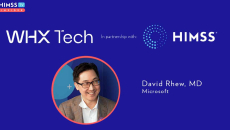
Success in AI-driven healthcare, according to Microsoft's Dr. David Rhew, requires clinician upskilling, strong governance and data standardization to ensure that technology supports, not replaces, human clinical judgment.

Dr. Doug Fridsma, former ONC chief science officer and current CMIO at Health Universe, discusses the challenges of AI in healthcare and balancing innovation with privacy, safety and regulation.
The healthcare industry is experiencing a fundamental shift in digital health infrastructure, one that prioritizes interoperability, clinician efficiency and patient-centered care – and where AI and advanced analytics play key roles.

With artificial intelligence, reduced burdens and faster clinical decisions can translate to better outcomes. However, the challenge for providers is in connecting those dots, says Sandra Johnson, senior vice president at CliniComp.

The Australian Digital Health Agency is enabling allied health's access to health data and wider uptake of AI tools and other emerging technologies.

According to Alex Aliper, president of Insilico Medicine, AI platforms can cut early drug development time from five years to 18 months, which will enable the UAE to create and deliver medicines tailored for its population.