Artificial Intelligence
Numerous challenges will hinder AI growth in healthcare unless the industry improves, a new scientific report finds.
It’s the beginning of a move to the next generation of AI-based tech, which will take a multi-party colloquial conversation between the clinical team and the patient to create a narrative and structured data, eliminating the keyboard from the surgical room completely, the company said.
In his 16 years with Seoul National University Bundang Hospital, Dr Rong-Min Baek served in key executive roles in both clinical and managerial areas, from department chairman to Chief Medical Officer and Chief Science Officer.
The provider organization has published a study that validates the clinical impact of health IT vendor MedAware’s machine learning-enabled patient safety platform designed to minimize medication-related risks.
Sydney Neuroimaging Analysis Centre (SNAC), an Australian company co-located with the University of Sydney’s Brain and Mind Centre, is building AI tools to automate laborious analysis tasks in their research workflow, such as isolating brain images from head scans and segmenting brain lesions.
Additional algorithms are in development and being validated for clinical use. One compares how a patient’s brain volume and lesions change over time. Another flags critical brain scans, so radiologists can more quickly attend to urgent cases. The researchers develop their algorithms using the NVIDIA Clara suite of medical imaging tools, as well as cuDNN libraries and TensorRT inference software.
WHAT’S THE IMPACT
SNAC analyses patient MRI and CT scans acquired at clinical sites around the world. With a training dataset of more than 15,000 three-dimensional CT and MRI images, SNAC is building its deep learning algorithms using the PyTorch and TensorFlow frameworks.
One of the centre’s AI models automates the time-consuming task of cleaning up MRI images to isolate the brain from other parts of the head, such as the venous sinuses and fluid-filled compartments around the brain. Using the NVIDIA DGX-1 system for inference, SNAC can speed up this process by at least 10x. Using semi-automatic methods, the process would take SNAC’s analysts 20-30 minutes but now it can be reduced to two or three minutes of pure machine time, while performing better and more consistently than a human.
Another tool tackles brain lesion analysis for multiple sclerosis cases. In research and clinical trials, image analysts typically segment brain lesions and determine their volume by manually examining scans — a process that takes up to 15 minutes. AI can shrink the time needed to determine lesion volume to just three seconds. That makes it possible for these metrics to be used in clinical practice as well, where due to time constraints, radiologists often simply eyeball scans to estimate lesion volumes.
COLLABORATIONS AND FUTURE PLANS
The centre collaborates with I-MED, one of the largest imaging providers in the world, as well as the computational neuroscience team at the University of Sydney’s Brain and Mind Centre. The group also works closely with radiologists at major Australian hospitals to validate its algorithms.
SNAC plans to integrate its analysis tools with systems already used by clinicians, so that once a scan is taken, it is automatically routed to a server and processed. The AI-evaluated scan is then passed on to radiologists’ viewers — giving them the analysis results without altering their workflow.
THE LARGER TREND
Also located in Sydney, Macquarie University and Macquarie Medical Imaging has recently partnered with GE Healthcare and Fujitsu Australia to research the ways artificial intelligence can help diagnose and monitor brain aneurysms on scans faster and more efficiently. The university will provide clinical expertise for the development and testing of the technology, which is provided by GE Healthcare, while Fujitsu will lead the initiative.
Singapore’s National Neuroscience Institute (NNI) is working with local medtech company specialising in AI and surgical robotics, Iota MedTech to develop a system to sort brain scans of head injury patients in order of urgency, Healthcare IT News reported in May this year. The development of the priority sorting system will help ensure that patients requiring immediate medical attention receive the care they need.
ON THE RECORD
“We often refer to manual annotation as the gold standard for neuroimaging, when it’s actually probably not,” said Tim Wang, director of operations, SNAC in a statement. “In many cases, AI provides a more consistent, less biased evaluation than manual classification or segmentation.”
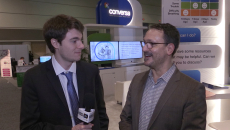
Conversa Health has seen growing enthusiasm for healthcare chatbots across both sides of the aisle, says Chief Product Officer Dr. Phil Marshall.
By combining clinical and consumer-derived data, such as from mobile phone apps and wearables, the program will offer tailored advice using machine learning to assess participants who have been to the hospital with chest pain.
Fujitsu will apply AI methods to images of the brain generated by GE’s Revolution CT scanner, and use a specifically-trained algorithm to look for abnormalities.
The Arizona payer’s use of advanced video technology offers lessons for healthcare provider organizations seeking to improve medication adherence and more.