Workforce
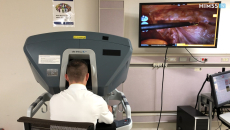
In the first edition of the HIMSS TV series "Assimilation," we take a tour of Inova Fairfax Hospital, where residents in training and physicians use operative simulators and immersive 3D to hone their surgical skills.
SPONSORED
 |
08:52 am |
February 18, 2020
|
08:52 am |
February 18, 2020
|
08:52 am |
February 18, 2020
Not only can speech recognition increase the time clinicians spend with patients, but using the technology in the cloud will ensure clinicians are less restricted, says Dr. Simon Wallace, CCIO at Nuance Communications UK Ltd.
Update: HIMSS20 has been canceled due to the coronavirus. Read more here.
As part of the merger of five independent orthopedic practices to form Virginia’s largest provider of orthopedic and therapy care, OrthoVirginia, a large investment was made implementing a new electronic health record system.
A survey gauging physician satisfaction with the system, however, showed an overall poor experience, which led the CIO and CMIO to work together to implement and show measurable improvements across a range of areas, including more efficient usage of the technology.
Among the most important decision made was to use provider satisfaction measurement tools, to better understand the most impactful EHR related elements that drive provider satisfaction.
A structured onboarding process, including an explanation of the organization’s culture, also helps sets expectations for what will be required of the provider to achieve EHR mastery.
"The lack of a clear articulation to the providers about what the EHR can be is a significant and ubiquitous problem," said Dr. Harry C Eschenroeder Jr., CMIO of OrthoVirginia, who is scheduled to address the topic March 12 at HIMSS20 with co-presenter and OrthoVirginia CIO Terri Ripley.
He explained there is confusion about what parts of the workflows are driven by compliance requirements and what parts of the EHR can be helpful.
"Workflows driven by compliance often frustrate providers and may add little value to patient care," he cautioned. "A well designed EHR can orient the physician to the patient’s situation, teach the patient what is wrong with them, and what they must do to get better."
He further noted it can also facilitate communication and coordination of care amongst the providers trying to help the patient.
"Providers must understand that they bear a responsibility to master and improve their imperfect EHR for the benefit of their patients," he said. "They need to experience some wins in making their EHR better."
Eschenroeder said some methodologies that can be used to successfully implement a continuous education program for physicians include offering “at the elbow” provider education and provider problem resolution based on a personal relationship between the provider and a provider support specialist.
"In addition, EHR educational presentations at department meetings can help providers to understand that the EHR is not a dead tool, it is evolving, and their input is critical," he said.
Additional methodologies could involve peer to peer teaching and support interactions in provider meetings, and teaching themes for the provider support specialists, so that rounding is more than answering complaints and solving problems.
Eschenroeder and his OrthoVirginia colleague Terri Ripley will share their insights during their HIMSS20 session, “Physician Satisfaction with EHR: Is it Possible to Improve?” It's scheduled for Thursday, March 12, from 2:30-3:30 p.m. in room W206A.
Dr. Ahmed Safwat Mitwalli Elassal, board member with the Egyptian General Authority of Healthcare, says Egypt is well-placed to deploy best practice technology solutions across Africa.
Pete Rose, currently director of enterprise services and deputy chief digital, data and technology officer at the Home Office, has also been named as the new deputy CEO of the organisation.
SPONSORED
 |
07:23 am |
February 05, 2020
|
07:23 am |
February 05, 2020
|
07:23 am |
February 05, 2020
ANCILE Solutions’ training technology, uPerform, helps organisations with the deployment and optimisation of software systems.
800 of Dr. Scott Jensen’s patients have thus far opted for virtual visits in rural Arizona. The telehealth tech has an easy ROI, he says, and boosts patient satisfaction.
Reducing clinician burnout is a major area of focus for EMRAM Stage 7 hospital St Jansdal in the Netherlands, as the drive to continually improve remains on the agenda, says Chief Pharmacy Informatics Officer Pieter Helmons.
Diversity and inclusion seem to be at the forefront of discussions in all workplaces, but is anything changing? In this blog, former NHSX director Sam Shah, writes about his experience.
Kluge will be succeeding Dr Zsuzsanna Jakab, now deputy director-general of the WHO.