Workflow
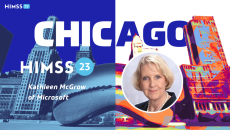
There are ways technology can help ease clinician burden. Kathleen McGrow, chief nursing information officer at Microsoft and a 2023 HIMSS Changemaker Award recipient, explains how.

Health tech incubator MATTER embeds health equity into its initiatives and encourages its partner companies to do the same, says Olyvia Phillips, its manager of equity initiatives.

Standardizing information capture, including a universal patient identification, can enhance data quality while eliminating the 20% record duplication rate facing healthcare organizations, says Gregg Church, president of 4medica.

FiveP's Baret, a messaging solution that came out of the pandemic, has been scaled to promote efficient clinical communications at Austin Health.

Verana Health uses large amounts of structured and unstructured de-identified patient data, including medical images, to inform value-based care models, explains Lawrence Whittle, CCO.

The CIO of the NYC-based federally qualified health center tells the story of going from no telemedicine to a thriving virtual care business.

With HIMSS23 Europe approaching in June, Joana Feijó, business development director for Health Cluster Portugal, discusses digital health innovation and the development of a technology framework for hospitals, which will be showcased in Lisbon.

That's just one of the findings from new Accenture research showing how the algorithms behind apps like ChatGPT could fundamentally transform healthcare processes and clinical workflows.

Healthcare organizations need to go from a reactive cybersecurity stance oriented around point solutions to developing comprehensive strategies to mitigate risk, says R. David Moon, chairman and founder of Arx Nimbus.

Military healthcare initiatives, including the common EHR and virtual-first care, are discussed by Dr. Brian Lein, DHA assistant director of healthcare administration, Bill Tinston, FEHRM director, and Holly Joers PEO DHMS program executive officer.