Quality and Safety
The Quality Summit will convene healthcare stakeholders to explore ways the department's many quality programs can be assessed and adapted to better advance value-based care models.
Deborah Heart and Lung Center’s workforce development program for its health IT team centers around staff experts who teach new recruits about how technology works there – and across the wider healthcare industry.
The partnership aims to give hospitals better insights into real-time patient data, boosting coordination with post-acute providers, payers and physician groups across the state.

SPONSORED
 |
10:02 am |
July 08, 2019
|
10:02 am |
July 08, 2019
|
10:02 am |
July 08, 2019
Taegyun Song, director of Korea Health Industry Development Institute, says over 90% of hospitals in Korea use an e-health system that tracks the patient journey, and now the aim is to develop systems outside medical institutions.
A Frost & Sullivan report predicts that as many as 45% of ORs will be integrated with intelligent technologies within the next four years to improve the precision and predictability of surgical services.
The agency warns that older MiniMed devices – which have been recalled by Medtronic – could be hacked and remotely controlled, adding to the list of cyber concerns for IoT devices.
Aged-care provider Ryman Healthcare in New Zealand has built its own electronic care planning system that runs on 3,500 tablets deployed in residents’ rooms across its residential aged-care villages.
The myRyman application has removed paperwork for both care planning and rostering and improved staff and resident satisfaction.
The $20+ million project has seen wi-fi deployed across all Ryman’s villages and the organisation’s IT team grow from three to 60 people since 2015, when work first started.
Clinical nurse specialist Victoria Brevoort said myRyman directs the care delivered in a resident’s room.
When a staff member logs into the tablet they are presented with a schedule of tasks that need to be completed that day, as well as information about the resident, such as their interests and family.
“People know much more clearly what they have to do and when they have to do it and it’s more accountable because they have to complete the task in the system,” she said.
“It has freed up our staff to spend more time with the residents, one on one. They can record what they talk about in the system, so we see the resident as a person, rather than a collection of tasks we need to do for them.”
Ryman corporate affairs manager David King said the organisation’s audit results have significantly improved since implementing the system, as 81 per cent of its villages now have four-year accreditation.
The technology project is also generating a wealth of data that is being mined for insights.
“We’ve discovered a whole load of data that we’ve never had before, and it’s a gold mine because it provides a closed loop between tasks and clinical outcomes,” King added.
A central dashboard of information allows Ryman’s business intelligence team to identify any anomalies quickly, such as a spike in falls, which can then be investigated.
Differences in performance between villages can also be interrogated in order to improve performance across the network, he explained.
Chief executive Gordon MacLeod said that “not only has it done what it set out to do – get rid of paperwork – but the data we’re collecting from it means we better understand care outcomes and allow us to lift our standards of care even higher’’.
This article first appeared on eHealthNews.nz.
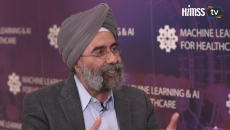
The most promising use case for blockchain in healthcare is the elimination of "redundant work, rework and reconciliation," says Tej Anand, professor of practice at the University of Texas' McCombs School of Business.
CGH Medical Center pharmacists say the system’s Med Card gives patients a better way to keep track of their medications – and say using the software has helped increase clinical knowledge.