Precision Medicine
At the Food and Drug Administration, the physician and venture investor promoted policies focused on innovating approaches to population health, opioids, chronic disease, AI and precision medicine.
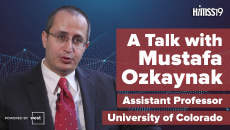
Getting insights about a patient's environment and lifestyle is just as critical as understanding genomic data, according to University of Colorado Assistant Professor Mustafa Ozkaynak.

Dr. Anthony Chang, medical director at CHOC Children’s, says artificial intelligence won’t replace the empathy doctors can provide to patients but smart machines can reduce the time clinicians spend on computers.
Australia’s Icon Group inks agreement with China’s Sanbo Brain Hospital Group to provide radiation …
Yesterday, Icon Group (Icon), Australia’s largest dedicated private provider of cancer care, officially signed an agreement with China’s Sanbo Brain Hospital Group (Sanbo) to deliver radiation oncology services, which are set to open later this year in their Chang’an hospital in Chongqing.
Sanbo is a group of Chinese hospitals internationally recognised for delivering specialist neurological services, including treatments for brain cancer. The group operates six brain hospitals in Beijing, Chongqing, Kunming, Fuzhou and Jinan. The agreement will see Icon operate the Chang’an Chongqing centre, with the site already in initial stages of development.
Why it matters
Icon will manage the facility in partnership with Sanbo, embedding a blend of international expertise to deliver a high-quality approach to cancer care. The centre will have the capacity to treat 900 patients annually.
Through the partnership, Icon will be sharing their expertise in radiation therapy, including remote radiation therapy planning with Sanbo. Icon’s centralised remote planning function, performed by a specialist, highly-skilled workforce of radiation therapists, uses advanced software systems to create individual, high-quality radiation therapy treatment plans for patients regardless of location.
What’s the trend
In June 2016, Icon signed a joint venture with China-based Yibai Healthcare to provide world-class radiation therapy services to 50 cancer centres across China. Yibai Healthcare is part of the Shanghai-listed GuiZhou YiBai Pharmaceutical company which engages in the research, development, production, and sale of pharmaceutical products in China.
The joint venture saw the launch of Icon’s newest arm – Icon Plan. Icon Plan is a centralised, remote radiation therapy dosimetry function for radiation oncology. Dosimetry involves data obtained during the planning consultation with a radiation oncology patient and uses that data to plan how the machine will target and deliver radiation to the tumour.
On the record
“The collaboration with Icon Group will increase Sanbo’s capacity in radiation therapy and chemotherapy, improve comprehensive cancer treatment, and provide an exceptional service to patients,” said Yang Zhang, General Manager of Sanbo.
Icon Group CEO, Mark Middleton said, “Cancer incidence in China alone are expected to increase by 70% by 2025, we are dedicated to helping reduce that burden. Icon is the first Australian healthcare company to export Australian cancer expertise into China, further providing training and education for local clinicians and staff and helping China deliver the best possible care to their people.”
Murdoch University has opened the doors to a new research centre at its Perth campus, with a focus on precision medicine.
Named the Centre for Molecular Medicine and Innovative Therapeutics (CMMIT), the research centre aims to lead transformation in healthcare by delivering precision medicine to people with life-threatening diseases.
A joint venture between Murdoch University and the Perron Institute, the CMMIT brings together scientists and clinicians from different fields of expertise to focus on the unique molecular and genetic makeup of individuals.
This approach is, according to the university, to “ensure that a person receives the right treatment at the right time”.
CMMIT Director Professor Steve Wilton will lead the team of researchers at the centre to develop specific treatments for serious health conditions such as Duchenne muscular dystrophy, motor neurone disease, Parkinson’s disease, multiple sclerosis and blood disorders.
Wilton said the challenge for the future was to develop therapies to treat individuals with a variety of different diseases.
“Precision medicine has the potential to transform healthcare on a scale equivalent to the way antibiotics transformed the fight against infectious diseases,” he said.
“The concept behind precision medicine is simple. It’s about designing a treatment that specifically targets the genetic makeup and other unique features of individual patients as a way of improving effectiveness and lessening side-effects. Doing this, however, is far from simple.”
[Read more: Precision medicine: huge promise, high hurdles | Technology underpins the clinical genomics movement in Australia]
Perron Institute Chair Professor Alan Robson said the launch of the centre is just the start in enabling Murdoch University and the Perron Institute to collaborate more effectively with other partners around the world.
“This centre will greatly expand our capacity to develop precision medical approaches that have the potential to change millions of lives in a truly significant way,” Robson said.
“New and exciting partnerships with industry partners in Australia and beyond will open up as the centre brings a new range of medical techniques to the world.”
The university has also welcomed $10 million in Federal Government support for an Australian National Phenome Centre (ANPC).
“The ANPC will put WA and the nation on the global stage, pioneering research that will translate into transformational benefits across human health, animal health, agriculture and food," Murdoch University Vice-Chancellor Eeva Leinonen said.
The CMMIT launch comes just days after Deakin University unveiled its new Institute for Health Transformation, bringing together more than 200 multi-disciplinary researchers and industry partners to address complex healthcare challenges of today.
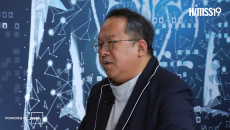
Hee Hwang, CIO of Seoul National University Bundang Hospital, says promising opportunities for transformation exist, especially in Asia and Middle East.
Health and research entities to advance genome sequencing for disease diagnosis.
Bumrungrad International partners with BC Platforms to offer personalised healthcare solutions for …
Last week, BC Platforms, an MIT Whitehead project spinoff which specialises in powerful genomic data management and analysis solutions, announced that it will be providing its genomics platform to Bumrungrad International Hospital, a private multiple-specialty medical centre founded 1980 in Bangkok, Thailand.
WHY IT MATTERS
BC Platforms will be providing its customisable end-to-end Software-as-a-Service (SaaS) platform to enable Bumrungrad to offer personalised healthcare solutions for their patients in the clinic. The core system will be seamlessly integrated in the hospital infrastructure from laboratory to electronic patient records.
To support advanced patient care, the ability to handle all types of genetic data from Genotyping and Next Generation Sequencing (NGS) instruments into clinical reporting is essential. Bumrungrad will also participate in providing its extensive Asian data and samples to BCRQUEST, providing additional sample diversity and data resources for researchers. BCRQUEST is a global network of healthcare service providers and biobanks that provide genomic and clinical cohort data for pharmaceutical and medical research and development.
THE LARGER TREND
Precision medicine, of which genomics is a subset of, was a key topic addressed at the recently concluded HIMSS19 Precision Medicine Summit. At the event, Dr. John Halamka, CIO of Beth Israel Deaconess Medical Centre, said that precision medicine, at its core, is "the right care in the right setting from the right provider at the right time."
Data – structured, complete, well-governed and easy to see – will be key to precision medicine becoming more widespread and Dr. Halamka added that on the precision medicine journey, having the data accessible is going to be hugely important. He also pointed out that besides technology, there are also other challenges such as "interesting politics and policy issues that are part of the precision medicine journey.”
While precision medicine offers huge promises, policy, technology, clinical processes and patient engagement need to evolve to make it a reality for primary care.
ON THE RECORD
“We are excited to be partnering with BC Platforms to bring personalized healthcare solutions into our clinical practice and research. We are looking forward to working with BC Platforms to set a new standard for predictive medicine complementing conventional treatment for our patients and clients across the globe,” said Artirat Charukitpipat, Chief Executive Officer at Bumrungrad.
Tero Silvola, CEO of BC Platforms, said, “We are pleased that Bumrungrad has chosen to adopt our genomics platform for their clinical practice and to benefit research. We aim to build comprehensive collaboration programs with Bumrungrad to facilitate projects where patients will benefit from the latest innovations and thereafter gain access to clinical trials relevant to their individual disease status. Bumrungrad is one of the largest healthcare providers in South East Asia and by contributing their data mainly focusing on Asian haplotypes to BCRQUEST we can greatly improve the diversity of our offering to research organisations worldwide.”
VivaLNK debuted an Internet of Things-enabled wearables sensor platform, TriFin Labs unveiled a patient engagement platform, eMDs launched a revenue cycle management system and Philips introduced an epidemiology system that uses genomics and deep learning.
Once the specification gains wider use for data exchange, it will open the doors for more advanced uses of data, including artificial intelligence and machine learning, IBM, Google and Microsoft executives said at HIMSS19.