Precision Medicine
The pharma company will leverage Concerto's artificial intelligence-powered analytics capabilities to gain better oncology insights.
At Renown Health, genomic testing and remote consulting meet for what's billed as a first-of-its-kind population health initiative.
In partnership with Hasso Plattner Institute, the New York health system will devote new resources to advancing biomedical and digital engineering, AI, machine learning and more.
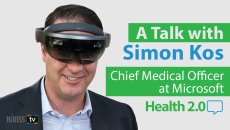
Looking to move healthcare systems out of the last century, the software giant is focusing on areas such as AI, population health, public cloud, precision medicine and virtual services, says Microsoft Chief Medical Officer Simon Kos.
Working with WakeMed in North Carolina, the delivery service will deploy a quadcopter along a pre-determined flight path to deliver blood and other diagnostic specimens.
The aging population is not only poised to swell but Baby Boomers are bringing tech chops and consumerism-era demands that health systems will be smart to embrace.
The famed digital health pioneer talks about his new book, Deep Medicine: How Artificial Intelligence Can Make Healthcare Human Again. The potential is immense, he says, but the U.S. needs a plan.
The deadline to submit a speaking proposal for the HIMSS Machine Learning & AI for Healthcare event is 5 p.m. on Monday, March 18. The event will be held in Boston on June 13-14.
Event Overview: The influence of machine learning and artificial Intelligence is being felt throughout healthcare, but with it come big challenges with technology, terminology, domain expertise, and, perhaps most daunting, how to introduce this transformative tool into existing clinician workflows.
Topics of interest and who can submit: This event presents peer-to-peer education and will look at the state of ML & AI in healthcare and separate what’s hype from what’s really happening in the field. Speakers will share success stories, lessons learned, and discuss challenges.
We are particularly interested in how hospitals and health systems have implemented machine learning and AI to improve care, control costs, and drive operational efficiencies – in short, to transform healthcare to a better, more patient-centric and sustainable system.
We also value submissions from other healthcare providers and payer organizations, academic institutes, and government agencies.
We want sessions that share practical tips and actionable insights that our attendees from healthcare organizations can use to meet clinical and operational goals.
Click here for more information and to submit a speaking proposal.
A Melbourne-based medical technology company has been granted a US$3 million contract to use digital health technology and AI to drive personalised medicine for the Epilepsy Foundation of America.
The company, Seer Medical, specialises in products and services to make the diagnosis and management of neurological disorders easy.
The My Seizure Gauge project will be done in collaboration with the US-based Mayo Clinic and London-based King College Hospital, and will use Seer Cloud to enable patients to gauge the likelihood of an epilepsy seizure occurring via an app.
The Seer Cloud platform will collect data from wearable devices that measure the activity of a patient’s brain, heart and other important vital signs.
The data will then be interpreted by AI on the cloud to automatically generate clinical insight.
Seer Medical CEO Dr Dean Freestone told HITNA that today, AI interpretation of brain signals highlight parts of data that are likely to be important for diagnostic purposes. What Seer Medical’s technology aims to do, through this project, is speed up the review process.
The algorithms discover complex combinations of seizure triggers that otherwise appear random as seizures can be influenced in subtle ways, and by many things.
For example, sleep, stress, alcohol, diet, weather, and other behavioural and environmental factors affect the odds of it occurring.
“Traditional diagnostics require patients to be monitored in hospital for a week. Seizures can be rare events, so it takes a long time to catch them. Patients can be waiting around in hospital for weeks and seizures are less likely to occur in a setting that’s so far removed from normal,” he said.
Using personalised data recorded over a long time period is expected to reveal the triggers for a person and moves neurology out of the clinical environment to the home, reducing the reliance on overburdened hospital infrastructure.
“Seer’s at-home diagnostic service allows patients to be recorded in the home environment, so there is no longer a need to be stuck in hospital for a week. This frees up beds for patients in greater need,” he added.
“In the future, AI will enable automated diagnosis of epilepsy, which will be revolutionary. AI will also be able to recommend what therapy will work best for an individual in future. This new type of personalised therapy is a while off, but we are working to build the infrastructure to make this a reality.”
[Read more: Research into the genetic risk factors for stroke uncovers game-changing discoveries | Ground-breaking collaboration creates world-first smart home for people with intellectual disabilities]
Founded in 2017, the company’s immediate focus is on epilepsy, with the project aiming to harness the collective knowledge of medical professionals and curating one of the world’s largest medical dataset.
“There are 65 million people living with epilepsy worldwide. Approximately one third cannot control their seizures effectively. These people live in persistent anxiety and everyday tasks like driving or cooking can become life-threatening,” he said.
“Using the Seer Cloud, patients will be able to gauge the likelihood of a seizure occurring soon via an app, bringing back control into their lives.”
According to Freestone, the project also represents the convergence of a range of technologies, with the potential for more in the near future.
“We are living in an incredible time of change in technology and the rate of change is increasing. Advances in wearable devices, high speed mobile networks and cloud storage and computing means that Seer can collect and organise personalised health data at unprecedented scales,” he said.
“The convergence of machine learning, AI, high-speed mobile networks, wearables devices and cloud computing will democratise healthcare. Soon, we will have 5G mobile networks, enabling rapid transmission of information from wearable devices across the web.
“The 2020s will see these technologies coming together, leading to the democratisation of healthcare and patient empowerment.”
Translational research is a main focus point for the iTHRIV consortium, which brings together areas of expertise including genomics, clinical research, data science and more.