Electronic Health Records (EHR, EMR)

Audacious Inquiry President Scott Afzal says his company created an encounter notification service for physicians that has become the starting point for using triggered events for a health information exchange.
Health IT vendors are building greater flexibility into clinical decision support systems so they can optimally function in a dynamic healthcare environment, Frost & Sullivan finds in a new report.
Underlying weaknesses in common OS’s are slowing hospitals down. Software can help fix them.
The communications system, integrated with the provider’s Epic EHR, is used throughout most of the medical center, and it has helped the organization boost HCAHPS scores in almost every measure.
A new Center for Connected Medicine/HIMSS Media survey of healthcare tech leaders shows that most hospitals and health systems are depending on a single, integrated EHR to solve their interoperability woes.
The independent medical charity in London says the system has reduced incidents of prescription error since it was introduced in April.
With more than a decade of experience as a registered nurse, Angela Ryan combines her clinical experience with her knowledge in health informatics toward the practical, meaningful and integrated use of digital health tools in Australia. In this interview with Healthcare IT News, she shares more on her role as the chief clinical information officer (CCIO) at the Australian Digital Health Agency (ADHA) and talks about why the My Health Record is a key pillar in Australia’s National Digital Health Strategy.
Q. Could you tell us more about your role as CCIO of ADHA and your background in healthcare?
A. In my role as chief clinical information officer at the Australian Digital Health Agency, I work collaboratively across the health system to develop and maintain strong relationships with key stakeholders in the community to promote adoption and meaningful clinical use of digital health services and technologies, to deliver benefit to all Australians. A key priority is ensuring strong clinical engagement with the National Digital Health Strategy and associated programs and services – including the My Health Record system – and clinical input and assurance into the design, development and delivery of digital health systems. The role provides clinical leadership for the implementation, advancement and optimisation of digital systems nationally.
I’m a clinician with a background in health informatics, and decades of experience in hospitals and public sector organisations, with an emphasis on governance, design, development and deployment of digital health strategies and technologies. Before moving into digital health, I had more than 14 years’ experience as a registered nurse, including paediatric and adult intensive care. I am now able to apply my understanding of health systems and practice not just to optimise technology design and rollout, but to act as an effective agent of change, building engagement and momentum around transformational programs.
Q. What are some of the latest projects/developments that you are currently working on at ADHA?
A. The Australian Digital Health Agency is setting out the pathway to achieve our goals in the National Digital Health Strategy, to support the premise that “A workforce confidently using digital health technologies to deliver health and care will be required to address the technology adoption challenge and calls for supporting the workforce to better adapt to, use and embrace the changes and opportunities created by digital health innovation.” A digitally enabled workforce for Australia will benefit consumers, healthcare professionals and the broader health system. In addition, future innovations and approaches to healthcare delivery, such as applied data analytics, and technologies such as machine learning, artificial intelligence (AI) and advanced robotics, will require a shift in the skills mix of the healthcare workforce in order to obtain the greatest benefit of these advances for healthcare consumers.
To support this, the Agency is undertaking a program to consult the health sector and other relevant stakeholders on strategies to address the enablement of the workforce and any perceived gaps. Our aim is to develop a holistic understanding of the potential skills and workforce shortages and develop strategies to address them. This will culminate in the development of a National Digital Health Workforce and Education Roadmap. The roadmap will be a focal point for a National Digital Health Workforce and Education Summit being planned for later in 2019. This event will bring together stakeholders from across the sector to consider the roadmap and agree the practical actions required to deliver the workforce Australia needs.
Q. From your experience both as nurse and in healthcare informatics, what do you feel are the greatest challenges in the journey toward achieving better health outcomes through digital health?
A. Striving to deliver real-time improvements in clinician workflow is the holy grail for me, but I know that we aren’t there yet. That said, l also know that many of my colleagues are deeply invested in this as an outcome, and recognise that to truly deliver on improvements in patient outcomes, we need to improve the way digital tools and technologies work inside healthcare environments. It might keep me awake at night, but I do believe we’ll see real change in the not-so-distant future.
Q. In 2017, you were awarded a Churchill Fellowship to study methods to prevent patient harm through national digital health safety governance. Could you share with us some of your key insights/findings from the study, especially through your visits to the UK, USA and Canada?
A. My Fellowship trip was life-changing and I met so many people who gave their time, their insights and knowledge so generously – Australia can undoubtedly benefit from this wealth of experience.
I developed a set of recommendations that drew on the overall findings and principles articulated within my Churchill report. I also drew on the premise of the ‘Health Information Technology (HIT) Safety Center’ model developed in the USA. I did this in part as it is the only fully elaborated model supported by an extensive evidence base, the structure of which is informed by learnings beyond the USA borders. The Center was originally recommended by the Institute of Medicine (IOM) Report ‘Health IT and Patient Safety: Building Safer Systems for Better Care’, published in 2012, with a subsequent commitment by the Obama administration to establish the roadmap to develop the Center.
It was further endorsed through the USA Food and Drug Administration Safety and Innovation Act (FDASIA) of 2015. While the Center has not been implemented as it was originally envisioned, many of its proposed members are active in the ‘Partnership for Health IT Safety’, a multi-stakeholder collaborative of more than 50 organisations that come together to analyse safety events and hazards, identify, and share solutions and safe practices, and inform policymakers and the broader healthcare community about priorities for health IT safety.
I contend that Australia should assemble a taskforce of experts from across the health sector, to include clinicians, consumers, government, researchers, policy makers and industry to develop the vision, mission, outcomes and roadmap for better coordinated digital health patient safety in Australia. The taskforce’s expressed purpose is to ensure digital health is safer for patients and will build upon the significant progress already made in Australia, and internationally. More information can be obtained here.
The precision medicine company will work with the U.S. Food and Drug Administration to see how secure patient data can be better put to work in the development of oncology treatments.
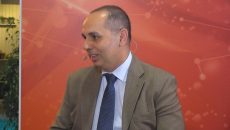
Shared funding is an important part of creating a shared health record, which should mean that the money is utilized more efficiently, says Associate CCIO for Primary Care NHS England Masood Nazir.
Eight more district health boards (DHBs) in New Zealand will be assessed on their digital maturity using HIMSS Analytics maturity assessments over the next 12 months.
The Ministry kicked off its digital health maturity model project early this year, with Southern DHB the first to complete the assessments, followed by MidCentral DHB, which is awaiting its report.
All DHBs are now being offered the chance to have an assessment using four HIMSS maturity assessments: EMRAM, O-EMRAM, CCMM and INFRAM.
Ministry of Health Group Manager of Digital Strategy and Investment Darren Douglass says the intention is that the remaining DHBs will have assessments in 2020/2021.
The Ministry and HIMSS are holding a workshop on Nov. 20 during Digital Health Week NZ 2019 in Hamilton for those wanting to learn more about the assessment process.
HIMSS Analytics Global Vice President John Daniels says the workshop will focus on how organisations can leverage the HIMSS maturity model road maps to guide their journey toward digital transformation.
He has been impressed with the level of engagement from the Ministry and the DHBs HIMSS has worked with so far.
“It seems everyone is on the same boat wanting to drive healthcare forward from a digital transformation perspective, and one of the big challenges organisations face is getting everyone working toward a common goal,” he said.
The HIMSS assessments score hospitals and care settings on their adoption and use of electronic medical records on a scale from 0–7.
At the workshop, Daniels will provide an overview of the maturity models, looking at how and why they were developed, as well as a deeper dive into EMRAM and O-EMRAM.
He says the process not only identifies the gaps in maturity, but provides details around those gaps, such as what factors are preventing the organisation from having a certain capability.
Daniels hopes the workshop will attract senior IT leaders, clinical leaders and industry partners as the groups need to work together on the transformation journey.
“For the most part, I think the culture is there in New Zealand that will enable this sort of transformation to occur, but you need the right leadership and the people using the systems to be on board and everyone working together, as it takes a team effort,” he added.
Douglass hopes that people from across the sector will attend the sessions at HINZ 2019 as their organisation may be invited to participate in an assessment.
“Undertaking the HIMSS maturity assessments uses an international tool that can assist DHBs in their roadmaps for digital investment. A New Zealand glossary has been developed to ensure the assessment fits the New Zealand health environment,” he said.
There will also be a session at the HINZ Conference 2019 regarding the learnings from the assessments that have been completed.
This article first appeared on eHealthNews.nz.