Clinical
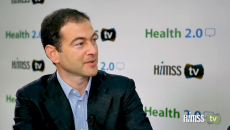
Jack Resneck, chair of the American Medical Association Board of Trustees, emphasizes the need for physicians to be involved in the early stages of app development to ensure they actually improve the overall care quality for patients.
Imagine knowing, in real time, whether a patient will suffer a surgical infection as a surgeon closes up a wound. That's the kind of clinical situation that machine learning is enabling at the University of Iowa Hospitals & Clinics.
In a 3-year pilot study ending in 2016, in a subset of general and colorectal surgery, the health system's innovation with AI analytics has led to a 74 percent reduction in surgical site infection. At scale, this would translate to approximately $1.2 million in cost savings – not including savings from value-based purchasing because of the reduced surgical site infection rate.
Iowa’s work with comes as more and more hospitals and tech vendors are undertaking innovative initiatives with machine learning and artificial intelligence. Johns Hopkins for instance, is using deep learning to improve how it handles pancreatic cancer and Amazon Web Services is harnessing machine learning to enable customers to better treat depression.
Co-developing machine learning
The university is co-developing the machine learning technology with vendor DASH Analytics. The system is called the DASH Analytics High-Definition Care Platform, or HDCP. Its proprietary design uses machine learning as it provides valuable data, metrics and decision support at critical moments during the point-of-care timeline.
HDCP, the university said, helps lower the rate of surgical infections, reduces the risk of requiring a blood transfusion during surgery, saves lives from brain failure and saves lives from unrecognized sepsis.
The technology combines several features, said John Cromwell, MD, associate chief medical officer and director of surgical quality and safety at the University of Iowa Hospitals & Clinics.
"The system uses curated knowledge of where and when specific critical decisions that drive outcomes are being made by providers for numerous clinical conditions where there is massive room for improvement," he explained. "It is a machine learning system that integrates with the EHR using industry-standard and vendor-specific APIs and in real time measures individual patient risks and evaluates appropriate best practice based upon these risks."
With those two features, HDCP integrates decision support within the provider's EHR workflow, and it generates feedback on how their use of the data changes their patient's outcomes, reinforcing high-value practices, he said.
The system works silently in the background, monitoring for specific points in patient care where decision support may improve patient outcomes.
At that point in time, the decision support becomes visible to the clinician or other front-line provider within their usual workflows in the EHR. It will present them with the specific risk for their specific patient along with actions to potentially mitigate that risk.
"The risks are assessed by using best-in-class machine learning algorithms that use both real-time and historical data on individual patients," Cromwell said. "These risk models are calibrated specifically to patients in each individual hospital using the platform."
Here's how it works
The surgical site infection reduction module in HDCP is integrated within the World Health Organization Surgical Safety Checklist that virtually all hospitals use during surgery. The module is activated near the completion of a surgery as the circulating nurse is going through his or her routine closing checks.
At the time of module activation, real-time data from the EHR such as the surgeon, case duration or estimated blood loss flows into the platform and is combined with historical data on the patient. All of this data then flows into the surgical site infection prediction model.
"The machine learning model calculates the infection risk and links this risk to specific interventions that the surgeon may take at the time of wound closure to reduce the infection risk," Cromwell explained. "The risk information and possible interventions are then presented in an interactive interface back to the nurse at her workstation – the whole process takes mere seconds to complete – who then delivers the information to the surgeon."
Using a single click, the nurse records whether the surgeon used the decision support recommendations. Ultimately the patient's outcome with respect to surgical site infection is returned to the platform and used to generate an aggregate report for the surgeon regarding his or her outcomes when recommendations were or were not used, thus reinforcing the use of appropriate decisions.
"It is very difficult for surgeons to integrate the information necessary to determine whether a patient is at high risk for a surgical site infection," Cromwell said. "There are certainly obvious cases where there is a break in technique, contamination, or very high-risk patient factors, but these are the minority of the cases."
There are interventions that can be done at the time of wound closure, but these can be costly or invasive. Would one do these interventions to 100 percent of patients if only a fraction can actually get a surgical site infection?
"Selectively using these interventions in patients where it is warranted by objective markers of risk maximize the therapeutic effect, while minimizing the cost and potential risks to patients," Cromwell explained. "In this case, we were able to selectively use negative pressure wound therapy on patients with markers of high risk to achieve the 74 percent reduction. Without the system, we could not have known objectively which patients to use this costly therapy on."
Ultimately, machine learning is critical for integrating hundreds or thousands of variables for individual patients in order to objectively measure risk, he added.
"Integrating such massive amounts of information that is impossible for any individual caregiver to perform," said Cromwell. "And no matter how much experience one has, the exponential increase in medical knowledge makes it impossible for a caregiver to assimilate all of the data necessary to consistently apply best practices in every situation."
A systematic approach to mitigating adverse outcomes or complications requires that one systematically identify the risks, he added. Machine learning algorithms, with few exceptions, are able to do this much more effectively than humans on a consistent basis, he said.
"This removes the variation in risk assessment that one may get between different physicians," he said. "Once a provider has an objective assessment of risk, then they may move on to mitigating that risk. When best practices are known and supported by data, machine learning can identify which patients these best practices should be applied to, in a consistent manner. By approaching risks objectively and systematically, we can have an effect greater than any pharmaceutical can provide."
Twitter: @SiwickiHealthIT
Email the writer: bill.siwicki@himssmedia.com
Learn how Tift Regional Health System found a more effective way to connect primary care doctors and specialists.
The National Institute on Aging awarded a $4.5 million grant to the University of California Berkeley and People Power, an IoT software provider, to support research on smart home solutions for caregivers of dementia patients.
People Power is creating customized systems through behavioral research on targeting everyday stressors for caregivers and dementia patients. The new technology gives caregivers proactive alerts that identify abnormal qualities in patient activities.
The tool increases the safety and quality of life for people living with dementia, said Robert Levenson, MD, a professor at the University of California, Berkeley.
“For the past 15 years, my laboratory at University of California, Berkeley, has been studying the cognitive and emotional changes in people with dementia, specifically individuals with Alzheimer’s disease and frontotemporal dementia,” he said.
“In the beginning, we were focused on the individuals with dementia,” said Levenson. Over time, he spoke with caregivers about the challenges they were facing and decided to alter his research to include them.
“We’re now focused on the challenges of caregivers who work with individuals with dementia,” Levenson said. “Many caregivers develop serious mental and physical health problems as they deal with the stress and burden of caregiving.”
The current study is “attempting to understand the types of solutions and technologies that can reduce the negative effects of caregiving,” he added.
With People Power, they’re developing in-home technology that can reduce caregivers’ everyday stressors. Through the NIA grant, they’ve begun research on the main stressors for caregivers and how the integration of technology can reduce these everyday challenges.
“The majority of a caregiver’s stress is a result of troublesome behaviors from the individual with dementia,” Levenson explained. “The inability to predict these troublesome behaviors contributes to a caregiver’s likelihood of developing particular illnesses like depression, anxiety, a decline in their immune system and more.”
Through the research, they’ve determined caregivers are faced with two common challenges.
The biggest is the anxiety that comes with being the sole caregiver for an individual with dementia. Caregivers are constantly worrying about the individual’s behaviors and how these will result in the individual injuring themselves – like if they forget to turn off the stove or wander away from the home.
The second is a little more subtle, but researchers found there’s a gradual sense of social isolation that impacts caregivers over time. As dementia progresses, the caregiver’s life becomes increasingly focused on the individual with dementia, resulting in caregivers gradually becoming isolated from their social circle.
“Through the utilization of artificial intelligence, the services can intelligently learn the habits of both the caregiver and the person living with dementia,” Levenson said.
“Using this data, the in-home solution can mitigate factors in the home like noise, lighting and temperature to diminish the chances of distress for the person with dementia and the caregiver,” he continued. “This controlled environment, created through automatized tracking, can help eliminate potential triggers and simplify the caregiver’s role.”
In terms of the research, they will conduct a formal evaluation of how the in-home technology influences the lives of the individual with dementia and their caregiver. They’ll monitor their health and wellness and determine if the in-home technology helps impact the negative effects of caregiving.
“The challenge for in-home technology is that in order for it to be widely adopted, it must become individualized,” Levenson said. “Every person with dementia and every caregiver are different, so we need to create personalized solutions that are flexible and can meet the needs of both.”
For technology to provide real value, it needs to be able to learn and evolve, he added. With the use of AI, the microservices are able to evolve their services based on the caregiver’s and dementia patient’s habits to provide solutions that improve their lives.
Twitter: @SiwickiHealthIT
Email the writer: bill.siwicki@himssmedia.com
With a vast rural population, the Florida hospital leaned on telehealth to improve transitional care.
By deploying a mental health IT platform, Comprehensive Mental Health Services provided evidence-based, self-care interventions to combat depression and anxiety.
It hopes decision support and clinical surveillance tools will help boost standards of care at all sites across its 10-state health system.
A case manager at Legacy Salmon Creek Medical Center devised a new program that also reaped an 81 percent reduction in avoidable emergency department visits by high utilizers.