Clinical
Eighty percent of users say the technology saves them time, and three out of four believe it has reduced errors.

University Hospital Southampton NHS Foundation Trust CIO Adrian Byrne discusses his organization's route to developing an electronic patient record (EPR), which involved an integration engine and standard messaging.

With an aging population, disconnected health information systems and a rising consumer, Hal Wolf, HIMSS President and CEO, says that breaking down barriers to information exchange will support delivery of better services and technology.

Dr. Manish Kohli, HIMSS Enterprise Board Chair, discusses physician burn-out and delivering insights for better clinical decision making, adding that success will come when the technology becomes invisible while patients are in front of doctors and nurses.
From the research lab to the bedside to the back office, AI and machine learning are transforming the ways we think about care and how we develop treatments.
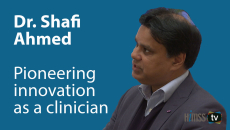
Dr. Shafi Ahmed, CMO, Medical Realities, says that clinicians can be inventors, and embrace change – as he learned at the UK's Royal London Hospital – by ensuring the patient voice remains prominent when developing innovative strategies at a leadership level.
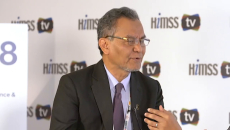
Dzulkefly Ahmad, Malaysia's minister of health, says that even if an organization has a good program and system in place, digitizing healthcare will not succeed if there is no clinical buy-in underpinned by training.
The time it takes to take a test has been reduced from 30 minutes to 15 minutes, freeing up technicians to do other clinical work.
The traditional model of outpatient care is creating unnecessary pressure on patients, clinicians and the NHS as a whole, a new report from the UK's Royal College of Physicians (RCP) has warned.
Excluding A&E, outpatient appointments account for around 85 per cent of all hospital-based activity in the UK, and figures indicate that the number of consultations has nearly doubled in England in the past decade.
Inefficient systems, poor communication, delays and long waiting times illustrate the need for a different approach, according to the RCP.
The NHS should “grasp the nettle”, said Professor Stephen Powis, NHS England national medical director, and leveraging the use of technology and innovation to reduce frustration among clinicians and patients should be a key part of the redesign process.
“As part of the long-term plan for the NHS, it’s right we look at ways to cut unnecessary appointments, save thousands of journeys, reduce traffic and pollution and make the NHS more efficient,” Professor Powis added.
Webinar: Essential Knowledge Series: Trends in Outpatient Practice Management and EMR Solution Adoption
Recent research from charity Age UK, cited by the RCP, indicated that a fifth of pensioners attending an outpatient consultation in the past year "reported feeling worse afterwards because of the stress involved in the journey alone".
Remote monitoring and telephone or video appointments could reduce the heavy reliance on face-to-face consultations, and the RCP said both clinical staff and patients “recognised the benefit” of these alternatives in appropriate settings.
But evidence also showed that patients did not want to “lose in-person contact”, and doctors argued that the best approach would be a combination of telehomecare and face-to-face consultations.
Tech allowing patients to submit personalised data could also be used to drive self-management and enable "clinical monitoring from a distance", but the RCP warned that "making good use of technology requires careful thought and planning".
"It is as much about changing clinical practice and professional culture as procuring high-quality, tested products," doctors said.
Their findings also suggested that a reluctance to adopt digital technologies was due to “concerns with locally available IT infrastructure and support, data protection, loss of remuneration from clinical commissioning groups and discrimination among patients less comfortable with the necessary technology”.
“Having re-evaluated the purpose of outpatient care and aligned its objectives with modern-day living and expectations, we must ensure that the benefits are measured in terms of long-term value for patients, the population and the environment, not just short-term financial savings,” said Dr Toby Hillman, co-author of the report, clinical lead for the RCP sustainability programme and consultant respiratory physician.
Twitter: @1Leontina
Contact the author: lpostelnicu@himss.org
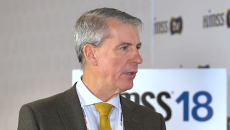
HIMSS Analytics Regional Director for Europe and Latin America John Rayner details Turkey’s progress in digitizing public hospitals as more than 160 organizations are recognized at Stage 6 of the Electronic Medical Record Adoption Model (EMRAM).