Artificial Intelligence
Te Whatu Ora sees up to $20 million in long-term societal savings from implementing the AI.

Chi Mei Medical Center in Taiwan has a high staff acceptance rate of generative AI-powered tools, says Dr Chia-Te Liao, director of the Center for Evidence-based Medicine & Health Policy at the hospital.
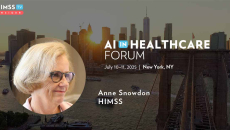
HIMSS Chief Scientific Research Officer Anne Snowdon says there are "thousands of reasons" AI tools are more readily adopted in other industries. But the biggest is that lives are at stake in healthcare. "We don't ever take that for granted."

Also, the Korean government has started a $16 million multimodal medical AI project with 14 public and private organisations.

Also, Victoria has expanded access to telestroke services in regional communities.

Patients can also experience brain coaching from the new initiative developed by the National University Health System.

An AI-powered frontline leaders platform has helped bring about a nearly 20% reduction in nurse turnover because leaders now have more time to build stronger relationships and step in sooner when someone is struggling, the chief nurse says.

FinThrive Chief Innovation Officer John Yount explains how agentic AI learns and can evaluate claims to make faster decisions to drive improved reimbursement.

The success of this program speaks to the promise of AI as a tool to help doctors make diagnoses, one researcher says.

The Epic-integrated tech boosted automated medication instruction mapping from 26% to 86%. Further, the clinical-grade AI's ability to understand unstructured Rx instructions eliminated manual entry in an additional 60% of cases.