Artificial Intelligence
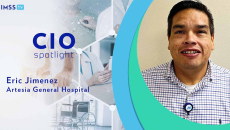
The chief information officer of the 25-bed New Mexico nonprofit describes how he's using AI to help with network defense, and how that's enabling gains in other areas. He also discusses plan for some clinical new applications of AI.

The estate of Singapore's legendary banker Khoo Teck Puat recently gifted the cluster over $100 million to help accelerate AI integration and population health research.

SPONSORED
 |
04:54 pm |
January 16, 2026
|
04:54 pm |
January 16, 2026
|
04:54 pm |
January 16, 2026
Join this session to learn about the evaluation methodology used to evaluate the performance of Elsevier’s ClinicalKey AI. We will share insights from Elsevier’s evaluation team’s experience establishing and implementing a framework for assessing the correctness and potential harmfulness of responses generated by the conversational search engine embedded within the tool.

A deep learning algorithm called FaceAge could allow clinicians to improve their qualitative assessments and possibly catch diseases sooner, says Mass General Brigham oncologist Dr. Raymond Mak, who'll showcase the technology at HIMSS26.

So says Dr. Andrew Mellin, CMIO at Surescripts, who also predicts prior authorization will become less challenging as prescribers in greater numbers turn to automated prior authorization technologies.

Michael Abrams of Numerof & Associates explains the need for the U.S. Food and Drug Administration to move faster on healthcare artificial intelligence governance, and why its drug development validation process is a good model.

Also, Mandaya Royal Hospital Puri becomes the first in Indonesia to introduce a robotic system for kidney stone removal from South Korea.

Properly structured content becomes a powerful asset, enhancing patient engagement, operational efficiency, and compliance while supporting personalized care, telehealth, and workforce needs.
SPONSORED
 |
04:29 pm |
January 15, 2026
|
04:29 pm |
January 15, 2026
|
04:29 pm |
January 15, 2026
Learn more about the sensitive measurement instruments Abridge has developed to power ROI insights, with real-world results from four health systems: MaineHealth, Reid Health, Samaritan Health Services, and Sharp HealthCare.

Beset by challenges on many fronts, small and rural health organizations are harnessing new technologies to improve care delivery and keep their doors open.