Artificial Intelligence

What does the next year in AI and genAI look like? How can and must AI help with the clinician shortage? Is fearmongering detrimental to AI's future? Greg Miller, vice president of business development at Carta Healthcare, has the answers.

A look at the ethics that provider organizations must consider when building out responsible models and equitable healthcare experiences, according to Oneil Rego and Ilana Golbin Blumenfeld, two experts at consulting giant PwC.

Also, Breast Cancer Foundation New Zealand is set to launch a national programme ensuring cancer therapy adherence.
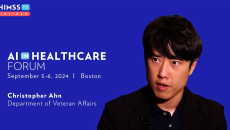
At the VA, automation is helping innovate troubleshooting, maintenance other med device management tasks, says Christopher Ahn, biomedical engineer supervisor at the U.S. Department of Veterans Affairs in Dayton, Ohio.

Robert Slepin, who has decades of experience as a health IT leader, offers his considered insights about the art and science of change management – helping health system C-suite and IT execs manage the demands of a fast-changing future.
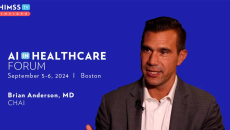
The Coalition for Health AI is helping chart the way forward with its draft framework for responsible deployments and other critical guidance. CHAI's cofounder Dr. Brian Anderson talks model integrity, assurance labs, alignment and more.

SPONSORED
 |
11:10 am |
September 25, 2024
|
11:10 am |
September 25, 2024
|
11:10 am |
September 25, 2024
One CTO’s biggest takeaways from HIMSS’ AI in Healthcare Forum.

They also feel the support provided by their healthcare organizations has either worsened or remained stagnant in the past year, according to a new Talkdesk survey. Can artificial intelligence help?
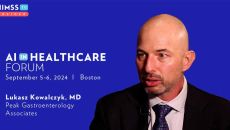
That's models that work and are clinically useful, says Dr. Lukasz Kowalczyk, a physician at Colorado's Peak Gastroenterology Associates, who describes the need to strategically deploy AI across the enterprise.

This includes a benchmarking platform for validating healthcare AI models.