Patient Engagement
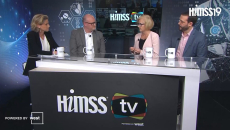
Anne Snowdon, with the World Health Innovation Network, and Blain Newton with HIMSS, discuss H-SIMM – the new maturity model for supply chain – and how it can help improve patient safety as well as potentially save health systems billions of dollars.
Cindy Cohn, executive director of the Electronic Frontier Foundation, offers advice on how companies can improve their products in terms of security and privacy.
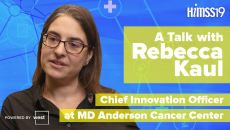
Rebecca Kaul, Chief Innovation Officer at MD Anderson Cancer Center, discusses using technology to give your patients your best, rather than leading with innovative tech that doesn't always solve the big problems.

Neil Jordan, Worldwide Health Leader and Connector at Microsoft, recounts how an AI-powered app for monitoring children who go home following complex heart surgery prevented tragedy.
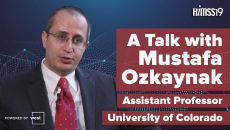
Getting insights about a patient's environment and lifestyle is just as critical as understanding genomic data, according to University of Colorado Assistant Professor Mustafa Ozkaynak.

Dr. Anthony Chang, medical director at CHOC Children’s, says artificial intelligence won’t replace the empathy doctors can provide to patients but smart machines can reduce the time clinicians spend on computers.

Harvard University’s Stan Shaw and Beth Israel Deaconess Medical Center’s John Halamka detail a new executive education joint venture between Harvard Medical School and HIMSS.
Nick Knowlton, VP of strategic initiatives at Brightree, discusses working with the CommonWell Health Alliance to enable patient-centric interoperability across the spectrum of care.

The focus should be on wellcare not healthcare, because finding a condition early results in better outcomes and better costs, says Nick van Terheyden, managing director of Incremental Healthcare.

There are different types of innovation disrupting the healthcare industry, from technology to value-based care and population health to state-based healthcare experimentation, says Lisa Simpson, CEO of AcademyHealth.