Clinical
Innovation
As artificial intelligence and robotic process automation are more widely deployed, they will help rehumanize medicine by allowing doctors to focus less on paperwork and administrative functions, and more on patient care.
The NYU School of Medicine’s technology enables radiologists to see images the way they currently see them, then, if they deem necessary, ask the AI for its opinion. Results to date are impressive.
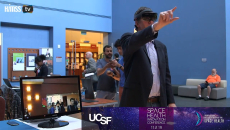
Sira Medical CEO Rick Beberman runs a demo of the VR/AR surgery planning tool, which he says can save up to 20% of operating room time.

Duke School of Medicine Professor Dr. Eric Peterson says the gulf between tech's vision and the clinical world's practical needs is wide, and clinical evidence will be vital in closing that gap.

Dr. Indu Subaiya, co-founder and president of Catalyst @ Health 2.0, says digital health companies are evolving from mere point solutions to "flip stack" vendors complete with clinical staff, innovative therapeutics and more.

Jonah Comstock, HIMSS Media's new director of content development and editor in chief, discusses the state of health tech investment, value-based care and other major talking points at this year's Health 2.0 Conference.

Exponential Medicine aims to cross-fertilize and blend tech innovations to get unstuck from a "sick care system," says founder and chair Dr. Daniel Kraft.

MITRE Lead Clinical Informaticist Sharon Sebastian discusses efforts to share clinical decision support across domains.

In the first edition of the HIMSS TV Deep Dive series, we look at the crisis of opioid addiction in the United States, and how to treat and prevent overuse and addiction.