News

In a sneak-peek of his session at December's virtual HIMSS Healthcare Cybersecurity Forum, a security leader from Trinity Health discusses some of the challenges and opportunities of infosec team building.
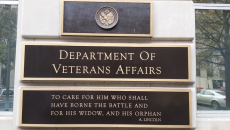
In a pair of op-eds published in the Federal News Network, former Veterans Affairs Deputy Chief Information Officer Ed Meagher offered his take on the agency's beleaguered attempts to update its electronic health record system.
In short, said Meagher, the VA's legacy EHR, VistA "needs to be modernized, not replaced."
As he explained, "VistA meets all of VA’s current needs. It does need to be 'replatformed' and key elements need to be modernized, but those efforts were underway, at several orders of magnitude lower cost and risk, when the Cerner system was imposed on the VA.
"No amount of good intentions, hard work, heroic management, relentless oversight or endless funding will be able to overcome the fatal flaws of this massive, misbegotten program," Meagher added.
WHY IT MATTERS
Meagher, who served as deputy CIO at the VA from 2000 through 2006, and briefly as the agency's chief technology officer in 2006, has been a longtime critic of the VA's plans for an EHR overhaul.
"VistA represents 30 years' worth of knowledge, experience, data standardization, education, integration, reliability, research, institutional memory and best practices. Much of this will be lost or degraded under the Cerner system," he wrote in his first op-ed, published October 15.
He also called the VA's report following its three-month strategic review "very disappointing," given what he saw as a lack of consideration about the EHR modernization contract.
"Instead, a laundry list of high-level issues were identified, and high-level remedies recommended. At the heart of each of these remedies was the belief that better management, better oversight and just plain trying harder would ultimately succeed," he said.
In short, Meagher said, the replacement plan is a "self-inflicted wound that if allowed to proceed will fester, degrade and ultimately critically damage the VA’s ability to meet its mission."
At the same time, he acknowledged in his second op-ed, published this week, that stopping the EHRM program will likely mean lawsuits, criticism and degradation of trust.
With that in mind, he offered VA leadership "specific recommendations," including:
Filtering next steps through a stringent view of what is best for veterans
Transparently addressing practical, contractual, political, personal, personnel and organizational issues
Examining the source of advice and counsel
Protecting alternatives by fully funding and staffing the VistA program office
Taking the time to "appreciate what you have" in VistA
Turning to a third party for an end-to-end modeling simulation of the proposed solution
Identifying the level of risks posed by the interdependencies of systems
Engaging with rank-and-file members of the VA team
Asking about enduring questions regarding the Cerner system and contract
Appreciating the potential consequence if the EHR program fails
"The very best advice I can offer you is that in this moment it may appear that staying the course is your best option and that halting this multibillion-dollar juggernaut would seem like failure and a waste of money and the efforts of many dedicated and committed people. That is not the case," said Meagher.
THE LARGER TREND
VistA has been criticized for being outdated and for lacking ease of interoperability with the Department of Defense.
But, as Healthcare IT News has reported, the homegrown EHR system is relatively well-liked, particularly by its users.
"When people really look at the history of VA, it has over 20 to 25 years of creating health informatics. It's elevated the functionality requirements over time," Deanne Clark, senior health informatics consultant at DSS, said in 2017. "VA has been working with end users to really understand the software and users."
ON THE RECORD
"In the long run, when your servant leadership will be judged, when your pluses and minuses will be summed, it only matters that you do the right thing, for the right reasons, at the right time," wrote Meagher in his second op-ed.
Kat Jercich is senior editor of Healthcare IT News.
Twitter: @kjercich
Email: kjercich@himss.org
Healthcare IT News is a HIMSS Media publication.

Baseimmune’s technology predicts future strains and designs antigens to protect against them.

Among hospitalized patients, the agency found that those who had gotten two shots of the Moderna or Pfizer vaccine were less likely to test positive for COVID-19.

Advocacy organizations and business groups, including the U.S. Chamber of Congress, argue that current law effectively prevents employers from offering virtual care to part-time or seasonal workers.

The COVID-19 pandemic pushed the business from delicate conditions like sexual health and hair loss into primary care and mental health.

Dr. Rowland Illing, director of international public sector health at Amazon Web Services, offers a tutorial on some leading-edge technologies, and how they're being deployed across healthcare.

SPONSORED
 |
12:12 pm |
November 02, 2021
|
12:12 pm |
November 02, 2021
|
12:12 pm |
November 02, 2021
Though deeply challenging on so many levels, the COVID cloud has had some silver linings for healthcare. One has been a growing realisation of the critical importance of interoperability between systems for telehealth to fulfil its potential, as a new webinar explores.

SPONSORED
 |
11:30 am |
November 02, 2021
|
11:30 am |
November 02, 2021
|
11:30 am |
November 02, 2021
Pandemic spurs hybrid care and cloud technology momentum for a more resilient future.

In October, the government enabled the use of the state ID for health insurance.