News

While hospitals and health systems continue to face an array of significant challenges, human-centered innovations that pair data with agility are helping improve caregiver experience and patient care, the research firm says.

Artificial intelligence does not replace coder judgment – it instead acts as a consistent second set of eyes, flagging areas that may warrant attention and providing supporting evidence, says the CFO of the health system's human-in-the-loop process.
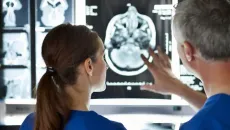
Medical researchers at Mass General Brigham say the self-supervised foundational model can identify inherent features from brain MRI datasets and is adaptable to other healthcare applications, including brain cancer treatment.

Dr. Jacqueline Naeem of Parkland Center for Clinical Innovation previews her upcoming HIMSS26 talk on how health systems can use EHR data to protect frontline staff.

The minibus package also funds HHS and extends acute hospital care at home.

John McDaniel, CIO of North Dakota's Trinity Health, is in the midst of a switchover with a go-live scheduled for October. He offers advice straight from the trenches that can help other health IT leaders with this epic – and Epic – task.
With its Zero Harm 24/7 project, the patient experience organization is asking health systems to help drive improvements in transparency and culture by establishing a standardized patient and staff safety framework.

The AI assistant offers personalized answers to members’ health benefit questions.

AI needs to be designed to address what matters most to patients and families, says Laura Cooley, who is speaking at HIMSS26.

It's the gold standard for analytics today, says Dr. Ryan Bosch of Acentra Health and a health system veteran – a proven model of care and data that can drive technical, clinical and business success.