Workforce
The lights, deployed at UC San Diego Health by BIOS, help with circadian entrainment to boost staff alertness and its wavelengths can improve visual check-ups for elderly patients, the company says.
The creation of the Burke Mental Health Emergency Center, which focuses on telemedicine, gives rural healthcare organizations and law enforcement new choices where few used to exist.
Three experts offer suggestions and tips for healthcare CIOs working with clinical communications hardware and software.
Working with WakeMed in North Carolina, the delivery service will deploy a quadcopter along a pre-determined flight path to deliver blood and other diagnostic specimens.
The health system co-designed a platform that provides multifactorial data analysis and direct-to-physician communication, as well as continuing education material.
At the Georgia health system, a smartphone app is the hub for after-hours communication among physicians, nurses and patients, with caregivers getting more information than ever.
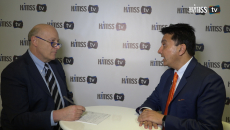
HIMSS Enterprise Board Chair Manish Kohli and HIMSS International EVP Bruce Steinberg discuss the lessons learned from digital transformation successes and failures throughout the world.
During the first year of tele-ICU, the technology helped save 125 lives, reduce ICU length of stay by 34 percent, reduce the sepsis mortality rate, and more.
A group of Kiwi clinicians with a passion for technology driving changes in healthcare has created a Clinical Informatics Leadership Network.
The new network is being supported logistically and financially by Health Informatics New Zealand and held its first meeting during the HiNZ 2018 conference in Wellington.
It now has 74 members from a range of health professions such as medicine, nursing, allied health, midwifery and pharmacy.
It provides an online forum for members to share expertise and ideas as well as national networking events.
Network organiser Karen Blake is the regional manager for health informatics at shared services organisation healthAlliance and has worked as a midwife in both New Zealand and Australia.
“There have been lots of failed IT projects in health and there’s enough evidence now to demonstrate that clinical leadership is absolutely fundamental to the success of these projects,” she says.
“Our IT solutions need to be clinically led to solve clinical problems, as it’s not about solving more and more IT problems.”
Similar networks have been set up in Australia and the UK, where NHS trusts routinely have a chief clinical information officer and there is a national CCIO for Health and Care.
Fellow network organiser and clinical director information services and virtual healthcare at Waikato DHB Ruth Large says in New Zealand there are a variety of ways that DHB information services use a clinical reference point, but there is no consistent clinical IT role in DHB leadership models.
“There has been a gap in terms of clinical leadership around the development of our digital technologies,” she says.
Large says CILN members do not need to have IT qualifications or a role involving informatics, but an interest in using technology to drive change, efficiency and good patient outcomes.
Large wants New Zealand to avoid the US experience where the wide implementation of electronic health records has seen many clinicians become disengaged, feeling they are entering patient data into computers to “feed the machine”, rather than for improved patient outcomes.
“We need a cohesive and supportive voice for clinical IT, otherwise we are just going to get the technologies we are given,” Large says.
This article first appeared on eHealthNews.nz.
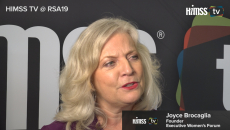
Joyce Brocaglia, CEO of Alta Associates and founder of Executive Women's Forum, details the need to fill board of director seats with people with security skills as well as diversifying cybersecurity teams.