Women In Health IT
Almost every informatics manager you speak to will tell you about problems attracting, recruiting and retaining high quality informatics staff. We also know the problem is likely to get worse rather than better, as greater numbers and more highly skilled and specialist staff are needed in the future.
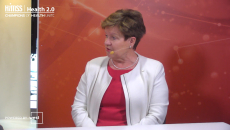
When developing a digital health system, it's crucial that the workforce be involved in the design process, says Kaija Saranto, professor in Health and Human Services Informatics at the University of Eastern Finland.
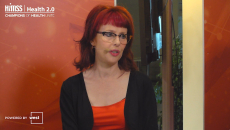
Victoria Betton, mHabitat founder and director and HIMSS UK Advisory Council member, says anonymity and remote access are just two benefits of using digital tools to help improve people's mental well-being.
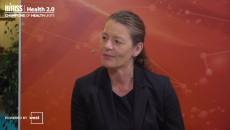
Norway Health Tech CEO Kathrine Myhre, winner of the HIMSS Europe Future50 award, says lessons from oil and gas industry successes along with Norway's pioneering culture help fuel the drive to maximize the healthcare system's potential.
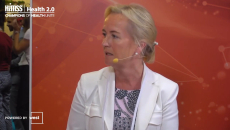
Cancer patients who used digital solutions to stay connected to their caregivers and report symptoms lived 6-7 months longer, says Dr. Johanna Mattson, director of Comprehensive Cancer Center at Helsinki University Hospital.
The Big C. is a platform to connect a community that offers leadership and skill training, while transforming the patient journey, says founder Stefanie Veraghtert.
Health data that has been collected securely is being used to improve life for Finland's population, creating trust between the government and its citizens, says the country's Permanent Secretary at the Ministry of Social Affairs and Health Päivi Sillanaukee, MD, PhD.
Progress has been made towards gender equality, but it is clear that much work remains to be done, and the situation is no different in health IT.
In a new survey of more than 100 women in the industry in Europe, carried out by HIMSS, owner of Healthcare IT News, more than 80% of respondents said they felt that their contribution to the industry was not recognised, and over 60% that they had encountered gender discrimination in the workplace.
This was manifested through lower chances of promotion and lower salaries, as well as fewer opportunities for training. “You have to work twice as hard to demonstrate the same as a man in your position,” one respondent said.
“Also there are places, specially [sic] when talking to investors that feel like they have to teach you things rather than listen to you. They expect the man in the room to carry the conversation and to deal with him rather than the woman.”
Sunjoy Mathieu, founder of Women in Digital Health in Switzerland, told Healthcare IT News the results were worrying. “There is a need for further support within organisations, and in my opinion that can only work if women who have ‘made it’ are mentoring and supporting other women, taking this responsibility and making change sustainable, on a societal level, not only fight for themselves as individuals," Mathieu said.
Mentoring programmes were also seen as important by respondents of the survey. However, only 30% said they were currently mentoring someone else, and 17% that they had a mentor. Approximately 50% expressed a willingness to be a mentor or a mentee.
Unveiling the results, Angela Velkova, HIMSS EMEA director of communities and strategic relations, said answers to questions about how women tackled gender discrimination in the workplace indicated that a majority of them were now coming forward and discussing the issues with colleagues and management, not letting it be swept under the rug.
Furthermore, around 80% of women said their organisations were promoting and supporting diversity by encouraging open dialogue and having a zero-tolerance policy for disrespectful behaviour.
"The percentage of women feeling discriminated at the workplace based on their gender is concerning," Velkova added. "The survey results motivate us to work more through strategic initiatives at the local level - and the HIMSS regional communities can serve as a great platform for that."
Last year’s survey saw 94% of women say they felt that their work went unnoticed, and Velkova said that the 11% decrease, compared to the 2019 results, indicated that this was now starting to be addressed.
But there is still a long way to go. “We clearly need to urgently move to a situation where the gender discrimination we have at the moment is a thing of the past,” said Charles Alessi, chief clinical officer of HIMSS. "It is not acceptable that such large amounts of women feel that their contributions are not valued. We have to change it," the CCO cautioned.
.jumbotron{ background-image: url("https://www.healthcareitnews.com//sites/hitn/files/u2556/HelsinkiJumbotron.jpg"); background-size: cover; color: white; }
.jumbotron h2{
color: white;
}
Full coverage: HIMSS & Health 2.0 Europe 2019
Healthcare decision makers, patients, clinicians, nurses, life science professionals, innovators and many more are set to convene at the HIMSS & Health 2.0 European Conference 2019 in Helsinki on 11-13 June.
CEO Liz Ashall-Payn discusses the review process of health apps by the Organisation for the Review of Care and Health Application, an accredited reviewing engine.
Technology can make connections with people 24/7, not just when they’re in a care setting, to manifest empathy, says Carium Chief Transformation Officer Lygeia Ricciardi.