Precision Medicine
Artificial intelligence will also continue to be a big focus, as it becomes more clear which startups are succeeding in their initial target sectors. VCs are also eyeing genomics analytics tools, as well as other more practical technologies.
“This is a big step forward in personalizing cancer treatment and ensuring better patient outcomes,” said Professor Lim Chwee Teck, Mechanobiology Institute, NUS Biomedical Engineering.
Masimo, the maker of monitoring technologies and connectivity tools for hospitals, announced this week that it will acquire the connected care assets of NantHealth for $47.25 million in cash.
WHY IT MATTERS
NantHealth’s Connected Care suite – with tools such as DCX device connectivity, VCX patient vitals software, HBox connectivity hub and Shuttle interface cable – enables medical device interoperability for hospitals and health systems.
The transaction is expected to close in the first quarter of 2020, subject to customary closing conditions.
Masimo officials say the deal will help it offer hospital customers improved continuum of care with its automation and noninvasive monitoring technologies.
It notes that NantHealth's suite of connected care tech enables more streamlined collection and storage of medical device data, through a vendor-agnostic platform, into electronic health records and other clinical information systems.
THE LARGER TREND
For its part, NantHealth says the sale will enable the company to focus on innovating in areas such as precision medicine.
"Our decision to sell the Connected Care business enables us to focus on accelerating growth for our NaviNet and Eviti SaaS solutions, our data and molecular analytics capabilities, and pursue other strategically aligned goals," said Patrick Soon-Shiong, NantHealth's chairman and CEO, in a statement.
"We believe Masimo has the best connectivity solutions, and we are delighted to have found the right home for our Connected Care business and our committed team of employees. We are working with Masimo to ensure a smooth transition for our Connected Care customers."
ON THE RECORD
"One of the strategic priorities for Masimo is, through our Hospital Automation solutions, to reduce clinician cognitive overload and reduce errors of omission," added Joe Kiani, chairman and CEO of Masimo.
"Through connectivity, predictive algorithms, and decision support, we hope to improve the continuum of great care. The connectivity assets we are acquiring are completely in line with our mission as they will help accelerate our internal growth initiatives in this area. Not only does Connected Care immediately increase our customer footprint but also provides us with products which complement our current portfolio."
Twitter: @MikeMiliardHITN
Email the writer: mike.miliard@himssmedia.com
Healthcare IT News is a publication of HIMSS Media.
The findings suggest AI systems can be trained to detect and grade cancer in prostate needle biopsy samples with an accuracy rate equal to that of prostate pathology experts.
Three experts from different areas of the health IT field discuss how artificial intelligence is going to play a larger role in the year ahead.
A study published in Nature suggests its model was able to spot cancer in de-identified screening mammograms with fewer false positives and false negatives than experts.
The pharma company will work with MIT's School of Engineering to establish an education program focused on developing new machine learning approaches to drug development and more.
BioLabs@NYU Langone, billed as the largest of its kind in New York City, will house more than 35 early-stage biotechnology and life sciences companies and 160 scientists and staff.
The center will use precision genomics to discover, address and treat genetic diseases, many of which affect infants and children and can cause life-long disability.
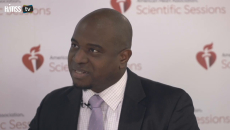
Azizi Seixas, with the Department of Population Health and the Center for Healthful Behavior Change at NYU School of Medicine, talks about using risk assessment tools to close the health access gap.