Population Health
One seeks to reduce variations in care, the other is about increased variations. But both are key to the future, says the health system's chief innovation officer.
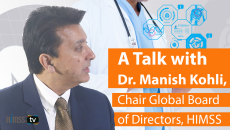
Chair Global Board of Directors, HIMSS, Dr. Manish Kohli discusses global struggles with quality, access and cost of care and how China has stepped up to those challenges with remarkable speed and level of ambition.
Frost and Sullivan found PHM vendors added predictive disease modeling, automated risk stratification and functions for identifying populations receptive to precision interventions.
More and more providers understand the key role social determinants play in delivering better health outcomes. AI and predictive analytics can help harness that data for better care and higher reimbursement.
SDOH will require a new education approach, platform and principles akin to personalized medicine.
Neck-and-neck, the two rideshare companies are making big moves to assert themselves in the space, hiring health IT talent as providers and other vendors continue to partner.
In the book Affordable Excellence: The Singapore Healthcare System by William A. Haseltine published in 2013, the author noted that Singapore “ranks sixth in the world” in terms of healthcare outcomes, while “spend[ing] less on healthcare than any other high-income country”. When compared with other countries, Singapore ranks high on value-based indices - A 2014 EIU white paper that looked at health outcomes and costs across 166 countries ranked Singapore second after Japan, noting that it had achieved similar outcomes to Japan’s but with a significantly lower investment.
One of the key pillars behind Singapore’s remarkable success in delivering affordable and high-quality healthcare since its independence in 1965 is the government’s approach to healthcare improvement and care as an integral and inseparable part of the overall development planning for the country, Haseltine explains in the first chapter of his book.
In November 2017, the Ministry of Health introduced the ‘3 Beyonds Strategy’ to keep healthcare in Singapore good and affordable.
They are:
(i) Beyond Healthcare to Health
(ii) Beyond Hospital to Community
(iii) Beyond Quality to Value
With an aging population and increasing costs and burden of healthcare in Singapore, the “Beyond Quality to Value” strategy becomes essential to retain or increase quality of care while ensuring value for money. The Agency for Care Effectiveness (ACE) was set up in 2015 to research treatments that provide the best value for money. For instance, three drugs may offer the same results, but have very different prices. Or a drug may be more expensive, but offer outcomes that are far better than cheaper alternative drugs.
Webinar: Compliance as code: Automate compliance using open source technology
In the long run, the conventional method of fee for service-based care that works on a basis of volume and treating illnesses and injuries as they occur is also not tenable – hospitals and healthcare organisations cannot expand their capacities indefinitely and there is already an existing manpower crunch of qualified professionals in the healthcare sector.
Treating illnesses and diseases when they occur is often expensive and unpleasant for patients – therefore, the proverb, “prevention is better than cure” is especially relevant. The “Beyond Healthcare to Health” strategy has seen the Health Promotion Board (HPB) ramping up efforts for people to become healthier and more active, through initiatives such as the National Steps Challenge (currently in its forth season) and Healthier Dining Programme.
Value-based care prioritises health outcomes that matter to patients relative to the cost of achieving those outcomes. This is also related to “Beyond Hospital to Community” strategy in which patients can receive appropriate care community or at home so they can stay well and avoid frequent hospital admissions. This is better for them in terms of health and convenience, and for the healthcare system too, as hospital care is very expensive.
The transition from a fee for service-based to a value-based healthcare system may not be an easy journey for many healthcare providers and organisations but it also presents many opportunities to relook existing approaches to healthcare, not just in the delivery of patient-centric care but also in aspects such as financing models and leveraging technologies such as AI to provide value to both patients and clinicians while reducing costs.
With the theme of “Disruptive innovation for Value-based healthcare”, the HIMSS Singapore eHealth & Health 2.0 Summit held from 23-24 April 2019 at Marina Mandarin Singapore will feature six main topics related to achieving value-based healthcare:
(i) Population health
(ii) Healthcare revenue cycle
(iii) Patient outcomes
(iv) Acute-to-community
(v) Cybersecurity; and
(vi) Artificial intelligence
The HIMSS Singapore eHealth & Health 2.0 Summit will be a great opportunity for like-minded healthcare leaders and professionals in Singapore and abroad to come together to tackle some of the major challenges and opportunities in moving towards a value-based healthcare system.

During December, we’ll interview thought leaders and experts to determine how data is redesigning the roles CEOs, CFOs, COOs and other execs play and take a business-first perspective on tactics such as cloud computing, telehealth and patient experience
The HIMSS AsiaPac 18 Conference in Brisbane officially started today with an opening plenary, Leadership Voices: Healthcare Anytime, Anywhere featuring five healthcare leaders and experts with experience from different parts of the globe. Dr Charles Alessi, Chief Clinical Officer, HIMSS, the moderator of the panel started with an opening question to the panelists – what are the drivers and challenges of healthcare?
Dr Manish Kohli, Senior VP and Chief Medical Information Office (CMIO), Aurora Healthcare and Chair, Global Board of Directors, HIMSS said that from his experience in the US and bringing a Cleveland Clinic to Abu Dhabi, healthcare systems around the world are struggling with the same issues – providing quality care, ensuring accessibility to care, reducing costs of care, enhancing the clinician experience as well as the patient experience.
“Another challenge in healthcare that is consistent across the globe, specifically in Western countries, India and China with large populations is that of the silver tsunami – an ageing population. They bring with them the wonderful benefit of extended lives but this also means that they are living with diseases longer,” said Hal Wolf, President & CEO, HIMSS, USA.
He added that a tremendous amount of healthcare resources is being consumed and about seven to ten percent of the population is consuming 80 percent of the resources, and with it comes funding challenges: “We not have a clear pathway to be able to sustain the encounter-based (healthcare) paradigm that we have grown up with. We will not be able to build enough hospitals fast enough.”
There is also the issue of a 7.2 million global workforce gap for the healthcare industry, according to the World Health Organisation (WHO). On a more positive note, Hal said that currently the healthcare industry has access to technological tools like never before but of course the healthcare information must be available first – the information can be used to provide better health outcomes but this needs to be balanced with privacy concerns in place.
CEO and CIO of eHealth Queensland, Australia, Dr Richard Ashby, was convinced and optimistic of the objective benefits brought about by rolling out digital health initiatives in Queensland. Seven to eight percent of hospital costs around the world in first world countries are caused by adverse events that are largely predictable and preventable.
“We are seeing the reduction of these preventable adverse events through the digitisation of healthcare, streaming data and giving clinicians data about what they have done and what they have not done. For instance, digitisation was reducing the length of hospital stays by six to nine percent. Translate that across Queensland and that is one less 700-bed hospital that we have to build,” said Dr Ashby.
However, in the context of Australia, he said that a real challenge is to address and provide for the health of the rural and indigenous communities, which are 600 or 700kms away from the urban areas. This is where mobile health initiatives such apps to help with eating disorders can be useful to address some of these challenges, for instance.
Sharing examples of consumer-direct health apps in China, Dr Jenny Shao, Health Information System Director, United Family Healthcare (UFH), Chair, HIMSS Asia Pacific Governing Council said that the whole healthcare industry in China is very much driven by the central government, so every reform and launch of a new platform or technology is usually directed by the government.
One of these examples is that a person living in an urban city in China can easily grab his/her phone with Internet access, open up an app and talk to the phone about his/her medical condition. The person will be guided to a list of doctors, he/she can pick one from the list, the physician’s face will appear on the screen and the consultation begins! If a prescription is needed after the consultation, the medication will get delivered to the person’s doorstep within half an hour or an hour, depending on traffic conditions. This is happening right now in China and no longer a dream, truly working towards the conference theme of “Healthcare Anytime, Anywhere”.
Another platform that was launched by the government in Shenzhen city, in the Southern part of Guangdong, requires residents to sign up with their GPs online. As long as the resident signs up, he/she will have a dedicated GP who will provide services to him/her, such as medical check-ups and referrals. The GPs will even check for alerts from the wearable devices of the resident. A dedicated physician will provide the resident with education on chronic diseases as well as helping him/her with the self-management of his/her health. This is currently in use in China for both younger tech-savvy consumers and also for older people to help them manage their chronic health conditions.
Tim Kelsey, Chief Executive, CEO, Australian Digital Health Agency, shared his perspective on the role of the consumer in healthcare as Dr Alessi mentioned how consumers are ‘pulling’ healthcare to themselves. “Governments in other parts of the world and certainly Australia are tapping into the energy source of the community and the person, in order to meet the sustainability challenge of a paternalistic health service, they need people to take more control of their healthcare and well-being”, Tim said.
He sees that in Australia that there is a very determined political commitment to un-tap that asset to get the community engaged in healthcare. Additionally, in terms of healthcare, the different administrations are trying to build on each other’s success with lots of collaboration, which is evident in the recently launched National Digital Health strategy in July this year.
As a light-hearted wrap up to the panel, Dr Alessi asked each of the five panelists what they would want to receive in a box for Christmas. Dr Shao wanted powerful clinical decision support tools for all physicians and healthcare providers. Dr Ashby wished for a big hard drive with hyper-advanced artificial intelligence that will aid in the prediction of demise and also help patients in hospital.
“In terms of healthcare, what I would really to receive in a package is the ultimate clinical decision support, an analytic platform that really allows for the best possible personalisation per person and circumstance,” Hal shared. Dr Kohli wished for resilience for those in the healthcare industry as it is an exciting time in healthcare and health information technology, in which the current generation has a unique privilege to shape healthcare like it has never been delivered before. Tim wanted to see the evidence of benefits from digital investments in healthcare to encourage those who remain skeptical that it is the right way to go.