Patient Engagement
Biofourmis, a Singapore-based health analytics platform, has entered into a collaboration with Brigham and Women’s Hospital in Boston, US to co-develop improvements to their proprietary analytics engine, Biovitals™ for Brigham’s Home Hospital Programme.
Patients are cared for in their home instead of the hospital in Brigham’s Home Hospital Programme, with the aim of providing the right care to the patient at the right time and place. The Programme started in November 2016 and about 200 patients have been cared for from home so far.
The process
After a patient has been discharged from the hospital, a doctor or nurse meets the patient at his or her home and all diagnostic work are performed at home, such as blood tests, X-rays and ultrasounds. The patient’s vitals including heart and respiratory rate, as well as movement are monitored 24/7 with wireless monitoring technology.
The patient is given an electronic tablet that allows him or her to communicate anytime with medical staff via phone, text or on-demand video. Many treatments, including medications, are administered at a patient’s bedside. Preliminary pilot data of nine patients who were randomised to receive care at home showed that the average direct cost for acute care episodes for home patients was up to half of the cost of the control patients cared for in the hospital.
Webinar: Patient Engagement: Transforming the Patient Experience with Innovative Digital Services
The collaboration between Biofourmis and Brigham and Women’s Hospital will harness and clinically utilise the vast quantity of biometric data that the home hospital team collects. The team plans use the Biovitals™ analytics engine and further innovate around new predictive algorithms. Unlike traditional threshold-based physiology monitoring, Biovitals™ uses advanced machine learning to learn a patient’s physiology and then dynamically build a personalised physiology signature that can detect subtle physiological changes that may predict a patient’s health. The programme would also use Biofourmis’ RhythmAnalytics™ platform to detect dozens of different cardiac arrhythmias.
“Current remote monitoring systems are based on univariate physiology analysis and have shown high false alarm burden and no early intervention, especially while monitoring patients in an ambulatory setting. This collaboration would enable us to enhance and co-develop new predictive models for monitoring acutely ill patients’ suffering from multiple conditions like heart failure, pneumonia, COPD, and atrial fibrillation at-home, enabling clinicians to intervene early and improve the level of safety of patients,” said Kuldeep Singh Rajput, Founder & CEO of Biofourmis.
“Our home hospital team is hoping to improve care for our patients by creating a suite of highly clinically-useful algorithms that can predict deterioration and improvement for those who are acutely ill,” said David Levine MD, MPH, MA, researcher and lead for Brigham and Women’s Home Hospital programme.
In December 2017, Biofourmis announced that it had raised US$5.0 million in a Series A round of funding from NSI Ventures and Aviva Ventures, the strategic corporate venture arm of international insurer, Aviva plc. The company also entered into a collaboration with Mayo Clinic, which would enable them to assess de-identified healthcare data from clinical trials and Mayo’s expert medical insights.
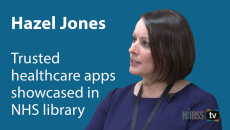
Hazel Jones, program director of Apps & Wearables at NHS Digital talks about the wide range of healthcare apps that were put through a stringent assessment process before being made available in the UK's NHS apps library.

Dr. Shafi Ahmed, CMO, Medical Realities, says that clinicians can be inventors, and embrace change – as he learned at the UK's Royal London Hospital – by ensuring the patient voice remains prominent when developing innovative strategies at a leadership level.
Dunedin, the second largest city in the South Island of New Zealand and the principal city of the Otago region, is currently making plans for a new digital hospital. The Southern District Health Board’s (DHB) Executive Director People, Culture & Technology, Mike Collins said that the new hospital will be largely paperless and will leverage technology to save time for both staff and patients.
Collins is responsible for the technology infrastructure for the new hospital, which will be built on the former Cadbury factory site, and says the focus is currently on the ambulatory care block. “We are trying to implement new technologies and solutions well before the hospital opens. From a change management perspective, I want staff to be comfortable working in that digital environment before the doors open,” he added.
His team is running workshops with clinicians and the community and taking a persona-based approach to designing the technology needed to enable better experiences for patients and staff. A key question asked when looking at patient journeys is whether the person really needs to go to hospital or whether they can be cared for closer to home.
Webinar: How Chief Digital Officers Can Boost Digital Transformation
This planning is not based solely around the DHB, but around the southern health system as a whole, and incorporates the region’s new Primary and Community Care Strategy. Dr John Adams, the new Chair of the Clinical Leadership Group – the senior clinical staff guiding the clinical direction of the New Dunedin Hospital, also emphasised the importance of an integrated approach to healthcare in the Southern region in an interview:
“It’s certainly clear to me that this is not just about building a physical hospital. It’s about building on the moves that have already been made around how the hospital works, and how it relates with primary care and the whole plan of health services in the region and the South Island. The New Dunedin Hospital is going to be a really important cog in the whole of the health services in the South Island. Part of the planning will be about how the clinicians continue to develop those exciting new ways of collaborative functioning, both internally and externally.”
The region has developed a digital strategy and is working with the Ministry of Health to identify key strategic goals, such as the implementation of interoperability standards.
The strategy plans for the next five to six years and is in line with the South Island Alliance’s regional strategy and the Ministry’s Digital Health Strategy, which is still in draft form.
A version of this article first appeared on eHealthNews.nz.
The mobile patient engagement system also cut no-shows by half and increased the number of referred patients seen by 25 percent.
A new report looks at nearly 20 vendors and sees that the market for texting tech is changing – as is the way providers are using the tools.
Through the technology, the provider organization also has collected 635 online reviews for its website.
Pivot Labs, a collaboration with tech services company Persistent Systems, will also seek innovative ways to boost clinical outcomes and manage costs.
Further, 38 percent of online appointments are booked after hours, which helps with both patient retention and new patient acquisition.