Patient Engagement
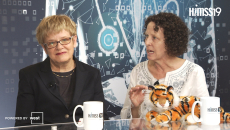
Ursula Hübner with the University of Applied Sciences Osnabrück and Beth Elias with University of Scranton discuss the Technology Informatics Guiding Education Reform and strategic approaches to seamlessly delivering health informatics education.
The aging population is not only poised to swell but Baby Boomers are bringing tech chops and consumerism-era demands that health systems will be smart to embrace.
Last month, Indonesia’s Ministry of Health (MOH) announced the launch of their Sehatpedia app to facilitate the public’s access to health information. The app (currently only available on Android platforms) has an interactive consultation (live chat) feature and provides access to health articles, medical journals and health policies. Users can also register for outpatient appointments through the app but this is only limited to hospitals under the MOH.
With the live chat feature, the public can consult doctors on health information needs such as disease complaints, health tips, and other medical consultations.
“Sehatpedia can be accessed by all Indonesian people. Physicians from 32 vertical hospitals of the MOH will respond to the consultation queries,” said Secretary of the Directorate General of Health Services, Dr. Agus Hadian Rahim, Sp.OT (K), M.Epid, MH. Kes.
In terms of the content for health articles, Sehatpedia is assisted by three communities: Health for Junior Indonesia (Kejora), which produces health articles relevant for young children, GARASI KITA community, and the FKG UI Teaching Staff Association.
According to the MOH, about 8000 people have downloaded the app as of mid-February 2019.

Revenue cycle management, patient and physician engagement, business intelligence and analytics, pop health and a clinically oriented supply chain are key pieces to patient-centered care, says KLAS VP of Business Development Doug Tolley.
The research firm's big takeaway from Orlando this past month: Newly empowered patients and the proliferation of data they bring will boost the business case for exchange – and have "cascading effects" for cloud, AI and more.
Eastern Health has rolled out a new trial across its Box Hill Hospital in Melbourne, Victoria, to help patients better manage their medication after they leave the hospital.
DC MedsRec, the community pharmacy-based service for patients discharged from Box Hill Hospital with four or more medicines, aims to reduce the risk of harm from dangerous drug interactions.
The trial, conducted in collaboration with the Australian Digital Health Agency (ADHA) and Monash University, will enable eligible patients to meet with trained community pharmacists, who will look at their hospital discharge summary via My Health Record (MHR), along with a range of other medication information on their electronic medical records (EMRs).
The pharmacist will then check the patient’s understanding of the drugs they are taking, resolve any potential medicine safety problems and ensure any medication-related recommendations from the hospital are followed up.
The pharmacist will also offer to dispose of any discontinued medications and prescriptions for the patient, with the patient's consent.
The move follows Eastern Health’s successful EMR implementation at Box Hill Hospital In October 2017, in partnership with Cerner, as part of its Great Digital Information Strategy 2015-2020.
ADHA CEO Tim Kelsey said the service was part of a $8.5 million program that trials innovative and new approaches to post-hospital support, palliative care and the management of chronic health conditions using digital technology.
“Pharmacists involved in the Box Hill project will be able to access their patients’ hospital discharge summaries quickly and easily using My Health Record,” he said.
“The ultimate aim is to ensure patients with complicated medication regimens don’t end up back in the hospital after taking a bad combination of medicines.”
Monash University Project Lead Greg Duncan said the trial was initiated as a result of poor medication management during or immediately after a hospital stay, which becomes a risk factor in 28 percent of potentially avoidable hospital readmissions within 30 days.
“We know medication errors often occur when patients leave the hospital and can mean patients end up being readmitted – so we will assess the impact of this new service on 30-day unplanned readmission rates to the hospital,” he said.
Eastern Health Chief Executive Adjunct Professor David Plunkett said the trial positions the organisation to “provide both excellent clinical care and research,” with real-world benefits.
“Community pharmacies from the Eastern Health area will take part in the pilot, with up to 5,000 patients potentially involved,” he said.
The success of the service will be evaluated after 12 months, with Kelsey adding that the results could potentially shape future projects, helping patients throughout Australia better manage their medicines.
This article first appeared on Healthcare IT News Australia.

Anne Snowdon, with the World Health Innovation Network, and Blain Newton with HIMSS, discuss H-SIMM – the new maturity model for supply chain – and how it can help improve patient safety as well as potentially save health systems billions of dollars.
Despite its clear potential to improve access to high-quality care in underserved communities, telehealth is underutilized by safety-net providers due to a range of barriers, according to a new report from the RAND Corporation.
The analysis, based on interviews with Medicaid officials from seven states and representatives from 19 Federally Qualified Health Centers in those states, points to insufficient reimbursement as a leading culprit for this lag, in addition to other logistical, policy and operational barriers.
WHY IT MATTERS
Telehealth can help rural, low-income and vulnerable populations better access health care -- and analyses have shown use of this technology, particularly live video telehealth, is growing among FQHCs. In some cases, telehealth is the only way to bring specialists into remote places. But uptake, maintenance and expansion of telehealth services have been spotty at best. The RAND report, sponsored by the Department of Health and Human Services, seeks to find out why.
Interviews with Medicaid and FQHC stakeholders revealed a lack of clarity around state telehealth policies and insufficient reimbursement as top barriers to adoption.
Other limiting factors included: infrastructure issues (e.g., insufficient broadband), technology costs, telehealth as a cost center, billing challenges, lack of buy-in among FQHC providers, challenges specific to the patient population (e.g., elderly patients, homeless patients), complexities in adjusting clinic workflow, inadequate supply of specialists to provide telehealth services to FQHC patients, complex and time-consuming logistics around credentialing and licensing, and challenges in working with remote providers.
The report suggests several possible solutions that address stakeholder concerns directly as well as areas for further research -- including surveying "the policy environment faced by FQHCs nationwide and explore whether certain policies seem to be associated with greater utilization of telehealth."
THE LARGER TREND
Given the advantages of using telehealth in underserved communities or to treat vulnerable patients, it is important that state officials and safety-net providers come to a mutual understanding of what's standing in the way of telehealth expansion for these populations -- and modify or clarify policies accordingly. Exciting developments in telemedicine technology must be evaluated in the context of whether they will provide benefits to all users, particularly those with the most need.
ON THE RECORD
"Telehealth is widely recognized as a tool that can increase access to care and improve quality, and, given that FQHCs are experimenting with telehealth across the United States, it is highly likely that many have confronted challenges and implemented strategies that can benefit others at different stages of implementation," the report authors write.
"Studies such as this can support Medicaid programs and FQHCs in the important process of peer learning. Furthermore, our findings highlight the important role of policy, in combination with cultural, organizational, and infrastructure factors, in strengthening the delivery of telehealth services."
Deirdre Fulton is communications professional and freelancer based in Maine.
On Twitter: @deirdrefulton
Healthcare IT News is a HIMSS Media publication.
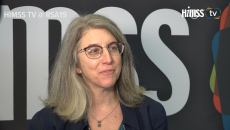
Cindy Cohn, executive director of the Electronic Frontier Foundation, offers advice on how companies can improve their products in terms of security and privacy.
At the hospital's inflammatory bowel disease center, providers can now deliver better care to patients with delicate conditions.