Interoperability
At Health 2.0, HHS Chief Data Officer Mona Siddiqui spotlighted recent efforts, including some cloud-based dynamic data and mapping tools, to link far-flung data for better public health.
An alphabet soup of healthcare stakeholders, including AHIMA, CHIME, MGMA and others, want the Senate HELP Committee to ensure the proposed regs serve the "needs of patients and those who deliver their care."

Deep Dive: The right culture, engagement, time frames and leadership must all be aligned, with EMRAM providing the roadmap to benchmark your organization digitally.
SPONSORED
 |
01:00 am |
September 23, 2019
|
01:00 am |
September 23, 2019
|
01:00 am |
September 23, 2019
The Minister of Health Malaysia, Datuk Seri Dr Dzulkefly Ahmad, in one of his remarks said, the Ministry of Health (MoH) is committed to ensure that the electronic medical record (EMR) system can be realised within three to five years in all hospitals and clinics nationwide.
Noting that the EMR system is one of the basic and fundamental digital infrastructure for building a digital health ecosystem, he said the system would allow for the entire clinics and hospitals to be integrated.
It will then enable the health facilities to achieve a seamless level of patient information services and systems, with no obstacles or barriers to accessing patient information. Fortunately with EMR, MoH will be able to enhance the effectiveness of health services in terms of patient care and management.
Part of the MOH Malaysia’s ICT Strategic Plan is to achieve a standardised digital health agenda and the vision is for an integrated healthcare system to provide comprehensive health services to the people. An integrated healthcare requires information that flows from different systems and various sources but interoperability between information systems still remains a challenge. Therefore, promoting the use of health informatics standards that is recognised internationally is important in pursuing this vision.
“In Malaysia, we are continuously developing and managing standards with international benchmarking. Among the standards implemented include the Malaysian Health Reference Data Model (MyHRDM), Malaysian Health Data Dictionary (MyHDD), ICD, ISO TC 215, LOINC and SNOMED CT,” said Datuk Dr Noor Hisham Abdullah, Director General of Health Malaysia.
Benefits of SNOMED CT adoption – locally and regionally
As one of the most comprehensive medical terminology standards, SNOMED CT is an international standard and validated clinically through a rigorous process. One of the main advantages of SNOMED CT is its comprehensive clinical concepts and relationships, which enable a wider range of analyses of healthcare data that could not be done previously.
“We have troves of health data waiting to be analysed and with the advancement of technology and also SNOMED CT, all of these data can be used and analysed by clinicians and healthcare policymakers to further improve the services and patient outcomes,” Dr Noor Hisham explained.
In the Asia Pacific region, the SNOMED CT community is also growing with members in countries such as Australia, Brunei, Hong Kong, India, Kazakhstan, New Zealand and Singapore. With a growing community, member countries can share their views and experience, particularly in the implementation of SNOMED-CT in their own countries – the exchange of ideas and collaboration will further improve the quality of healthcare services of the member countries. With increasing numbers of participating countries, the journey towards interoperability of patient data and improvement of service delivery for treatment across borders can be achieved faster.
“SNOMED CT is more than just about comprehensive clinical terminology standards. It is also about the community behind it. Within the SNOMED CT family, we have an abundance of shared knowledge and experience between experts from the SNOMED International committee and also member countries,” said Dr Noor Hisham.
SNOMED implementation in Malaysia and its impact
According to Dr Noor Hisham, MOH Malaysia is interested in analysing health data and utilising it for evidence-based decision making and planning at the highest level. SNOMED CT allows for improved data analytics at the Ministry through the development of MyHarmony and Malaysian Health Data Warehouse (MyHDW). MyHarmony is a feature of MyHDW that has the ability to deal with unstructured data.
Through using MyHarmony with SNOMED CT, more information from free-text utilising the SNOMED CT structure can be generated, reducing the effort needed to collect data in a structured manner such as in registry and indicator reports.
Another benefit of using MyHarmony with SNOMED CT is the ability to generate new information by retrospectively running new queries on old discharge summary records, which reduces the effort and time to collect data in a prospective manner when new questions arise, such as for indicator reports that often change on a yearly basis.
Information can be delivered in a timelier fashion through using MyHarmony with SNOMED CT and this enables clinicians and health managers to plan and take action without waiting for a yearly report which can take one to three years.
Future plans for SNOMED-CT in Malaysia
“Firstly, we want to expand the usage scope of SNOMED CT with MyHarmony. Currently, we are in the middle of developing the dental procedure reference dataset. We are looking into extracting the data on dental procedures by analysing the procedure data written in free text by dental clinicians.
We are also planning to expand SNOMED CT’s usage for drug and Traditional Chinese Medicine (TCM). We look forward to work with the vendor community to increase the awareness of SNOMED CT, and hope that more vendors will utilise SNOMED CT in their products and benefit from its functionalities,” shared Dr Noor Hisham.
The SNOMED CT Expo 2019 will be held in Kuala Lumpur, Malaysia from Oct 31 to Nov 1. Malaysia’s Minister of Health, The Honorable YB Datuk Seri Dr Dzulkefly Ahmad will deliver the conference opening plenary. More details about registration can be found here.
Contra Costa Health Services takes on whole person care by gathering every bit of data, not just medical care data, and getting it into its Epic EHR. The results have been startling.
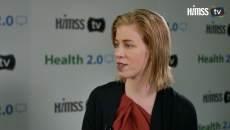
Medal co-founder and CEO Lonnie Rae Kurlander says her company's collaboration platform for common workflows translates a wide variety of formats into FHIR data to be exported downstream.
A legal expert who helped write HIMSS’ comments on the proposed rule offers an in-depth look at the new regs, and explains what they could mean for IT and infosec leaders.

Exponential Medicine aims to cross-fertilize and blend tech innovations to get unstuck from a "sick care system," says founder and chair Dr. Daniel Kraft.

Deep Dive: In Part 1 of a four-part series, healthcare cybersecurity veterans discuss the major risks facing healthcare organizations, and why protecting sensitive data and systems is a must for providing care.
Two interoperability projects will get a funding boost from the Leading Edge Acceleration Projects in Health Information Technology, or LEAP in Health IT program, launched by the The Office of the National Coordinator for Health Information IT.
WHY IT MATTERS
The LEAP in Health IT awardees will get address fast emerging and future challenges to advance the development and use of interoperable health IT.
The specific focus is twofold. ONC was seeking innovations in the standardization and implementation of scalable FHIR consent resources, and the design, development and demonstration of enhanced patient engagement technologies.
The 2019 awardees are San Diego Regional Health Information Exchange and University of Texas at Austin.
San Diego Regional HIE, with an eye toward standards, use case and community testing, will develop and make available FHIR Consent Implementation Guide and package new open-source prototypes and content to assist partners in using the FHIR Consent Resource.
University of Texas at Austin will develop and test a patient-engagement platform to support an array of mobile apps aimed at underrepresented populations. The focus will be on privacy and security needs, user-centered design approaches and appropriate data sharing across patients, clinicians and researchers.
THE LARGER TREND
ONC says the LEAP in Health IT initiative is aimed at "well-documented and fast emerging challenges that inhibit the development, use, and/or advancement of well-designed, interoperable health IT. It is expected to further a new generation of health IT development and inform the innovative implementation and refinement of standards, methods, and techniques for overcoming major barriers and challenges as they are identified."
These initiatives are the most recent in ONC's ongoing efforts to spur interoperability innovation across healthcare. While another project, CONNECT, recently transitioned from ONC control to the private sector, other efforts continue as the agency pushes forward on data exchange imperatives of the 21st Century Cures Act.
ON THE RECORD
"These projects will make it easier for our increasingly complex health care system to leverage the latest technological advancements and breakthroughs more quickly and to enable real-time solutions to health care challenges," said National Coordinator for Health IT Dr. Don Rucker, in a statement.
Twitter: @MikeMiliardHITN
Email the writer: mike.miliard@himssmedia.com
Healthcare IT News is a publication of HIMSS Media.