
Government & Policy
The opt out process is ‘overly complicated’ said NHSX chief executive.

She comes to OCR from New York State's Department of Health, where she coordinated COVID-19 response and led social programs. Before that, she worked in the Obama administration on cybersecurity at DHS.

The inclusion of remote therapeutic monitoring codes in the 2022 Physician Fee Schedule suggests that transformations in digital health policy initiated in response to COVID-19 are beginning to have some permanence.
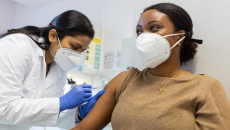
With more and more organizations requiring proof of COVID-19 vaccination, attention has to be paid to factors that could hinder wider uptake: access to technology, privacy concerns, social determinants of health and more.

The Office of Inspector General found that many states do not conduct monitoring specific to telemedicine – despite reporting concern about fraud, waste and abuse.

The agency's analysis suggests increases in interoperability and patient-provider communication, along with frequent use of mobile health apps.

A recent task force report offers some preliminary exploration of how definitions of EHI and designated record set might be operationalized going forward under the Cures Act Final Rule.

The app is being developed to simplify the entry process at hospitality venues.
Selected institutions will use the money to develop curricula, recruit participants and assist in public health career placements.
Health and social care secretary Sajid Javid said the UK must “level up” digital health inequalities to ensure the long-term sustainability of health and social care.
One in 10 NHS trusts are still operating on paper-based systems and 71% of the social care sector has no digital access to information on patients’ medication, according to figures revealed by Javid at the Founders Forum Health Tech Summit this week.
“Despite the great progress of recent years, too much of the system doesn’t currently have the basics in place, which frustrates patients and makes life harder for colleagues on the frontline,” Javid said in his virtual keynote address.
In the speech, which took place during London Tech Week today (21 Sept), Javid said the opportunities of digital transformation should be “spread fairly” by shoring up cybersecurity capability, replacing out of date technology and supporting the adoption of shared care records.
He stated that 88% of integrated care systems will have a shared record in place by the end of September – up from 65% six months ago.
Also, he said clear digital standards were being developed to encourage innovation and multiple funds for tech transformation would be consolidated into a single fund.
WHY IT MATTERS
Javid said that digital transformation was essential to increase the time spent on patient care and could mean releasing more than 10 hours of care worker time per care home each week.
THE LARGER CONTEXT
In his speech, Javid praised “coders, developers, and innovators” for helping the NHS during the “seismic change” of the pandemic.
He acknowledged digital health successes including the online coronavirus diagnosis service, the vaccination booking system and use of primary care data to create the world’s largest analysis of coronavirus risk factors.
Also he noted the NHS app, which allows people to view the NHS COVID Pass, has now reached 16 million users, compared to four million in May.
More than 300,000 people are being supported at home through digital solutions for monitoring long-term conditions, such as pulse oximeters which allow patients to measure their blood oxygen levels, he said.
Javid also highlighted the creation of the AI Health and Care Award, which is making £140 million available over three years for AI technology and the creation of the What Good Looks Like digital framework, which sets out standards for digital maturity.
ON THE RECORD
Javid said: “Now we’ve seen what health tech can do at a time when health systems around the world were under incredible strain, we must build on the progress that we’ve all seen and deliver this long-awaited digital revolution.
“First, we need to get the basics right and make sure that the great advances we’ve seen are replicated across the whole of NHS and social care.”