Electronic Health Records (EHR, EMR)

Dr. Caren Campbell had bad experiences with electronic health records in the past. When she opened her own practice, she found an EHR that met all her needs.

Julia Gudgeon, the first national digital midwife, will oversee the online records.

Version 2 of the United States Core Data for Interoperability offers "clearer direction toward the standardized, electronic exchange" of those data types and others, enabling better care for "all patients."

SPONSORED
 |
05:45 pm |
July 12, 2021
|
05:45 pm |
July 12, 2021
|
05:45 pm |
July 12, 2021
Most EHR systems do a fine job automating the hospital’s administrative and operational functions, but fall short of the mark when it comes to streamlining clinical workflow in a manner that truly supports providers delivering patient care. The pandemic drove this harsh reality home, in particular when care expanded to non-traditional settings, such as temporary triage tents in hospital parking lots. Join Cathy Donohue, vice president of product management at PatientKeeper, Inc., as she reviews some of the EHR-related challenges providers encountered caring for patients during the surge, and how EHRs are likely to evolve following the pandemic.
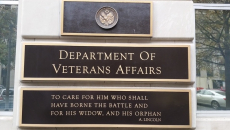
A pair of reports from the Department of Veterans Affairs Office of Inspector General raised more potential concerns about the VA's electronic health modernization program.
The reports, published on back-to-back days this past week, flagged unreliable IT infrastructure cost estimates for the EHR modernization program as a whole, along with training deficiencies for business and clinical workflows at the first go-live site at the Mann-Grandstaff VA Medical Center in Spokane, Washington.
WHY IT MATTERS
In the first report, published this past Wednesday, the VA OIG's Office of Audits and Evaluations noted that the VA had reported to Congress in 2018 that the EHR modernization program would cost about $16.1 billion over the course of ten years.
That cost included about $4.3 billion for IT upgrades, including system interfaces and updates to end-user devices such as desktop and laptop computers.
"Reporting reliable cost estimates for these upgrades is imperative so that Congress has the information needed to make informed budgetary and investment decisions," observed the OIG.
Unfortunately, says the OIG, complete documentation for those estimates was lacking – making it difficult to assess their accuracy.
In addition, "the OIG found [the Office of Electronic Health Record Modernization] did not include costs for critical program-related IT infrastructure upgrades in the estimates reported to Congress, effectively underreporting program costs by nearly $2.5 billion," read the report.
OEHRM lacks formal agreements with the VA's Office of Information and Technology and the Veterans Health Administration to commit to funding those $2.5 billion upgrades. The absence of agreements can leads to problems, if OIT or VHA can't complete them.
"Without all critical IT infrastructure upgrade costs accurately presented in the life-cycle cost estimates, Congress lacks a comprehensive picture of total program costs that decision-makers need to make informed oversight and investment decisions," read the report.
The second report, which concerned the new EHR at Mann-Grandstaff, also raised issues.
In that report, the VA OIG's Office of Healthcare Inspections found significant gaps in staff training on how to use the new EHR – particularly in regard to context and workflow.
"Facility leaders reported that training did not provide opportunities to test proficiency in navigating a wide variety of clinical scenarios; instead, instruction focused on the multiple steps required to complete specific tasks," read the report. The OIG found that facility leaders and staff said they had insufficient time to cover complex training topics, especially amid the context of COVID-19's other challenges.
Two or three months after using the new EHR, more than half of facility staff said they couldn't share patient information with other clinicians without difficulty, and nearly two-thirds said they couldn't navigate the different EHR applications without difficulty.
"Overall, the survey results showed that, after training and two to three months of new EHR use, only a small percent of facility users reported facile use with EHR core functions," said the OIG.
Perhaps unsurprisingly, the OIG observed low employee morale and concerns regarding patient complaints and provider productivity.
The watchdog also noted some VA staff members' apparent attempts to disguise the training issue: "Disturbingly, leaders from VA OEHRM Change Management withheld some training evaluation data requested by the OIG and altered other data prior to sending to the OIG."
"The OIG has notified VA senior leaders of this issue and is further pursuing the matter," wrote auditors.
THE LARGER TREND
The VA's EHR modernization rollout has been beset by difficulties for months, between COVID-19-related delays; other critical OIG reports about cost underestimations; and reports of confusion and dissatisfaction from its early users.
The unenthusiastic response to the project's initial rollout led to a pause on the program while the VA undertook a strategic review.
But earlier this month, VA Secretary Denis McDonough said the department would stick with Cerner for the modernization.
ON THE RECORD
"As with any operation of this magnitude, success is dependent on ensuring synchrony of multiple, complex moving parts," wrote the OIG officials in the July 8 report. "A governance structure that ensures collaboration and engagement of all relevant stakeholders is critical to achieving that success."
Kat Jercich is senior editor of Healthcare IT News.
Twitter: @kjercich
Email: kjercich@himss.org
Healthcare IT News is a HIMSS Media publication.

SPONSORED
 |
10:00 am |
July 12, 2021
|
10:00 am |
July 12, 2021
|
10:00 am |
July 12, 2021
Two HIMSS Market Intelligence surveys show that many organizations lack the data needed to support analytics initiatives.

The Department of Justice says the defendants breached a provider's EHR and used proceeds from stolen data to buy SUVs, off-road vehicles and jet skis.

In the inaugural episode of the Changemaker Podcast series, Alison Connelly-Flores, CMIO at Bronx-based Urban Health Plan, describes the hard-hit early days of COVID-19, strategies for vaccine distribution and the value of social determinants of health.

The Commons Project announced on Thursday that it had released a free COVID-19 vaccination verification app.
The SMART Health Card Verifier, available for download on iOS and Android devices, is aimed at allowing users to scan an individual's SMART Health Card QR code and confirm their vaccination status.
WHY IT MATTERS
A handful of major pharmacies and vaccine providers, including Walmart, Sam’s Club, UC San Diego Health, and the states of California and Louisiana, have already announced that vaccine recipients would be issued SMART Health Cards (or other apps built on the SMART Health Card framework): digital vaccine records that can be shared with compatible services.
More providers and states are expected to begin issuing the cards in the coming weeks.
"SMART Health Cards were developed by a coalition of private and public stakeholders with the goal of empowering individuals with access to a trustworthy and verifiable copy of their vaccination records in digital or paper form," said Dr. Christopher Longhurst, chief information officer at UC San Diego Health.
"The cards only contain the information required to verify your vaccination or test status, and the choice of how and when to share that information is totally up to the individual," he said.
Now, the newly released app is intended to allow businesses, schools, sporting arenas and other organizations to quickly determine the validity of those Health Cards. The app will also check whether the issuer is a verified health data source from the CommonTrust network.
Developers say the verifier app does not store or share any personal information, although it does display key data including issuer name, vaccine type, dates of vaccine doses, and the recipient's name and date of birth.
THE LARGER TREND
The Commons Project Foundation is in the steering group of the Vaccination Credential Initiative, along with representatives from Mayo Clinic, MITRE Corporation, Microsoft, Evernorth, CARIN Alliance, UC San Diego Health and Apple.
A number of health IT heavyweights – including Allscripts, Beth Israel Lahey Health, CARIN Alliance, Cerner, Change Healthcare, CPSI, Epic, HIMSS (parent company of Healthcare IT News), HL7, IBM, Imprivata Mayo Clinic, Meditech, Microsoft, MITRE, NextGen, Oracle, the Sequoia Project and Zocdoc – have also loaned their expertise and resources to VCI.
The result is the SMART Health Card: interoperable and verifiable vaccine record technology.
The project, which has been months in the making, is aimed at allowing vaccinated people to show proof of their inoculations and safely return to group events.
ON THE RECORD
"For people to be truly empowered with their health information, meaning that they can use and share it in the ways they find valuable, the data must be able to be widely accepted and trusted,” said JP Pollak, cofounder and chief architect at the Commons Project.
"The addition of the SMART Health Cards Verifier App to the ecosystem will make that reality much more achievable," he added.
Kat Jercich is senior editor of Healthcare IT News.
Twitter: @kjercich
Email: kjercich@himss.org
Healthcare IT News is a HIMSS Media publication.

The Boston-area health system hopes to have two clinical systems live by September and for the full digital platform, including 300 other apps, to be operational by this time next year – offering big opportunities for scaling AI and machine learning.