Electronic Health Records (EHR, EMR)

The company can deliver high-quality content to U.S. clinicians, says VP Ken Cassell.

A paper published in the Journal of the American Medical Informatics Association noted that EHRs often misclassify American Sign Language as an "other" language, leading to data quality issues.

White House officials testified this past week that they have seen a "discernible decrease" in U.S.-targeted cyberattacks linked to Russia.
As reported by The Hill, Chris Inglis, the country's first national cyber director, told the House Homeland Security Committee that it was too soon to tell why the number of incidents had lessened.
"It may well be that the transgressors in this space have simply lain low in understanding that this is for the moment a very hot time for them, and we need to ensure that that continues to be the case," said Inglis.
"I think in the longer term, we will be able to measure in a qualitative and a quantitative fashion what the diminishment of those efforts are," he added.
Inglis emphasized the importance of staying the course when it comes to cyber defenses, saying that the United States needs to "ensure that our strategy is solidified and brought to bear."
Inglis' remarks prefaced news that the Department of Justice had charged two individuals for deploying Russia-linked REvil ransomware against U.S. targets.
EHR vendor reports security breach
QRS, Inc. has begun notifying individuals of a cyberattack that involved the personal information, including the health information, of some of its clients' patients.
QRS, a technology services company that offers electronic health record and practice management software, said in a notice on its website that it had discovered in August that one of its dedicated patient portal servers had been accessed.
After taking the server offline and investigating, QRS determined that the attacker had accessed the server between August 23 and 26.
During that time, the attacker may have acquired files containing individuals' name, address, date of birth, Social Security number, patient identification number, portal username, and/or medical treatment or diagnosis information.
According to the U.S. Department of Health and Human Services Office for Civil Rights Breach Portal, the incident affected 319,778 individuals.
"Although QRS is not aware of any identity theft or fraud to any person as a result of this incident, it is notifying the potentially affected patients on behalf of its clients to advise them about the steps QRS has taken to investigate the incident and provide them with guidance about monitoring their information," wrote the company on its site.
Philips flags security vulnerability in EMR systems
Philips has issued an advisory regarding a version of its TASY Electronic Medical Record HTML5 system.
According to the alert, Philips said it had identified two potential vulnerabilities in system versions 3.06.1803 and prior that may allow SQL injection under certain conditions.
"Should this occur, a successful SQL injection attack can result in confidential patient data being exposed or extracted from the TASY database," said the company.
"Attackers could gain unauthorized access to Tasy EMR systems or accounts and, ultimately may lead to a Denial of Service to the database," the advisory continued.
Philips advised affected customers to upgrade to versions 3.06.1804 or later, which are not subject to the vulnerabilities.
"At this time, Philips has received no reports of exploitation of these vulnerabilities or incidents from clinical use that we have been able to associate with this problem. Philips' analysis has shown that it is unlikely that this vulnerability would impact clinical use," said the vendor.
"Philips' analysis also indicates there is no expectation of patient hazard due to this issue," said the alert.
Kat Jercich is senior editor of Healthcare IT News.
Twitter: @kjercich
Email: kjercich@himss.org
Healthcare IT News is a HIMSS Media publication.

The mobile electronic health record company will join EverCommerce's suite of healthcare-focused tools.

A nurse IT expert at the organization explores the complex journey to an electronic health record unlike any other.

Also, Dutch medical AI-company Thirona closes financing round.

Former Microsoft exec Kurt DelBene, who helped right the course for Healthcare.gov eight years ago, could be tasked with enabling a bigger turnaround job at Veterans Affairs.

SPONSORED
 |
11:06 am |
November 04, 2021
|
11:06 am |
November 04, 2021
|
11:06 am |
November 04, 2021
In an age of clinician burnout and patient backlogs, technology and artificial intelligence can help lighten the load and take electronic health records to the next level.
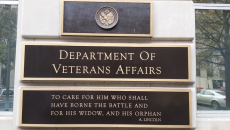
In a pair of op-eds published in the Federal News Network, former Veterans Affairs Deputy Chief Information Officer Ed Meagher offered his take on the agency's beleaguered attempts to update its electronic health record system.
In short, said Meagher, the VA's legacy EHR, VistA "needs to be modernized, not replaced."
As he explained, "VistA meets all of VA’s current needs. It does need to be 'replatformed' and key elements need to be modernized, but those efforts were underway, at several orders of magnitude lower cost and risk, when the Cerner system was imposed on the VA.
"No amount of good intentions, hard work, heroic management, relentless oversight or endless funding will be able to overcome the fatal flaws of this massive, misbegotten program," Meagher added.
WHY IT MATTERS
Meagher, who served as deputy CIO at the VA from 2000 through 2006, and briefly as the agency's chief technology officer in 2006, has been a longtime critic of the VA's plans for an EHR overhaul.
"VistA represents 30 years' worth of knowledge, experience, data standardization, education, integration, reliability, research, institutional memory and best practices. Much of this will be lost or degraded under the Cerner system," he wrote in his first op-ed, published October 15.
He also called the VA's report following its three-month strategic review "very disappointing," given what he saw as a lack of consideration about the EHR modernization contract.
"Instead, a laundry list of high-level issues were identified, and high-level remedies recommended. At the heart of each of these remedies was the belief that better management, better oversight and just plain trying harder would ultimately succeed," he said.
In short, Meagher said, the replacement plan is a "self-inflicted wound that if allowed to proceed will fester, degrade and ultimately critically damage the VA’s ability to meet its mission."
At the same time, he acknowledged in his second op-ed, published this week, that stopping the EHRM program will likely mean lawsuits, criticism and degradation of trust.
With that in mind, he offered VA leadership "specific recommendations," including:
Filtering next steps through a stringent view of what is best for veterans
Transparently addressing practical, contractual, political, personal, personnel and organizational issues
Examining the source of advice and counsel
Protecting alternatives by fully funding and staffing the VistA program office
Taking the time to "appreciate what you have" in VistA
Turning to a third party for an end-to-end modeling simulation of the proposed solution
Identifying the level of risks posed by the interdependencies of systems
Engaging with rank-and-file members of the VA team
Asking about enduring questions regarding the Cerner system and contract
Appreciating the potential consequence if the EHR program fails
"The very best advice I can offer you is that in this moment it may appear that staying the course is your best option and that halting this multibillion-dollar juggernaut would seem like failure and a waste of money and the efforts of many dedicated and committed people. That is not the case," said Meagher.
THE LARGER TREND
VistA has been criticized for being outdated and for lacking ease of interoperability with the Department of Defense.
But, as Healthcare IT News has reported, the homegrown EHR system is relatively well-liked, particularly by its users.
"When people really look at the history of VA, it has over 20 to 25 years of creating health informatics. It's elevated the functionality requirements over time," Deanne Clark, senior health informatics consultant at DSS, said in 2017. "VA has been working with end users to really understand the software and users."
ON THE RECORD
"In the long run, when your servant leadership will be judged, when your pluses and minuses will be summed, it only matters that you do the right thing, for the right reasons, at the right time," wrote Meagher in his second op-ed.
Kat Jercich is senior editor of Healthcare IT News.
Twitter: @kjercich
Email: kjercich@himss.org
Healthcare IT News is a HIMSS Media publication.