Decision Support
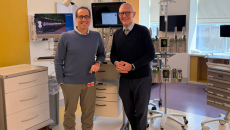
Two of the hospital's physicians explain how the decision support technology aggregates patient signals to indicate health trajectories – which tells clinicians when to evaluate a patient's evolving state and determine an appropriate response.

Several companies have released artificial intelligence enhancements for healthcare administration and operations, from billing and staffing to security and data management. Also, the VA will scale ambient scribing.

A government-backed initiative has recently collected over a million biospecimens and ultrasound images from 12,000 pregnant persons in India to develop pregnancy AI solutions.

A $4.7 million collaboration led by the National Cancer Centre Singapore will develop a clinical-grade test using AI and advanced genomic sequencing for more precise cancer profiling.

Also, a new collaboration in China aims to incubate healthcare startups.

The public Queensland health service is integrating remote monitoring and clinical decision support capability, with initial application in post-acute care and chronic condition management.

CIO Richard Taggart says the framework introduces a risk-based governance model for AI use in NSW public hospitals and establishes an AI advisory service to review projects and guide safe implementation.

A doctor-tech leader from India argues that genomic data infrastructure, resistance forecasting and sovereign AI discovery tools will be critical to future regional pandemic response.

The focused large language model is designed to help provide caregivers and administrators answers to their questions based on their own organizations' data, the vendor's chief data scientist explained at HIMSS26.
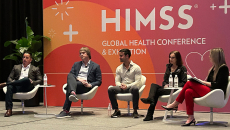
Some providers are still in the very early stages. Others are spending big on shiny objects. Still others are well off to the races, with mature deployments enabling robust ROI. Where are we in the AI hype cycle? It depends, said panelists at HIMSS26.