Clinical

Health systems evaluating AI must look beyond datasets and algorithms to understand the assumptions and priorities embedded within the applications themselves.
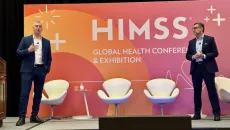
At HIMSS26, leaders from Emory Healthcare and Mass General Brigham discussed how initiatives like the Healthcare AI Challenge aim to help health systems make safer deployment decisions.
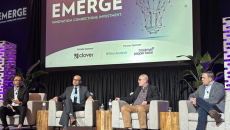
To get innovative healthcare technologies into the hands of providers, patients and others, it takes a community of partners to turn policy signals into market momentum.

Farhana Alarakhiya of Aga Khan University has decades of data experience, and she's using it to create data-driven insights that can solve population health challenges in low- and middle-income countries.
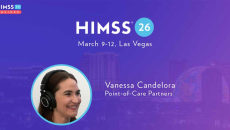
Price transparency for medications and services will make it possible for patients to budget for procedures and shop for better prices with in-network providers, Point-of-Care Partners' Vanessa Candelora says.

At HIMSS26, panelists discussed whether healthcare technology is improving care or adding challenges to the healthcare journey for clinicians and patients.
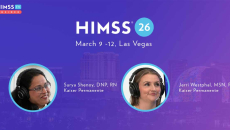
To ensure new AI products support nursing workflows rather than force nurses to adapt to the technology, include nurses in the development process, Kaiser Permanente's Surya Shenoy and Jerri Westphal advise.
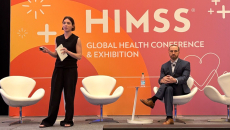
A multi-artificial intelligence agent architecture triggers high-risk patient advanced care planning to improve clinical workflows and patient experiences, while integrating critical human steps for action.
Predictive analytics boost AI tools and help patients and clinicians connect. However, HIMSS Chief Scientific Research Officer Anne Snowdon says that, globally, only about 30% of analytics capacity has been realized.
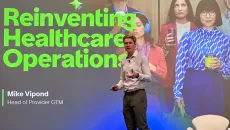
AI exposes chaos when fragmented data and broken workflows become more visible during automation, says Michael Vipond of ServiceNow.