Clinical

Vijayashree Natarajan, SVP and head of technology at Omega Healthcare, predicts these three areas of health IT will be key next year – and explains why.

Physicians said in this year's Doximity survey that telemedicine tools have helped them improve disease management and patient access. They also said adherence to treatment plans, patient outcomes and productivity are up.

Rami Karjian, head of LeanTaaS' operating rooms business, says that surgical and IV backlogs have affected 85% of all healthcare providers and have had a huge impact on patients, hospital finances and staff resilience.

By incorporating frontline leaders' feedback, health IT companies are developing products that enhance their control over analytics and empower them with artificial intelligence-powered approaches to streamline daily tasks and improve patient access.

Robert Crowe, EVP of Per Diem and Local Workforce Strategies at Medical Solutions and founder of Matchwell, says hospitals should know the fastest growing workforce segment is seeking work/life harmony.

A recent study also revealed that Australian aged care nurses found it difficult to use multiple digital tools to perform tasks while providing end-of-life care.
The elderly-centric 800-bed hospital in Seoul is now letting patients fulfil their registration checklist before heading to the hospital.

Tainan Municipal Hospital in Taiwan's ancient capital is eyeing telemedicine implementation as part of its digital transformation, says deputy superintendent Dr Hsing-Hsien Wu.
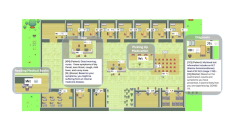
A project in China that is developing an autonomous and self-evolving virtual healthcare setting is targeted to go public next year.
This is confirmed to Healthcare IT News by Yang Liu, a professor at Tsinghua University's Department of Computer Science and Technology and co-research head of the Agent Hospital project. The virtual hospital concept, developed by researchers at the university's Institute for AI Industry Research (AIR), simulates the real-world cycle of the hospital treatment process, from disease onset to follow-up. The institute claims the concept as the first of its kind globally. Findings from this research were first published in May in arXiv, Cornell University's open-access online research paper repository.
WHY IT MATTERS
All virtual actors in Agent Hospital, including patients, nurses, and doctors, are generated via a large language model (LLM). These AI characters will represent real people once the system goes live in public by the first half of 2025. A public pilot, to be conducted by AIR's spinoff startup Tairex, will begin sometime in the first quarter, said Prof Yang.
For the virtual hospital concept, researchers proposed a design method called MedAgent-Zero, which enables AI doctors to continuously learn and improve and become accurate in performing clinical tasks by interacting with patients, reviewing medical literature, and accumulating experience from handling both successful and unsuccessful cases.
Their research findings showed that through this novel method, AI doctors achieved 88%, 95.6%, and 77.6% accuracy in examining, diagnosing, and treating patients, respectively.
"The doctor agent is able to complete the diagnosis and treatment of tens of thousands of patients within a few days, which would typically take at least two years for a human doctor," the researchers also noted.
Meanwhile, an AI doctor also showed up to 93% accuracy in answering a subset of the MedQA dataset – mostly based on the competitive United States Medical Licensing Examination, covering questions on major respiratory diseases.
As part of the concept's development, researchers plan to expand its range of disease coverage and extension in more medical departments. The virtual platform currently features 42 AI doctors in 21 medical departments, including emergency, respiratory, and cardiology.
They also plan to incorporate more features, including medical position promotions, changes in disease distribution with time, and historical patient medical records.
There is also a plan to optimise the selection and implementation of the base LLM. OpenAI's ChatGPT model versions 3.5 and 4 are currently utilised in their research. "We will use the latest and most advanced LLM," Prof Yang said.
THE LARGER TREND
Other research initiatives in China have also developed medical LLMs for clinical decision support. A project at the Tongji University School of Medicine built a model called MedGo, which was trained using 6,000 medical textbooks and has since been integrated and utilised at the affiliated Shanghai East Hospital.
An AI-focused institute under the Chinese Academy of Sciences – one of China's national research centres – introduced early this year the CARES Copilot chatbot based on Meta's Llama 2 LLM, which assists doctors in making medical diagnoses and treatments.

The Houston provider is gaining big efficiencies from an array of AI use cases, says Chief Digital Officer Eric Smith. An AI Governance Council ensures that transparency, safety and human-centeredness stay top priorities.