Clinical
The health system co-designed a platform that provides multifactorial data analysis and direct-to-physician communication, as well as continuing education material.
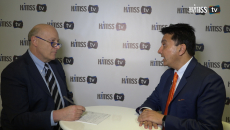
HIMSS Enterprise Board Chair Manish Kohli and HIMSS International EVP Bruce Steinberg discuss the lessons learned from digital transformation successes and failures throughout the world.
During the first year of tele-ICU, the technology helped save 125 lives, reduce ICU length of stay by 34 percent, reduce the sepsis mortality rate, and more.
A group of Kiwi clinicians with a passion for technology driving changes in healthcare has created a Clinical Informatics Leadership Network.
The new network is being supported logistically and financially by Health Informatics New Zealand and held its first meeting during the HiNZ 2018 conference in Wellington.
It now has 74 members from a range of health professions such as medicine, nursing, allied health, midwifery and pharmacy.
It provides an online forum for members to share expertise and ideas as well as national networking events.
Network organiser Karen Blake is the regional manager for health informatics at shared services organisation healthAlliance and has worked as a midwife in both New Zealand and Australia.
“There have been lots of failed IT projects in health and there’s enough evidence now to demonstrate that clinical leadership is absolutely fundamental to the success of these projects,” she says.
“Our IT solutions need to be clinically led to solve clinical problems, as it’s not about solving more and more IT problems.”
Similar networks have been set up in Australia and the UK, where NHS trusts routinely have a chief clinical information officer and there is a national CCIO for Health and Care.
Fellow network organiser and clinical director information services and virtual healthcare at Waikato DHB Ruth Large says in New Zealand there are a variety of ways that DHB information services use a clinical reference point, but there is no consistent clinical IT role in DHB leadership models.
“There has been a gap in terms of clinical leadership around the development of our digital technologies,” she says.
Large says CILN members do not need to have IT qualifications or a role involving informatics, but an interest in using technology to drive change, efficiency and good patient outcomes.
Large wants New Zealand to avoid the US experience where the wide implementation of electronic health records has seen many clinicians become disengaged, feeling they are entering patient data into computers to “feed the machine”, rather than for improved patient outcomes.
“We need a cohesive and supportive voice for clinical IT, otherwise we are just going to get the technologies we are given,” Large says.
This article first appeared on eHealthNews.nz.
The program uses a mix of home visits and telehealth technologies to bring more services to the home.
Hutt Valley District Health Board (DHB) is using robots to process the 24,000 e-referrals it receives every year. Hutt Valley DHB is based in Lower Hutt, and covers an area including Upper Hutt, Wainuiomata and Eastbourne, located in the Wellington region of New Zealand.
The DHB, along with Wairarapa and Capital and Coast DHBs, has recently embarked on a project to automate the Mental Health Intake Assessment process.
Former chief information officer at Hutt Valley Shayne Hunter spoke at the HiNZ 2018 conference in Wellington last November about the e-referrals automation project.
He said this was previously an end to end process of manually registering and processing all e-referrals, estimated to require more than 4600 hours annually or the equivalent of 2-2.5 full time clinical administrators.
“We embarked on a project to try and make that robotic,” he explained.
During a 3-month pilot period, the robotic process automation attempted 681 e-referral registrations had an 83 percent success rate, saving an estimated 71 hours in staff time. For e-referral processing there were 900 attempts and a 75 percent success rate, saving 56 hours.
He said there were problems with the data coming in, such as missing data, which means human interpretation is still sometimes needed.
“It doesn’t have to be start to finish robotically, it can co-exist with humans in the process,” said Hunter.
“We took the person from referrals and they’ve now become a virtual workforce manager to help automate other processes.”
A plan to use robots to speed up basic clinical coding, so coders can spend more time on difficult coding scenarios, has been paused due to the high level of complexity.
However, the Mental Health Intake Assessment project is moving ahead and the DHBs are hoping to be able to automate 100 percent of the process.
Hunter added that the DHB is also looking at embedding AI to interpret the content where there is missing data.
This article first appeared on eHealthNews.nz.
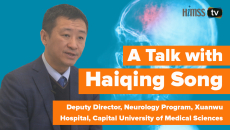
Haiqing Song, deputy director of the neurology program at the Xuanwu Hospital, Capital University of Medical Sciences in China, talks about his organization's approach to digitization and what is needed to effectively leverage technology.
At the hospital's inflammatory bowel disease center, providers can now deliver better care to patients with delicate conditions.
Working with a cardiac monitoring platform from Eko, the health system is validating algorithms to help more accurately screen for valvular damage with a digital stethoscope.
Three experts offer comprehensive advice and tips for healthcare CIOs starting a clinical decision support journey.