Artificial Intelligence
Supervised? Unsupervised? Semi-supervised? Huh? Experts from Harvard and Stanford say the subtle differences in terminology actually have big impact.
Cisco will build new applications for IBM’s platform that hospital security teams can use to better understand and respond to advanced threats.
New products and services will incorporate predictive and prescriptive analytics and machine learning to augment infosec employees and resources, Gartner finds.
New Infosys report points to importance of "ethical standards" for training talent as automation changes workflows.
Stanford Medicine, UC San Francisco University of Chicago Medicine to help Google Brain fine-tune predictive analytics to spot patterns in EHRs.
Persistent infrastructure and talent acquisition concerns render the industry not-quite-ready to embrace the next generation of health IT. But we’re getting close.
Team plans to leverage Watson AI to develop cognitive tools that use analytics, knowledge-driven learning and semantics-based interrogation.
Healthcare providers, life science companies and technology vendors view artificial intelligence as important to competitiveness, Tata Consultancy Services reports.
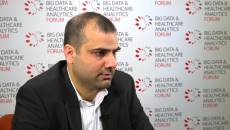
Zeeshan Syed, Director of the Clinical Inference and Algorithms Program at Stanford Healthcare, presents the differences between AI and machine learning and discusses current applications of each technology in healthcare.
Partnership with GE Healthcare with first focus on improving clinician productivity and patient outcomes in diagnostic imaging.