Artificial Intelligence

Researchers from the University of California, San Diego found that factors such as lack of insurance, economic instability and poor transportation to obtain care were associated with a 30-day readmission.
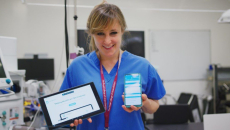
MedTech Europe welcomes launch of European Health Data Space
The European Commission this week launched the European Health Data Space (EHDS), which will allow citizens to access their health data in any EU member state.
MedTech Europe CEO Serge Bernasconi, said: “To be successful, the proposed EHDS legislation needs to address the barriers to data sharing, advance investment in infrastructure, and foster the adoption of international interoperability standards. But first and foremost, it needs to lay the foundation for the building of trust in health data sharing amongst EU citizens.”
The proposal put forward by the European Commission will now be discussed by the Council and the European Parliament.
NHSE tech director Harjeet Dhalival to join Palantir
Former NHS England deputy director of data services Harjeet Dhalival is reported to be joining US software firm Palantir.
The news comes shortly after it was revealed that NHS’s former head of artificial intelligence (AI) Indra Joshi was joining the company, raising concerns about conflicts of interest. Palantir is competing for the £240 million NHS federated data platform (FDP) contract.
A Palantir spokesperson, said: “Palantir hires the best and brightest people from public and private sector organisations around the world. We are delighted that Harjeet is joining Palantir’s UK team, which we are aiming to grow by 250 this year.”
Study finds AI algorithm detects interval breast cancers
A study, published in the European Journal of Radiology, found that AI can correctly detect interval breast cancers in prior screening mammograms, including in some cases with no discernible suspicious signs.
The AI, developed by Berlin-based deep tech firm Vara, assessed 2,396 screening mammograms from women at the Mammography Reference Centre North in Germany, who were later diagnosed with an interval cancer.
In the cohort, 374 of the interval cancers were considered ‘false negative’ and 468 ‘minimal signs’. When the algorithm was set at an operating level of 99% specificity, it could detect and localise 27,5% (103) of the ‘false negative’ and 12,2% (57) of ‘minimal sign’ cancers.
Diaverum launches holiday dialysis booking platform
Renal care service provider Diaverum has launched a booking engine for holiday dialysis.
The d.HOLIDAY booking platform allows users to apply search filters, select payment options in advance and have real-time visibility of treatment availability across Diaverum’s global network of clinics.
Michaela Blomstrand, director of patient experience and community affairs, Diaverum, said “Travel has already for some time evolved into a digital-led industry, and will continue to lean on digital innovation as it seeks to find agile ways of recouping its losses from the pandemic. Our strategy for d.HOLIDAY and our booking platform has been developed in line with this prediction”.

Dr. Samir Said at Philips Middle East, Turkey and Africa, discusses how unique data-driven practices and AI-enabled tools can be embedded in care delivery to help future-proof health systems and improve care delivery.

An algorithm that can help predict atrial fibrillation can also assist in identifying patients with a bigger chance of cognitive decline.

The framework, which leaders hope will start working in 2025, will potentially harness the health data of nearly 450 million people, facilitating cross-border care and opening opportunities for research.

Dr. Stephen Lin of Stanford University Medicine discusses how primary care is ready for investment and innovation.
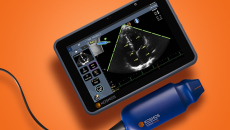
Dr. Mark Favot says learning to use point-of-care ultrasound devices can be "very humbling" for physicians – but artificial intelligence can make it easier for them to acquire new skills.

A team from Boston Children's Hospital and Yonsei University used local weather information to help forecast the possibility of patients missing scheduled appointments.

"We have shoved so many things to the bedside nurse, between monitoring and documentation I am not sure how they manage the patient anymore."
![[Left] Bernett Lee and [Right] Wilson Goh, co-directors of the Centre for Biomedical Informatics, NTU Singapore LKCMedicine](/sites/hitn/files/styles/230x130/public/2025-07/AD86314E-8312-487B-98CC-079545A2CDDF_0.jpeg?itok=RJMgUVu5)
One works to shed light on dementia in Asians while the other currently focuses on predicting mental disorders in at-risk youths.