Artificial Intelligence
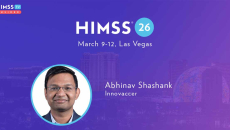
Innovaccer CEO and cofounder Abhinav Shashank previews the HIMSS26 panel where he'll join other unicorn founders to offer stories about their origins, early failures and breakthrough wins.

Now the global chief medical officer for Aidoc, Ehrenfeld will discuss how AI should be integrated into clinical systems.

New this month: Smart technology collaborations aim to enhance inpatient care, promote patient coordination and reduce clinical burdens with advanced AI.

Before healthcare organizations can embark on a meaningful AI journey, they need to first consider if their data and interoperability strategy is positioning them for future success.

Dr. Michael Spaeder of the University of Virginia previews his upcoming HIMSS26 talk on using AI and machine learning to detect potentially catastrophic health events.

With an artificial intelligence-powered medical search and decision support platform, the health system's physicians can access the latest clinical evidence for use in patient care.

The funding will help the company scale its AI-powered, in-network virtual psychiatry platform, which employs more than 800 full-time psychiatrists.
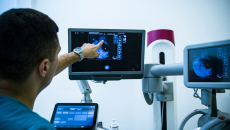
This comes as it recently extended the screening age to 74 and started transitioning to a population-based digital register.
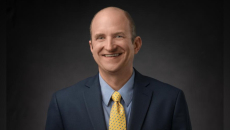
So says Ryan M. Cameron, Children's Nebraska's newly minted chief information and innovation officer. He says provider organizations should pursue a small set of agentic AI projects – not as pilots for innovation's sake, but as fixes for concrete problems.

With the clinical artificial intelligence agent, doctors are able to spend less time sifting through drop-down menus and typing on their laptops to document patient visits, the EHR company says.