Artificial Intelligence
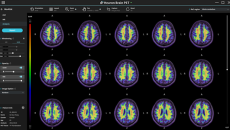
Also, IHH Healthcare is now offering AI-based sleep monitoring solutions.

CIO Craig Kwiatkowski describes some of the artificial intelligence tools in use at the Los Angeles health system – and shows how teams are employing an AI-powered primary care app to train on datasets that reflect diverse populations.
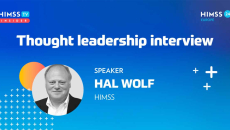
Hal Wolf, president and CEO of HIMSS, talks about what to expect at the 2024 HIMSS European Health Conference & Exhibition, including a deep dive into legislation expectations, such as the AI Act and the European Recovery and Resilience Fund.

The Advanced Research Projects Agency for Health, ARPA-H, seeks to scale hospitals' cybersecurity capacity by automating patch deployments across networks and medical devices, speeding the time from vulnerability detection to software updates.

Craig Kwiatkowski is calibrating the pace of the health system's artificial intelligence adoption to ensure it's deploying generative AI safely and responsibly.

Craig Kwiatkowski is taking the FAVES approach: fair, appropriate, valid, effective and safe. He says this also helps from an adoption perspective.

Using 14 key performance indicators (KPIs), decision-makers receive an overview of surgeon performance. This increased transparency aims to enhance the quality of care and identify potential areas for improvement.
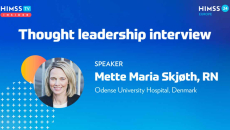
Mette Maria Skjøth, RN, department head at the Dermatology and Allergy Centre of Denmark's Odense University Hospital, discusses potential uses for AI tools, including early detection of sepsis and infectious diseases.

Sarah Hatchett, who had been serving as interim chief information officer since August 2023, will take on the role full time.

By 2030, there is projected to be a shortage of 120,000 cardiologists in the U.S. Combined with the decline in hospital beds and rising cost of heart failure, healthcare organizations need to find a way to detect heart failure earlier and at lower cost.