Artificial Intelligence
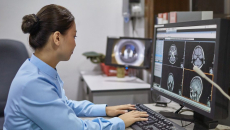
Also, the Korean government is investing $25 million in developing AI for drug discovery.

Compliance requirements have left health plans 'scrambling,' Johns Hopkins says, spurring creation of the AI initiative.

Matt Cybulsky, LBMC practice leader for healthcare AI, value-based care and product innovation, discusses consulting digital health companies on seeking investment.

Providers should push hard to maximize the use of generative AI and natural language processing tools – but validate performance for each system rigorously before making it available for widespread use, a physician author says.

SPONSORED
 |
10:47 pm |
August 06, 2024
|
10:47 pm |
August 06, 2024
|
10:47 pm |
August 06, 2024
AI has permeated various aspects of daily life in recent years, but its impact on healthcare has been hailed as revolutionary. Studies have predicted that by the end of 2026, 55% of healthcare organisations in Asia Pacific will have data governance frameworks that prioritise AI’s ethical and explainable use.
Such vast projected AI use in healthcare can be attributed to its active and proactive capabilities in optimising patient and health journeys.
AI capabilities in HealthTech
Active - Streamlining Medical Data Management
AI has the potential to streamline manual processes by automatically and swiftly summarising large amounts of healthcare data. Consequently, AI can assist in optimising patient journeys by automatically generating precise information regarding wait times, appointment hours, and treatment plans.
Overall, such approaches can help patients manage their expectations while alleviating their anxiety regarding future health appointments and procedures.
Proactive – Forecasting system and patient vulnerabilities
Numerous AI tools, such as machine learning algorithms and natural language processing, can help healthcare systems analyse large datasets, detect patterns, and generate actionable insights in real-time.
This feature is crucial for the cybersecurity of sensitive health data such as Electronic Medical Records (EMR). Not only can AI detect risks in real-time, but it can also forecast potential vulnerabilities and prescribe fixes.
AI-powered solutions transforming APAC healthcare
Data-based Operation and Communication Center (DOCC) PAN
The DOCC PAN is an AI-powered platform developed by South Korea's Samsung Medical Center (SMC) that employs predictive modelling. Using DOCC PAN, employees can input operational data at 30-minute intervals to estimate patient influx and reallocate staff during peak hours. In SMC's busy and crowded Blood Collecting room, implementing DOCC PAN has significantly reduced patient wait times.
“The median waiting time eventually plummeted dramatically, from a range of nine to 10 minutes to a mere four minutes,” said Oksoon Jeong, Manager, Data Service Platform, Samsung Medical Centre.
Intelligent Anti-Microbial System (i.A.M.S.)
i.A.M.S is a comprehensive antimicrobial AI platform recently implemented in China Medical University Hospital (CMUH). The four-in-one functioning platform can leverage AI to detect drug-resistant strains and predict and monitor the risk of infectious sepsis and mortality.
Since its inception, CMUH has significantly benefited from the platform's ability to automatically compare drug-drug interactions and allergy history, allowing the hospital to learn and generate smart medicine dosage recommendations.
“Three months after the system (i.A.M.S) was launched, the mortality rate due to sepsis was successfully reduced by 7.1%,” said Lu-Ching Ho, Clinical Pharmacist and CMUH HIMSS Project Group Secretary.
Digital maturity can be maximised with the right network and guidance
To attain comparable transformative digital maturity, healthcare providers must place themselves in environments that facilitate key information sharing, collaboration, and expert guidance on how to leverage AI in healthcare. The upcoming Innotech Conference is one example of such a setting.
This premier event will bring together leaders from healthcare, government, and tech sectors, along the wider medical community to discuss the future of digital healthcare transformation.
Guest of Honour, Ong Ye Kung, Singapore’s Minister of Health, will deliver a keynote address highlighting Singapore's vision for digital healthcare transformation, among other digital health developments.
Additionally, panel discussions featuring innovators and thought leaders like Tan Bin Ru, President, Enterprise Digital at ST Engineering, and healthcare futurist, Lucien Englen, will examine the use of AI-driven technology to improve healthcare systems.
Discussions at the event can inspire and empower attendees with actionable insights into AI, driving meaningful advancements that prioritise patient-centred care while assuring sustainable healthcare transformation.
The InnoTech Conference will be held on 3 September 2024 from 11.30am – 3.30pm at the Marina Bay Sands. For more event information or to register, click here.

Encryption technology used in elections can potentially improve an AI model's predictive capability without compromising patient data privacy.

Offered in partnership with Novo Nordisk Foundation, the fellowship will focus on technologies that analyze vast amounts of data to increase diagnostic accuracy, speed personalized medicine and improve clinical trials.

The Boston health system's director of AI operations discusses some challenges and best practices for integrating large language models into research and operational tasks while explicitly excluding direct clinical care.

Prolonged understaffing in clinical laboratories threatens to compromise patient care, but deployment of automation and artificial intelligence technologies could offer a lifeline to burned out lab workers.