Workforce

Rural providers are using use voice AI to manage administrative burden and the government funding NLP research into improving the cultural sensitivity of mental healthcare. Other companies, meanwhile, have announced new secure-by-design certifications.

When able to access patient-specific medical data, an integrated chatbot was accurate, complete and as empathetic as human providers in its message replies – but also long-winded and more complex, according to research from NYU Langone.

Strategies to curb violence in the work setting include training, technology support and coordinating with local law enforcement.

The companies will further develop speech-to-text technology that takes healthcare provider's notes and can upload key excerpts to EHR-agnostic files, while the agency accepts feedback on the sole-source solicitations.
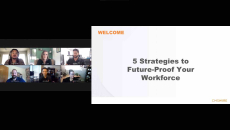
Watch as Jon LeBlanc, Senior Director of Sales at Infor, Brianna Zink, Senior Director of Product Strategy, Healthcare at Infor, Todd Stonestrom, SI & ISV Success Manager, NP Healthcare at AWS, and Evan Friedman, Senior Manager, Human Capital Practice at Deloitte, discuss how changing employment practices and adopting the Infor workforce productivity platform can help organizations continue to grow in the changing work landscape.
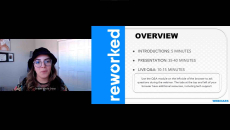
Watch as Joanna White, Chief Nursing Executive at Infor, and Theresa Beebe, Solution Consultant, Healthcare at Infor, talk to Gina Seekers, Director of HRIS at Children’s of Alabama, and Diana Kennedy, Applications Engineer III – ERP Team at Children’s of Alabama, about how the hospital implemented a workforce management platform that helped them improve work experience and reduce turnover for its nursing team.

Health systems and hospitals are experiencing widespread nurse shortages, and those shortages became a driving factor in nurse strikes across the U.S. in 2023. As healthcare organizations explore ways to mitigate the factors leading to nurse burnout and turnover, technology presents one possible way to help improve nurse satisfaction.
Clinical and non-clinical healthcare workers are increasingly leaving their jobs due to burnout and cognitive overload, and many cite technology as a factor in their decision. Unconnected, disparate IT systems in a healthcare organization (HCO) disrupt workflows, restrict data access and complicate tasks, making non-clinical staff less productive and leaving clinical staff unable to give enough attention and care to patients.
Amid the ongoing uncertainty of the economic climate and the shifting work landscape, organizations that employ hourly workers are under intense pressure to control operating costs and keep productivity high.

Also, eHealth NSW is expanding the Clinical Device Notification Platform to rural and remote areas in Sydney.